
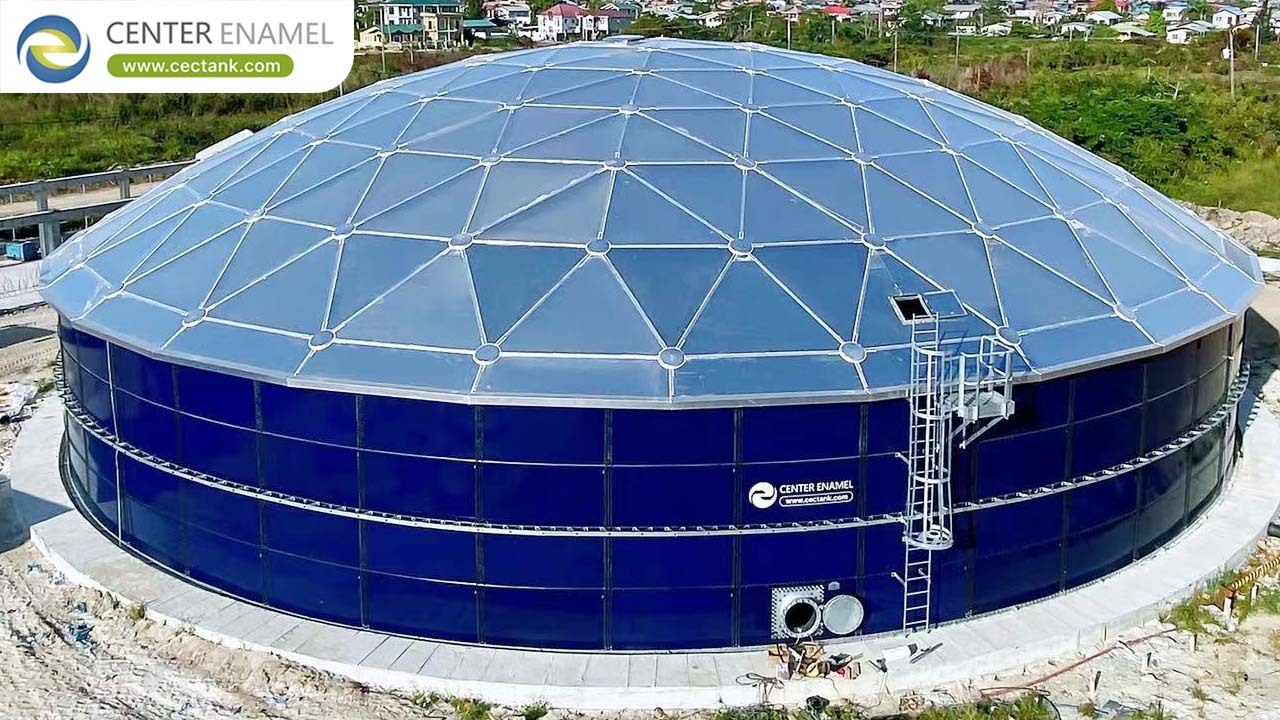
Tanques de Aço Revestidos com Vidro (GLS) de 18.000 m³: Uma Solução Confiável para Armazenamento de Água e Tratamento de Efluentes
No mundo da infraestrutura municipal e industrial, a escala faz toda a diferença. Para reservatórios de água de grande porte, estações municipais de tratamento de esgoto e instalações industriais de processamento, a infraestrutura de armazenamento deve ser maciça, durável e altamente confiável. O tanque de Aço Revestido com Vidro (GLS) de 18.000 m³ emergiu como uma solução de engenharia de primeira linha, oferecendo a combinação perfeita entre alta capacidade de armazenamento e excepcional longevidade.
À medida que o setor se volta para infraestruturas sustentáveis e de baixa manutenção, a tecnologia de Vidro Fundido ao Aço (GFS/GLS) destaca-se como o padrão para a gestão hídrica do século XXI.
A Engenharia por Trás do Armazenamento em GLS de Grande Escala
Com capacidade de 18.000 m³, a integridade do tanque não depende apenas do revestimento — trata-se de uma complexa engenharia estrutural. Os tanques GLS são construídos utilizando chapas de aço de alta resistência, revestidas de fábrica com um esmalte de vidro especial e submetidas a temperaturas superiores a 820 °C. Isso cria uma ligação molecular, inorgânica, mais dura que o epóxi e mais resistente que o concreto.
Por Que os Tanques GLS de 18.000 m³ Superam o Concreto e o Aço Soldado
Ao especificar tanques dessa magnitude, os engenheiros priorizam Custo Total de Propriedade (TCO) e Confiabilidade estrutural.
| Recurso | Tanque GLS de 18.000 m³ | Tanque de Concreto Fundido | Tanque Soldado em Aço Carbono |
| Resistência à Corrosão | Superior (Vidro Inerte) | Baixo (Requer Vedação) | Baixo (Precisa de Pintura) |
| Velocidade de Construção | Rápido (Montagem Modular Parafusada) | Muito Lento (Meses) | Moderado |
| Manutenção | Mínimo (Sem Pintura) | Alta (Reparo de Rachaduras) | Alta (Reaplicação de Revestimento) |
| Impacto no Local | Baixo (Montagem Compacta) | Alto (Grande Área de Instalação/Cura) | Alto (Trabalhos a Quente/Soldagem) |
| Ciclo de Vida do Ativo | Mais de 30 Anos | 20–30 Anos | 20–30 Anos |
Vantagens Críticas para Uso Municipal e Industrial
1. Resistência Superior à Corrosão
O revestimento interno e externo de vidro é completamente não poroso. Em aplicações de águas residuais, onde o efluente contém ácidos, sais e cargas orgânicas, a superfície vítrea evita a degradação comum no concreto. Para água potável, essa barreira inerte impede a lixiviação metálica, garantindo que a qualidade da água permaneça compatível com as normas NSF/ANSI 61.
2. Implantação Modular Rápida
A construção de um tanque de concreto de 18.000 m³ pode levar meses de fundição, cura e testes. Já o tanque GLS é pré-fabricado em uma fábrica com controle climático e montado no local mediante um método hidráulico de içamento “de cima para baixo”. Isso minimiza a perturbação no canteiro de obras e reduz o prazo do projeto em até 60%, permitindo que sua instalação entre em operação mais rapidamente.
3. Escalável e Preparado para o Futuro
Como os tanques GLS são parafusados em vez de soldados, oferecem uma flexibilidade impossível de alcançar com concreto moldado monoliticamente. Se as necessidades de sua instalação evoluírem, esses tanques frequentemente podem ser desmontados, realocados ou até ampliados adicionando camadas anulares extras, protegendo assim o investimento inicial.
Atendendo aos Padrões Globais de Engenharia
A confiabilidade nessa escala exige o cumprimento rigoroso de normas internacionais. Nossos tanques GLS de 18.000 m³ são projetados para atender às mais exigentes normas globais, assegurando segurança estrutural, resistência sísmica e desempenho à prova de vazamentos:
ISO 28765: Referência mundial para esmaltes vítreos e porcelânicos em tanques de aço parafusados.
AWWA D103-19: A norma para tanques de aço parafusados revestidos em fábrica, garantindo cálculos específicos de cargas de vento, sísmicas e hidrostáticas.
NSF/ANSI 61: Certificação para componentes de sistemas de água potável, confirmando a segurança para aplicações com água potável.
Perguntas Frequentes (FAQ)
Pergunta: Um tanque GLS de 18.000 m³ consegue suportar atividades sísmicas?
R: Sim. Cada tanque é projetado utilizando Análise por Elementos Finitos (FEA) para resistir às cargas sísmicas, de vento e hidrostáticas específicas do local do seu projeto. Nosso design parafusado permite um grau de flexibilidade estrutural que ajuda o tanque a absorver melhor a energia sísmica em comparação ao concreto frágil.
Pergunta: O revestimento de vidro racha com o tempo?
R: A fusão entre o vidro e o aço é altamente resistente. Embora o vidro seja rígido, ele está unido a um substrato de aço flexível. Nosso revestimento foi projetado para suportar tensões mecânicas normais sem apresentar trincas ou delaminação, assegurando uma vida útil de mais de 30 anos.
Pergunta: Qual é o protocolo de manutenção para um tanque desse porte?
R: A manutenção é mínima. Como a superfície de vidro não enferruja nem oxida, não requer jateamento periódico nem pintura. Inspeções anuais dos selos dos parafusos e dos componentes da cobertura costumam ser suficientes para manter a garantia e a integridade estrutural.
Pergunta: Este tanque é adequado para tratamento de águas residuais?
R: Absolutamente. Na verdade, os tanques GLS são amplamente considerados a solução ideal para efluentes de esgoto, digestão anaeróbica e armazenamento de lodo, pois evitam o acúmulo microbiano e a corrosão causada por ácidos, problemas frequentes em tanques tradicionais.
Parceria com a Center Enamel
Como líder global na fabricação de GLS/GFS, a Center Enamel traz mais de 30 anos de experiência aos seus projetos de infraestrutura. Oferecemos suporte completo — desde os cálculos hidráulicos iniciais e projetos de fundações específicos ao local até a montagem e comissionamento profissionais — garantindo que sua solução de armazenamento de 18.000 m³ opere em seu máximo desempenho.
Pronto para escalar sua infraestrutura? Entre em contato com nossa equipe de engenharia para um estudo de viabilidade, análise estrutural ou uma proposta técnica detalhada.