
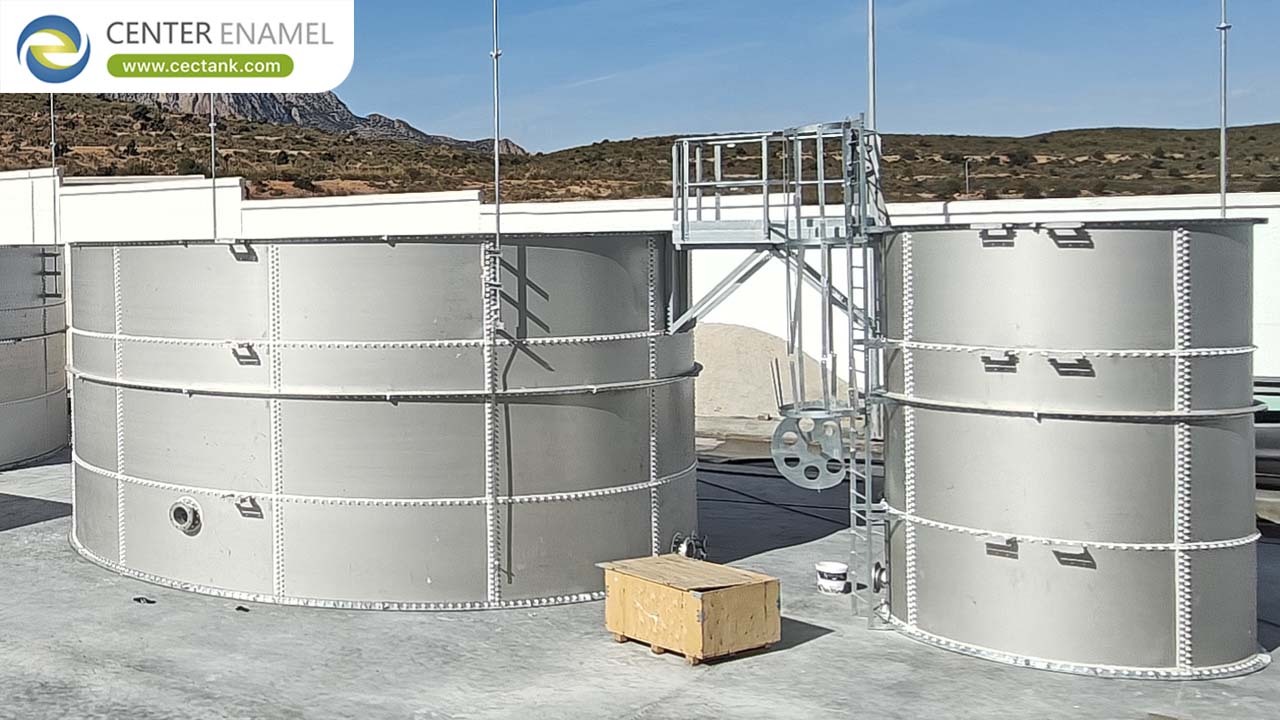
API 650 Stainless Steel Tanks: The Ideal Solution for Safe and Efficient Liquid Storage
Direct Answer: In heavy industrial fluid management and bulk storage operations, API 650 stainless steel tanks represent the gold standard for safe, reliable, and leak-free atmospheric containment. API 650 is a rigorous design specification published by the American Petroleum Institute that mandates exact structural metrics for welded vertical storage vessels.
By executing these designs in premium stainless steel alloys rather than traditional carbon steel, engineers create a containment asset that delivers zero-contamination purity, elite corrosion resistance without protective coatings, and unmatched operational safety. This makes them the definitive engineering choice for high-value chemicals, aviation fuels, food-grade ingredients, and pure process water storage.
1. The Engineering Rigor of API 650 Standards
An API 650 tank is not merely a steel silo; it is a highly engineered structure designed to withstand severe internal hydrostatic stress and external environmental loads (such as wind shear and seismic events).
The standard specifically dictates:
Atmospheric Pressure Limits: Engineered for internal pressures roughly equal to atmospheric pressure (not exceeding $5.6 text{ kPa}$ or $0.75 text{ psi}$).
Welding Quality Control: Mandates 100% continuous full-penetration butt-welding for all vertical shell joints, backed by extensive radiographic (X-ray) non-destructive testing to verify structural soundness.
Graduated Shell Thickness: Because hydrostatic pressure intensifies linearly toward the bottom of the vessel, the tank shell is built using rings of varying thicknesses. The bottom-most ring features the thickest plate, while higher rings become progressively thinner, saving material weight while preserving structural safety margins.
To calculate the minimum required thickness ($t$) of each shell ring under the standard One-Foot Method, engineers utilize the following governing equation:
2. Material Science: Grade 304 vs. 316L Stainless Steel
While API 650 historically focused on carbon steel, Appendix X of the standard provides specific rules for duplex and austenitic stainless steel tank designs. Choosing the right alloy depends entirely on the chemical composition of the stored medium.
Grade 304 Stainless Steel
An iron alloy containing roughly 18% chromium and 8% nickel. It provides exceptional resistance to atmospheric oxidation, pure water, and mild industrial chemicals. It is highly cost-effective for bulk water storage, light oils, and agricultural processing.
Grade 316L Stainless Steel
Contains roughly 16% chromium, 10% nickel, and an essential 2% to 3% molybdenum. The “L” denotes low carbon content ($<0.03%$), which prevents chromium carbide precipitation during the welding process. The inclusion of molybdenum dramatically enhances the tank’s defense against pitting and crevice corrosion in high-chloride or acidic environments, making it indispensable for seawater, pharmaceutical inputs, and aggressive chemical processing.
3. Interactive API 650 Sizing & Thickness Calculator
Use this interactive engineering simulator to compute net storage volume and estimate the required bottom-ring shell thickness according to API 650 parameters.
4. Technical Comparison of Standard Storage Specifications
Selecting the right engineering code is vital to matching your operational pressure, temperature, and material constraints.
| Design Standard | Primary Structural Focus | Typical Material Scope |
| API 650 | Vertical, cylindrical atmospheric storage tanks. | Carbon steel, Austenitic stainless steel, Duplex alloys. |
| API 620 | Large, welded low-pressure storage vessels. | Carbon steel, stainless steel for cryogenic applications. |
| AWWA D100 | Welded carbon steel tanks for municipal water works. | Primarily restricted to carbon steel systems. |
5. Lifecycle Total Cost of Ownership (TCO) Advantages
When evaluating project capital, looking exclusively at the material cost per ton leads to deeply flawed procurement conclusions. Stainless steel carries a higher initial material expense compared to plain carbon steel, but its long-term Total Cost of Ownership tells a far different story:
The True TCO Calculation:
Elimination of Internal Liners & Coatings: Carbon steel tanks storing corrosive fluids require expensive epoxy or polyurethane internal coatings that must be chemically stripped and completely re-applied every 7 to 10 years. Stainless steel forms its own passive chromium oxide layer, requiring zero synthetic coatings.
Zero Fluid Contamination: Iron leaching from corroding carbon steel can ruin entire batches of chemical or food assets. Stainless steel maintains absolute product purity, ensuring zero operational batch write-offs.
No Structural Corrosion Allowance: Because stainless steel does not oxidize under normal operational parameters, engineers can reduce the design corrosion allowance ($CA$) to 0.0 mm, allowing for thinner, lighter plates that lower structural foundation loading requirements.
Frequently Asked Questions (FAQ)
Can API 650 stainless steel tanks be used for high-pressure storage?
No. API 650 is intentionally calibrated for atmospheric storage applications where internal design pressure does not exceed . For low-pressure designs up to the system must be engineered in strict accordance with the API 620 standard instead.
What is the purpose of the hydrotest in an API 650 construction sequence?
Before placing an atmospheric tank into active service, it must undergo a full hydrostatic test. The vessel is completely filled with water for a minimum of 24 hours. This permits engineers to closely examine all welded seams for structural micro-leaks, verify uniform foundation settlement under maximum load, and validate the overall structural integrity of the shell.
Why is 316L preferred over standard 316 for welded tank configurations?
The “L” designation specifies that the carbon content of the steel alloy is capped below 0.03%. During field-welding, standard carbon levels can lead to a phenomenon known as chromium carbide precipitation along the weld zones, depleting the chromium content and leaving the seams highly vulnerable to localized corrosion. Utilizing low-carbon 316L eliminates this risk, maintaining complete corrosion resistance across all welded joints.