
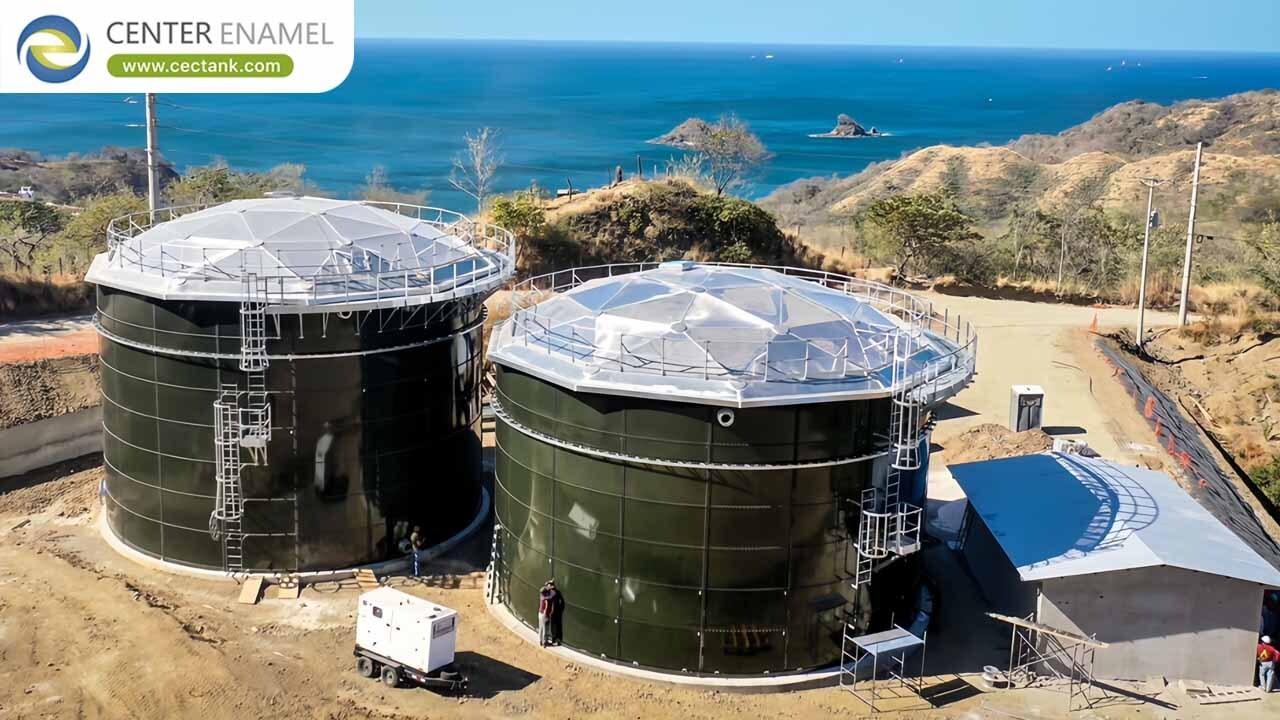
CSTR Reactor: Revolutionizing Biogas Projects for a Sustainable Future
A Technical Guide to Continuous Stirred Tank Reactor (CSTR) Technology in Anaerobic Digestion
In the global shift toward renewable energy, the Continuous Stirred Tank Reactor (CSTR) has emerged as the industry benchmark for anaerobic digestion (AD). By efficiently converting organic waste into high-yield biogas, CSTR technology is transforming waste management from an operational burden into a profitable, sustainable energy resource.
This article explores the mechanics of CSTR reactors, their role in modern biogas projects, and why they represent a critical infrastructure investment for industrial and municipal facilities.
Key CSTR Specifications
For decision-makers and engineers, here is a quick technical summary of CSTR performance:
- Process Type:Continuous anaerobic digestion.
- Mechanism:Constant mechanical mixing/stirring to maintain homogeneity.
- Feedstock Versatility:Highly adaptable to diverse organic streams, including sewage sludge, food waste, agricultural residues, and industrial effluents.
- Core Advantage:High stability and resistance to “load shocks” compared to other reactor designs.
- Best For:Industrial-scale wastewater treatment, municipal digesters, and high-strength organic waste processing.
1. Understanding CSTR Technology
A Continuous Stirred Tank Reactor (CSTR) is a biological reactor where organic feedstock is continuously fed into a vessel and mixed thoroughly by mechanical agitators. Unlike batch reactors or simpler plug-flow systems, the CSTR maintains a constant, “steady-state” environment.
The Mechanics of Efficiency
- Continuous Flow:Raw organic matter enters, and processed digestate exits, ensuring 24/7 biogas production.
- Active Homogenization:Mechanical mixers prevent stratification (layering) and the formation of “scum” crusts. This ensures bacteria have uniform access to nutrients, preventing “dead zones” inside the tank.
- Optimal Control:CSTRs allow for precise control of parameters like Hydraulic Retention Time (HRT), pH, and temperature (mesophilic or thermophilic), ensuring the microbial colony remains active and productive.
2. Why CSTR is Revolutionizing Biogas
The transition from traditional fixed-dome or simple settling tanks to CSTR technology is driven by significant improvements in efficiency and circular economy benefits.
Feedstock Flexibility
CSTRs are the “Swiss Army Knife” of biogas reactors. While other systems may struggle with viscous, high-solid, or fluctuating waste streams, a CSTR can process:
- Industrial Sludges:Thick, solids-laden waste from food processing.
- Agricultural Waste:Manure, straw, and energy crops.
- Municipal Organic Waste:Source-separated household waste.
Superior Stability
Because the entire volume is mixed, the system is less sensitive to “shocks” in the influent feed. If a batch of waste has a slightly different composition, the large, homogenized tank volume buffers the impact, keeping the microbial population stable.
3. Technical Comparison: CSTR vs. Plug Flow
Choosing the right reactor technology depends on your specific waste stream and operational goals.
| Feature | CSTR (Continuous Stirred) | Plug Flow Reactor (PFR) |
| Mixing | Active (Mechanical Stirring) | Passive (Natural flow) |
| Feedstock Flexibility | High (Handles liquids/slurries) | Moderate (Better for high-solids/manure) |
| Process Stability | High (Homogeneous mix) | Low (Sequential digestion) |
| Operational Complexity | Moderate | Low |
| Primary Use | Wastewater/Complex industrial waste | Farm-scale manure/consistent waste |
4. The Role of Advanced Engineering: Center Enamel
The performance of a CSTR is heavily dependent on the quality of the tank construction. Corrosion, leaks, and structural degradation can halt a biogas project, turning a green initiative into a maintenance liability.
Shijiazhuang Zhengzhong Technology Co., Ltd. (Center Enamel) is a global leader in providing advanced CSTR solutions. By utilizing Glass-Fused-to-Steel (GFS) technology, Center Enamel provides reactors that combine the structural strength of steel with the chemical inertness of glass.
Why Center Enamel CSTR Systems Lead the Market:
- Corrosion Resistance:The GFS surface is impervious to the acidic gases (H₂S) produced during anaerobic digestion, ensuring the tank lasts for decades without painting or recoating.
- Modular Construction:Bolted-steel panels allow for rapid, site-specific assembly, reducing capital expenditure and construction timelines.
- Custom Engineering:Every system is designed with integrated heating, automated feeding, and real-time monitoring to maximize gas yield.
Frequently Asked Questions (FAQ)
Q: Can a CSTR system be scaled up?
A: Yes. The modular design of bolted CSTR tanks allows facilities to start with the capacity they need and easily expand by adding more capacity or tanks as waste volumes increase.
Q: Does a CSTR require a lot of energy to mix?
A: While CSTRs require more energy for mixing than Plug Flow systems, the increased biogas yield—and the revenue from that energy—typically far outweighs the power consumption of the agitators.
Q: Is CSTR suitable for extreme cold climates?
A: Yes. Because the reactor is a sealed, insulated, and temperature-controlled vessel, CSTRs are widely used in cold-climate regions. They are typically equipped with heating jackets or internal heating coils to maintain the ideal temperature for bacterial activity.
Optimize Your Biogas Potential with Center Enamel
Transforming organic waste into a renewable energy asset requires robust, proven, and compliant infrastructure. With over 30 years of manufacturing excellence and nearly 200 proprietary patents, Center Enamel is your partner for high-efficiency CSTR biogas solutions. We deliver engineered infrastructure that prioritizes operational uptime, emission reduction, and long-term return on investment.
Are you currently assessing the feasibility of a biogas project, or are you looking to upgrade an existing digestion system to higher-efficiency CSTR technology?