
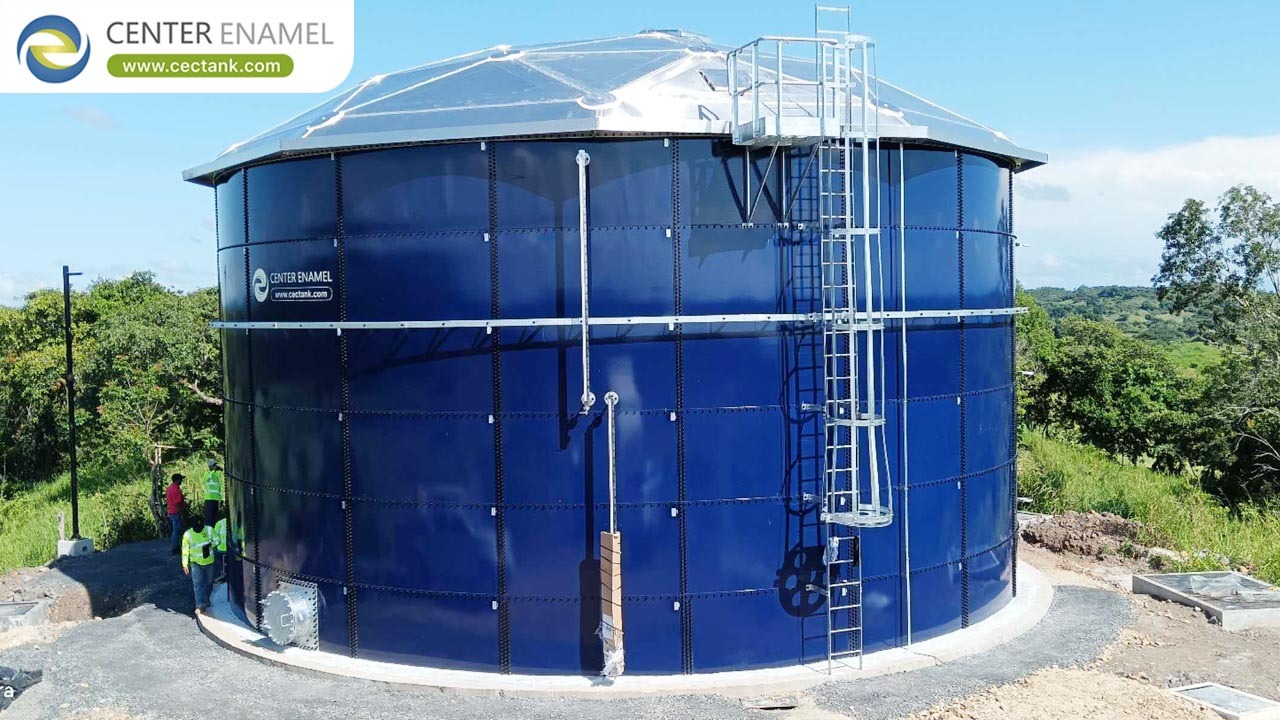
18.000 m³ Feuerlöschwassertank – NFPA- und FM-konforme Löschwasserspeicherung
Industriekomplexe, Logistikzentren, Flughäfen, Kraftwerke und kommunale Stadtviertel sind verpflichtet, spezielle Brandschutz‑Reserven vorzuhalten – und im Maßstab eines Campus liegt dieser Bedarf häufig bei 18.000 m³ (etwa 4,76 Millionen US‑Gallonen) sofort verfügbarer Wassermenge. Ein Brandschutzwassertank dieser Größe ist ein lebensrettendes Sicherheitselement: Er muss vom ersten Moment an den vorgesehenen Durchfluss und Druck liefern, seismischen und windbedingten Belastungen standhalten sowie die Anforderungen der zuständigen Behörde (AHJ), des Versicherers sowie Normen wie NFPA 22 und FM Approvals erfüllen. Betonbehälter neigen zu Rissen und Leckagen; vor Ort geschweißte Stahltanks überlassen ihre Schutzbeschichtung dem Einsatzpersonal – beides führt zu Beanstandungen bei Inspektionen, die die Inbetriebnahme verzögern.
Center Enamel liefert großvolumige Brandschutzwassertanks, konstruiert nach den strukturellen Standards AWWA D103-09, NFPA 22 und den Anforderungen von FM, mit GFS‑Paneelen, die gemäß NSF/ANSI 61 zertifiziert sind. Als erster Hersteller von glasfused‑to‑steel‑Behältern in China – mit nahezu 200 Patenten im Bereich der Emaillierung, FM‑zertifizierten Beschichtungen und Exporten in mehr als 100 Länder seit 2008 – bietet Center Enamel Brandschutzwasserspeicher, die bereits beim ersten Planprüfungsversuch bestehen.
1. Was verlangt NFPA 22 von einem 18.000 m³‑Brandschutzwassertank?
NFPA 22 regelt ortsbauweise errichtete Wassertanks für den privaten Brandschutz; die Einhaltung dieser Norm im Maßstab von 18.000 m³ bedeutet, den Tank als Bestandteil eines Brandschutzsystems und nicht als gewöhnlichen Speicher zu konstruieren.
- Saug- und Druckanschlusskonstruktion:Sorgfältig ausgelegte Anschlüsse, Antivortex‑Platten und eine optimierte Saugtankhydraulik gewährleisten, dass die Feuerlöschpumpe unter allen Entnahmesituationen den vorgesehenen Durchfluss erhält.
- Strukturelle Zuverlässigkeit:AWWA D103-09-based FEA design addresses wind, seismic, and hydrostatic loads; anchorage systems are engineered for the site’s seismic category.
- Erhaltung der Wasserqualität:the inert GFS glass surface — fired at 820-930°C, 100% holiday spark tested — prevents corrosion products and biofilm from fouling pump strainers and sprinkler heads during long standby periods.
- Zubehörkonformität:Dachluken, Entlüftungsöffnungen, Überlaufsysteme, Füllstandsmessgeräte, Frostschutzvorrichtungen sowie OSHA‑konforme Zugänge runden das NFPA‑22‑Paket ab.
2. Warum GFS‑Schraubbehälter im Brandschutz besonders überzeugen
Brandschutzwasser steht jahrelang still und muss jederzeit einwandfrei funktionieren – ein Einsatzprofil, das inerte, wartungsfreie Behälter belohnt und aufgetragene Beschichtungen bestraft.
- Korrosionsbeständigkeit im Stillstand:Stehendes, wenig bewegtes Wasser greift unbeschichteten oder schlecht beschichteten Stahl stark an; die inerte Glasschicht verhindert die Bildung von Korrosionsprodukten, die sonst auf die Feuerlöschtechnik übergehen würden.
- FM-zertifizierte Beschichtungsoption:Center Enamel’s FM-certified coating systems align with insurer requirements for approved components — a direct benefit during property insurance underwriting.
- Schnelle Bereitstellung:Die Montage von verschraubten Paneelen verkürzt die Bauzeit auf wenige Wochen und sichert so die Fertigstellungsfristen sowie die Einhaltung der versicherungsrechtlichen Fristen.
- 30–50 Jahre Lebensdauer des Gehäuses:Keine Nachbeschichtungsprogramme sorgen dafür, dass das Brandschutzwasser‑Anlagensystem über Jahrzehnte hinweg konform und inspektionsbereit bleibt.
3. Realisierung eines Brandschutzwasserprojekts mit 18.000 m³
Im Maßstab eines Campus entscheidet die Disziplin der Lieferung – einschließlich Engineering, Logistik und Inbetriebnahme – darüber, ob der Tank zum Zeitpunkt der Beantragung der Nutzungsbescheinigung einsatzbereit ist.
- Konfigurationsflexibilität:18.000 m³ können als ein einzelner Tank oder in einer redundanten Mehrzellenanordnung (zum Beispiel 2 x 9.000 m³) geliefert werden, wodurch Inspektion und Wartung möglich sind, ohne den Schutz zu beeinträchtigen – Center Enamel entwickelt beides je nach Projekt.
- Einheitlicher Beschaffungsumfang:Tankkörper, Dach (einschließlich Aluminium‑Geodätikdome‑Optionen), Mannlöcher, Flansche, Leitern, Plattformen sowie Instrumentenanschlüsse werden als einheitliches, ingenieurtechnisch abgestimmtes Paket geliefert.
- Globale Logistik und Überwachung:Containerlieferungen und Montageüberwachung in über 100 Ländern gewährleisten, dass auch abgelegene Industriestandorte termingerecht fertiggestellt werden.
- Inbetriebnahmehilfe:Hydrostatische Prüfverfahren und entsprechende Dokumentation unterstützen die Akzeptanz durch Behörden und Versicherer bereits beim ersten Antrag.
| Bewertungskriterium | Zentrum emaillierter GFS-Feuerwassertank | Beton-Feuerwassertank | Beschichteter geschweißter Stahltank |
| Einhaltung von Normen | Engineering gemäß AWWA D103-09 + NFPA 22, FM-zertifizierte Beschichtungsoptionen | Kundenspezifische Ausführung; Anpassungen gemäß NFPA 22 variieren | Nur konform, wenn die Feldbeschichtung hält |
| Qualität des Reserve-Wassers | Überlegen – inertes Glas, keine Korrosionsprodukte | Schlecht – Auslaugung und Rissbildung | Mäßig – Korrosionsprodukte infolge von Beschichtungsdefekten |
| Bauweise-Geschwindigkeit | Schnell – verschraubte Montage innerhalb weniger Wochen | Sehr langsam – monatelange Gussarbeiten | Langsam – Schweißen plus Feldbeschichtung |
| Seismische und windbedingte Widerstandsfähigkeit | Hoch – FEA‑geprüft entsprechend der Standortkategorie | Mäßig – Rissbildung bei seismischen Ereignissen | Mäßig – Risiko von Beschichtungsschäden an Verbindungsstellen |
| Lebenszyklus und Wartung | Minimal – 30–50 Jahre Konstruktionslebensdauer | Hoch – Reparatur‑ und Abdichtungszyklen | Hoch — erneute Beschichtung alle 5–10 Jahre |
Ingenieurtechnische Sicherheit
Jedes Projekt für Brandschutzbehälter umfasst FEA‑Berechnungen gemäß AWWA D103‑09, eine mit NFPA 22 abgestimmte Auslegung der Anschlüsse und Zubehörteile, FM‑zertifizierte Beschichtungsoptionen, NSF/ANSI‑61‑Oberflächen in Trinkwasserqualität sowie die ISO‑9001‑/45001‑Zertifizierung der Fertigung – das vollständige Paket für die Planprüfung durch die zuständige Behörde (AHJ) und die Underwriting‑Prüfung nach FM Global‑Standard.
Häufig gestellte Fragen (FAQ)
Wie viel Wasser enthält ein Brandschutzbehälter mit einem Volumen von 18.000 m³?
18.000 m³ entsprechen etwa 4,76 Millionen US‑Gallonen – eine Reserve im Campus‑Maßstab, die üblicherweise als ein großer Behälter oder in einer redundanten Mehrbehälter‑Anordnung ausgeführt wird. Center Enamel plant die Geometrie, die Saug‑Hydraulik sowie die seismische Verankerung gemäß NFPA 22 und AWWA D103‑09.
Welche Normen gelten für Brandschutzwassertanks?
NFPA 22 regelt private Brandschutzwassertanks in Nordamerika; dabei werden die Zulassungen von FM Approvals von Versicherern anerkannt. Die strukturelle Auslegung erfolgt gemäß AWWA D103‑09 für geschraubte Tanks. Center Enamel liefert eine ingenieurtechnische Ausführung, die allen drei Normen sowie dem OSHA‑konformen Zugang entspricht.
Warum GFS für die Brandwasserspeicherung wählen?
Fire water stands stagnant for years; GFS’s inert glass surface generates no corrosion products to foul pumps and sprinklers, carries FM-certified coating options, and needs no recoating for a 30-50 year life.
Können Brandschutzbehälter individuell angepasst werden?
Ja – sowohl einzelne als auch redundante Mehrzellen‑Konfigurationen, Kuppel‑ oder Kegeldächer, Frostschutz, Füllstandsmesssysteme sowie sämtliche Zusatzkomponenten gemäß NFPA 22 werden projektspezifisch ausgelegt; eine Aufsicht bei der Errichtung ist weltweit verfügbar.