
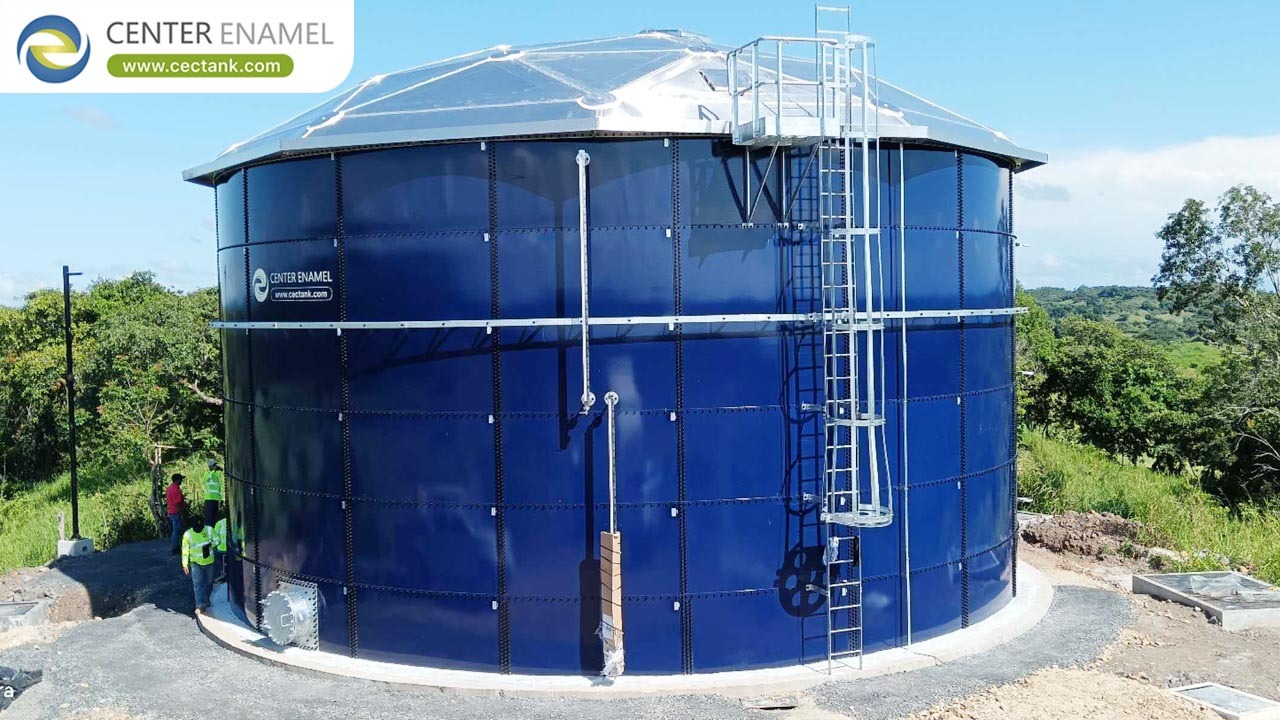
50 m³ glasfused-to-steel-Tank – kompakte GFS-Lagerung für Kleinanwendungen
Nicht jeder Speicherbedarf ist ein Megaprojekt. Bauernhöfe, Ranches, Aquakulturbetriebe, kleine Industrieanlagen und abgelegene Gemeinden benötigen regelmäßig zuverlässige 50 m³ (etwa 13.200 US-Gallonen) Speicherkapazität – sei es für Bewässerungswasser, Tränkwasser für Nutztiere, Regenwassernutzung, Brandschutzreserve oder Prozessflüssigkeiten. Bei dieser Größenordnung stoßen Käufer auf eine Lücke: Dünnwandige Kunststofftanks altern und reißen bereits nach wenigen Jahren, vor Ort geschweißter Stahl ist abhängig von Baustellenteams und Feldlackierungen, und Beton ist sowohl kosten- als auch zeitintensiv überdimensioniert. Ein kleiner Tank muss dennoch ein langlebiger Tank sein.
Der 50 m³ große Glas-auf-Stahl‑Tank (GFS) von Shijiazhuang Zhengzhong Technology Co., Ltd (Center Enamel) schließt diese Lücke mit derselben Technologie, die auch in kommunalen Reservoiren eingesetzt wird: eine Glasschicht, die bei 820–930 Grad Celsius auf Stahl aufgeschmolzen wird, 100% hochspannungsgeschützt funkengetestet und gemäß AWWA D103-09 konstruiert, mit NSF/ANSI 61 zertifizierten Oberflächen für Trinkwasseranwendungen. Als erster GFS‑Tankhersteller in China bringt Center Enamel über 200 Patentierungen im Bereich der Emaillierung in ein kompaktes, kostengünstiges Paket ein.
1. Warum ein 50-m³-Glas‑auf‑Stahl‑Tank bei kleinen Anwendungen die Alternativen übertrifft
Bei 50 m³ entscheidet weiterhin die Korrosionsbeständigkeit, Lebensdauer und Installationskosten – und die mit Glas beschichtete Oberfläche gewinnt in allen drei Punkten, unabhängig von der Tankgröße.
- Echte Korrosionsbeständigkeit:Die bei 820–930 Grad Celsius eingebrannte Glasschicht ist chemisch inert und kann weder abblättern noch blähen. Kunststofftanks oxidieren und reißen; verzinkter Stahl korrodiert in aggressivem Wasser; GFS jedoch nicht.
- Trinkwasser-zertifizierte Oberfläche:Das nach NSF/ANSI 61 und WRAS zertifizierte Glas erfüllt Trinkwassernormen, sodass ein kompakter Tank Wohnhäusern, Gemeinden und Nutztieren dieselbe zertifizierte Qualität bietet wie ein kommunales Reservoir.
- Kompakte Schraubverbindungslieferung:Der 50-m³-Tank wird als kompaktes Paneel-Paket geliefert und lässt sich innerhalb weniger Tage mit Handwerkzeugen aufbauen – ohne Schweißen, ohne Feldlackierung und ohne kranabhängige schwerer Lasten.
- Überprüfbare Fabrikqualität:Jedes einzelne Paneel besteht vor dem Versand unter ISO‑9001‑Kontrolle einen 100%-Hochspannungs‑Fehlerstromprüfstand, sodass der kleine Tank dieselbe Qualitätsbeweise liefert wie die größten Modelle.
2. Typische 50 m³ GFS-Tankkonfigurationen
Ein 50-m³‑GFS‑Tank ist dimensionsmäßig kompakt – etwa 3,3 m Durchmesser mal 6 m Höhe oder eine ähnlich angepasste Geometrie – und seine Zubehörteile sind entsprechend der jeweiligen Einsatzanforderungen ausgelegt.
- Dimensionierungskonzept:Die Ingenieure von Center Enamel optimieren das Verhältnis von Durchmesser zu Höhe hinsichtlich des Platzbedarfs vor Ort, der Pumpenansaugung sowie der Windlast; typische 50-m³‑Konfigurationen passen problemlos auf eine kleine Betonplatte oder ein kompaktes Fundament.
- Aufgabenangepasste Zubehörteile:Flansche für Zu- und Abläufe, Mannlöcher, Dachluken, Entlüftungsöffnungen, Leitern und Plattformen – konfiguriert je nach Anwendungsbereich wie Wasserversorgung, Bewässerung, Brandschutzreserve oder Prozessbetrieb.
- Dachoptionen:Ein konisches Dach für den Standardbetrieb oder eine Aluminium‑Geodätische Kuppel, wenn eine wartungsfreie, korrosionsfreie Abdeckung bevorzugt wird.
- Mehr-Tank-Anordnungen:Mehrere 50-m³‑Einheiten können parallel miteinander verbunden werden, wenn Betreiber modulare Redundanz gegenüber einem einzigen großen Tank bevorzugen.
3. Anwendungen und Installation im Maßstab von 50 m³
Kompakte GFS-Tanks beweisen ihre Leistungsfähigkeit in Branchen, in denen Zuverlässigkeit auf kleinstem Raum gefordert ist.
- Landwirtschaft und Viehzucht:Trinkwasserspeicherung, Bewässerungspuffer und Gülleaufbereitung, wo die inerte Oberfläche Düngemitteln sowie wechselnden Wasserchemien standhält.
- Aquakultur:Saubere, inerte Lagerung für Zusatzwasser und Vorratswasser, mit nach NSF/ANSI 61 zertifizierten Oberflächen zum Schutz des Inhalts.
- Regenwassernutzung und Brandschutzreserve:Kompakte Reservebehälter für Campusanlagen, Gästehäuser und Industriestandorte; derselbe Tank erfüllt auch kleinräumige Notfallreserveanforderungen gemäß NFPA-Norm.
- Installation überall möglich:Schraubmontage auf einem kompakten Fundament, mit FEA-geprüftem Design für lokale Wind- und Erdbebengegebenheiten – selbst an abgelegenen Standorten und Inseln, die per Standardcontainer erreicht werden können.
| Bewertungskriterium | 50 m³ GFS-Tank (zentral emailliert) | Kunststoff-/Polymer-Tank | Feldgeschweißter Kohlenstoffstahl |
| Korrosionsbeständigkeit | Überlegen – Glasbrand bei 820–930 °C, 100%-Funkenprüfung | Ungünstig – UV-Oxidation, Spannungsrissbildung innerhalb von 5–10 Jahren | Mäßig – Risiko durch Feldbeschichtung und Schweißarbeiten |
| Trinkwasserkonformität | NSF/ANSI 61- und WRAS-zertifiziertes Glas | Variabel; Bedenken hinsichtlich der Auslaugung | Zertifizierung der Beschichtung variiert |
| Installation | Schnell – kleine Paneelbaugruppe, Befestigung mittels Handwerkzeug | Schnell, jedoch Kran erforderlich für einteiligen Tank | Langsam – Schweißen und Feldlackierung |
| Lebenszyklus und Wartung | Minimal – 30–50 Jahre Konstruktionslebensdauer | Ersatz innerhalb von 10–15 Jahren üblich | Neuversiegelung alle 5–10 Jahre |
| Qualitätsnachweis | Fabrik-Brandprüfungsprotokolle je Paneel | Herstellerangaben zur Chargenqualität | Nur Feldinspektion |
Ingenieurtechnische Sicherheit
Der 50-m³-GFS-Tank wird mit FEA-geprüftem strukturellen Design gemäß AWWA D103-09, potable Zertifizierung nach NSF/ANSI 61, 100%-Holiday-Funkenprüfprotokollen sowie ISO 9001/45001-Fertigungsstandards geliefert – dieselbe Konstruktionsdatei, die auch für Tanks verwendet wird, die 100-mal so groß sind.
Die Tankgröße beeinflusst die Logistik, nicht die Physik. Ein 50 m³ großer GFS‑Tank verfügt über dieselbe gebrannte Glasschicht und dieselben Prüfprotokolle wie unsere 10.000 m³ großen Reservoire – denn die Wasserqualität bleibt auch im kleinen Maßstab unbeeinträchtigt. — Senior‑Emaillierungstechniker, Shijiazhuang Zhengzhong Technology Co., Ltd (Center Enamel)
Häufig gestellte Fragen (FAQ)
Wie groß ist ein 50 m³ großer Glas-auf-Stahl-Tank?
50 m³ entsprechen etwa 13.200 US-Gallonen. Eine typische Konfiguration hat ungefähr einen Durchmesser von 3,3 m und eine Höhe von 6 m; sie wird entsprechend der Standfläche und dem Pumpensaugdruck projektspezifisch angepasst. Der Tank wird flach verpackt in einem kleinen Container verschickt und lässt sich innerhalb weniger Tage aufbauen.
Ist ein kleiner GFS-Tank für Trinkwasser sicher?
Ja. Die Glasoberfläche ist gemäß NSF/ANSI 61 und WRAS für den Kontakt mit Trinkwasser zertifiziert, sodass ein 50 m³ großer GFS-Tank die gleiche zertifizierte Qualität wie ein kommunales Reservoir für Trinkwasser aufweist.
Wie lange hält ein 50 m³ GFS-Tank?
30–50 Jahre bei minimaler Wartung. Die bei 820–930 °C eingeschmolzene Glasschicht kann nicht abblättern, blasen oder reißen wie Kunststoff oder Feldlacke; daher wird die Lebensdauer durch die Stahlkonstruktion bestimmt – nicht durch alternde Beschichtungen.
Kann der 50 m³ Tank individuell angepasst werden?
Ja – das Verhältnis von Durchmesser zu Höhe, die Dachform (Kegel oder Aluminium-Geodätendom), Zubehörteile (Flansche, Mannlöcher, Leitern, Plattformen) sowie Anordnungen mehrerer Tanks werden je nach Anwendung und örtlichen Gegebenheiten konstruiert.