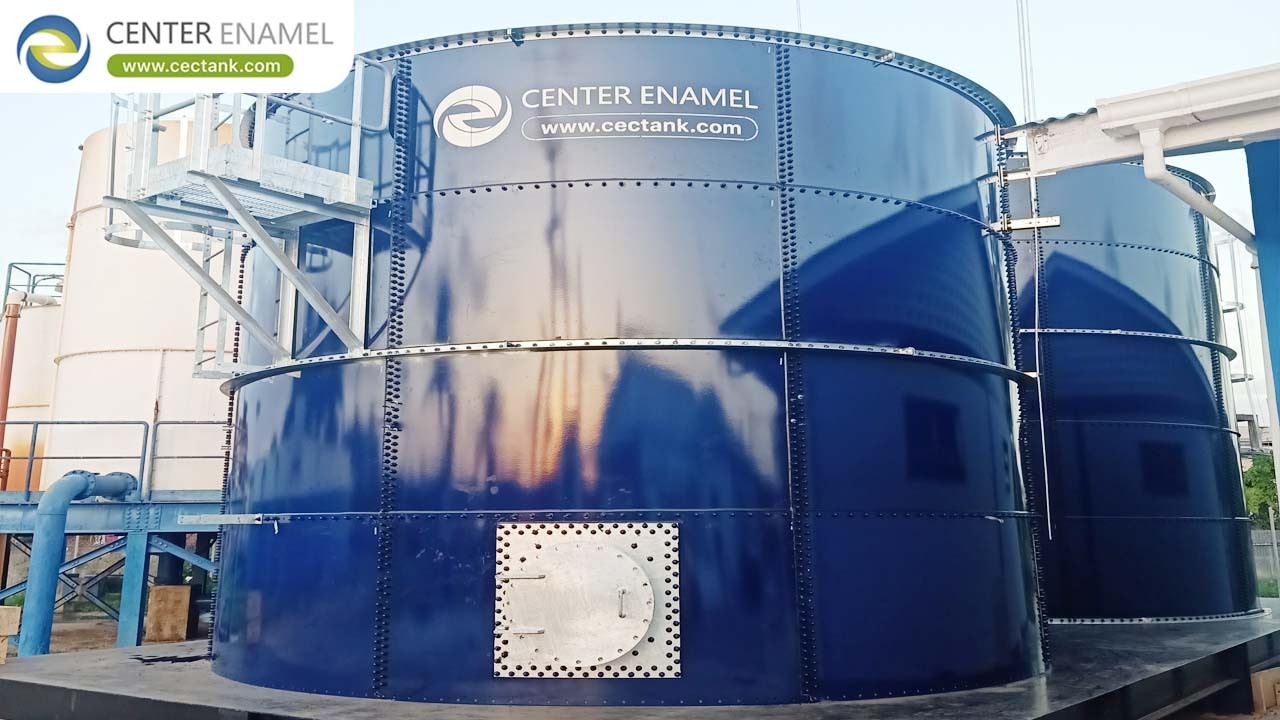
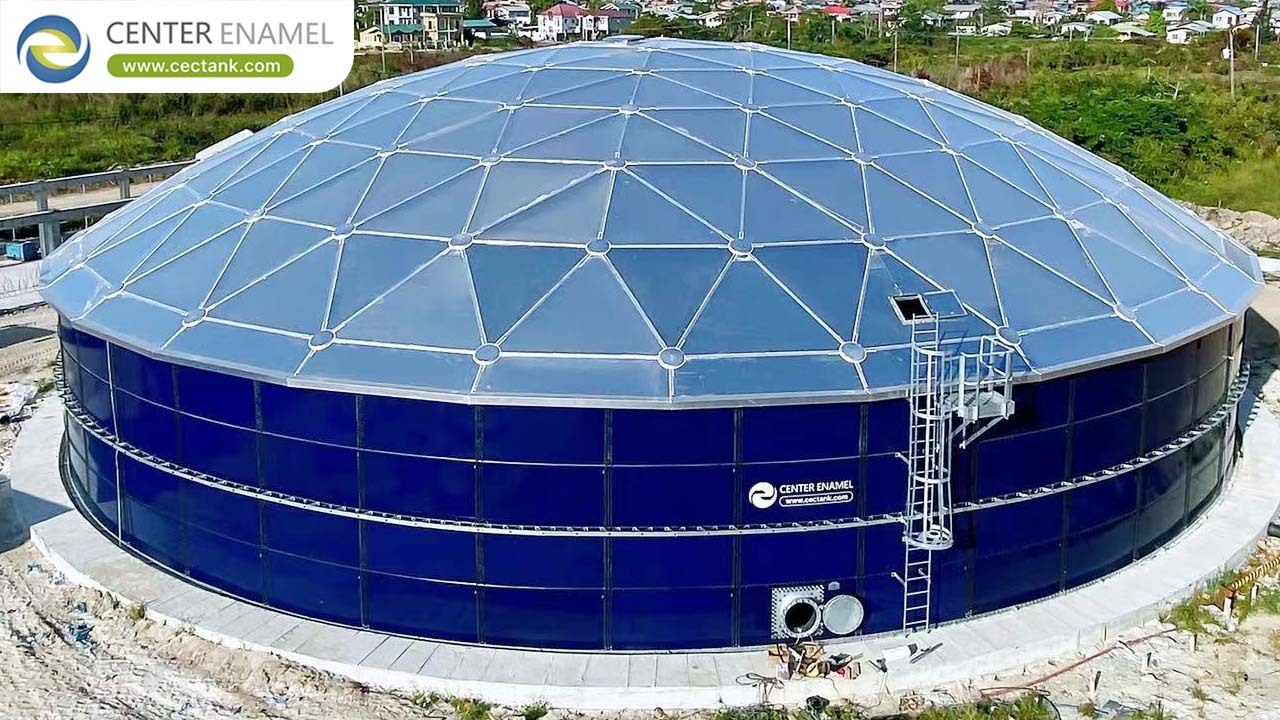
GFS‑Anaerobreaktoren: Die ideale Lösung für Biogasprojekte
Direkte Antwort: Glas-geglüht-auf-Stahl (GFS)-Anaerobbehälter sind aufgrund ihrer überlegenen Korrosionsbeständigkeit gegenüber Schwefelwasserstoff ($H_2S$) und organischen Säuren, ihres modularen Designs für eine schnelle Inbetriebnahme sowie einer Lebensdauer von über 30 Jahren bei minimalem Wartungsaufwand die branchenführende Lösung für Biogasprojekte. Im Gegensatz zu Beton oder herkömmlichem geschweißtem Stahl bieten GFS-Tanks eine luftdichte, inerte Umgebung, die die Methanausbeute maximiert und gleichzeitig die langfristigen Betriebskosten (OPEX) senkt.
Warum GFS-Technologie die Zukunft des Biogases ist
Die anaerobe Vergärung (AD) ist ein anspruchsvoller, chemisch aggressiver Prozess. Organische Abfälle wie Gülle, Lebensmittelabfälle und Klärschlamm zerfallen in flüchtige Fettsäuren und Schwefelwasserstoff – Verbindungen, die herkömmlichen Kohlenstoffstahl schnell angreifen und porösen Beton erodieren lassen.
Die GFS-Technologie – bei der Glasemail bei Temperaturen von 820°C–930°C– erzeugt eine porenfreie, chemisch inerte Barriere. Diese Verschmelzung bildet das entscheidende Element für eine zuverlässige Biogasinfrastruktur und gewährleistet, dass die Behälterkonstruktion unabhängig vom pH-Wert des eingesetzten Substrats stabil bleibt.
Technische Vorteile: GFS im Vergleich zu herkömmlichen Materialien
Bei der Planung einer AD-Anlage beeinflusst die Wahl des Behältermaterials direkt die Rentabilität des Projekts. Die folgende Tabelle verdeutlicht, warum GFS zum Maßstab moderner Biogasanlagen geworden ist:
| Merkmal | Glas-geglühter Stahl (GFS) | Feldgeschweißter Stahl | Betonbehälter |
| Korrosionsbeständigkeit | Überlegen (Glas ist inert) | Niedrig (Muss häufig neu beschichtet werden) | Mäßig (säureempfindlich) |
| Montagegeschwindigkeit | Schnell (Modular/Hubsystem) | Mäßig (Erfordert Schweißarbeiten) | Langsam (Aushärtezeit) |
| Wartungsbedarf | Minimal | Hoch (Strahlen/Malen) | Mäßig (Rissreparatur) |
| Lebensdauer | Über 30 Jahre | 15–20 Jahre | 50+ Jahre (bei hoher Qualität) |
| Gasdichtheit | Ausgezeichnet (Fabrikgetestet) | Variabel (Schweißqualität) | Schlecht (anfällig für Risse) |
Wichtige Leistungstreiber für Betreiber von Biogasanlagen
1. Verbesserte Gasdichtheit und Sicherheit
Die Biogasproduktion hängt von der Einhaltung strenger anaerober Bedingungen ab. GFS-Schraubbehälter werden mit präzisionsgestanzten Paneelen und hochwertigen EPDM-/Viton-Dichtungsmassen gefertigt. In Kombination mit Doppelmembrangasbehältern bieten sie eine luftdichte Umgebung, die Methanleckagen verhindert, die Sicherheitsvorschriften einhält und das Gasvolumen, das an Blockheizkraftwerke (BHKW) oder Aufbereitungssysteme weitergeleitet wird, maximiert.
2. Kompatibilität mit fortschrittlichen AD-Prozessen
GFS-Behälter sind das bevorzugte Gefäß für komplexe Biogastechnologien, darunter:
- CSTR (Kontinuierlich gerührte Tankreaktoren):Die glatte Innenseite der GFS-Wände verhindert Schlamm-“Totzonen” und sorgt so für eine gleichmäßige Temperaturverteilung sowie effizientes Mischen.
- UASB-/IC-Reaktoren:Die antihaftbeschichtete Oberfläche erleichtert eine bessere Granulierung der Biomasse und führt zu höheren Abbauraten des chemischen Sauerstoffbedarfs (COD).
3. Schnelle Errichtung durch “Top-Down”-Montage
Die modulare GFS-Konstruktion ermöglicht die Montage auf Bodenniveau. Mithilfe eines synchronisierten Hebesystems werden zunächst das Dach und der obere Ring errichtet und anschließend angehoben, um darunter weitere Paneele anzubringen. Dadurch entfällt der Bedarf an massiven Gerüsten, die Arbeitskosten sinken und die Zeit zwischen Baubeginn und erstem Gasausstoß wird erheblich verkürzt.
Häufig gestellte Fragen (FAQ)
F: Sind GFS-Tanks für Rohstoffe mit hohem Schwefelgehalt geeignet?
A: Ja. Schwefelwasserstoff ist äußerst korrosiv gegenüber blankem Stahl und Beton. GFS-Tanks sind speziell dafür konstruiert, sauren Umgebungen standzuhalten, wodurch sie sich ideal für schwefelreiche Ausgangsstoffe wie Klärschlamm oder bestimmte Lebensmittelabfälle eignen.
F: Können GFS-Vergärungsanlagen erweitert werden, falls mein Biogasprojekt wächst?
A: Einer der größten Vorteile der GFS-Technologie liegt in ihrer Modularität. Da der Tank aus standardisierten Paneelen besteht, ist es häufig möglich, den bestehenden Tank nach oben zu verlängern und zusätzliche Ringe am Boden anzubauen, wodurch die Kapazität effektiv erhöht wird, ohne dass eine komplett neue Anlage errichtet werden muss.
F: Benötigen GFS-Tanks innere Auskleidungen?
A: Im Gegensatz zu Betontanks oder verzinktem Stahl, die oft interne Polymerlinern benötigen, um Korrosion und Leckagen zu verhindern, sind GFS-Tanks vollständig selbsttragend. Die glasfusierte Oberfläche dient als eigene Schutzschicht, sodass regelmäßige Linerwechsel entfallen.
Prüfen Sie gerade die statischen Lastanforderungen Ihrer nächsten Biogasanlage? Ob Sie eine kommunale Kläranlage oder ein landwirtschaftliches Projekt zur Energiegewinnung aus Abfällen planen – unser Engineering-Team liefert Ihnen detaillierte Berichte zur chemischen Kompatibilität sowie standortspezifische strukturelle Planungsparameter.