
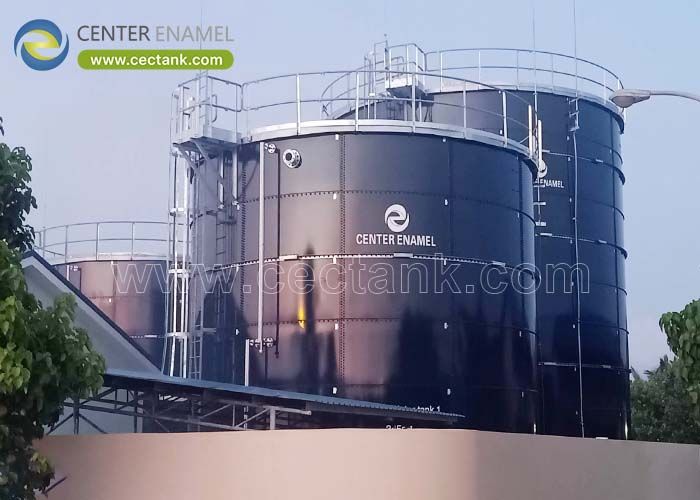
GFS-Tanks FDA-zertifiziert: Lebensmittelgeeignete Glas-auf-Stahl-Lagerbehälter
Sind GFS‑Behälter von der FDA für den Lebensmittelkontakt zugelassen?
Was macht eine Tankoberfläche lebensmittelecht?
Wie reinigt man einen lebensmittelechten GFS-Tank?
Was ist der Unterschied zwischen FDA‑ und NSF‑Zertifizierung?
Lebensmittel- und Getränkeverarbeiter stehen vor einem Problem der Behälterung, das die meisten industriellen Spezifikationen nie berücksichtigen: Das gelagerte Produkt wird letztlich verzehrt, sodass die Behälteroberfläche selbst zu einer lebensmittelsicheren Oberfläche wird. In Molkereien, Brauereien, Saft‑ und Getränkebetrieben sowie Anlagen zur Herstellung von Speiseölen folgen die Ausfälle einem vorhersehbaren Muster: Eine Beschichtung, die nie auf Lebensmittelkontakt geprüft wurde; eine Oberfläche, die Mikroporosität entwickelt, in der sich Produktreste und Bakterien ansammeln; ein Reinigungsregime, das die Geometrie nicht erreichen kann; oder eine Beschichtung, die nach wenigen Temperaturzyklen beginnt, das Produkt zu verunreinigen. Die Kosten liegen selten beim Behälter selbst, sondern betreffen vielmehr die betroffene Charge, das Risiko eines Rückrufs sowie die Feststellungen bei Audits.
Glas‑auf‑Stahl‑Verklebung ist von Natur aus hervorragend für den Lebensmittelkontakt geeignet, da die eingebrannte Glasoberfläche inert, porenfrei und glatt ist – sie verursacht weder Auslaugungen noch Verunreinigungen und bietet keinen Nährboden für bakterielle Kolonisation. FDA‑zertifizierte GFS‑Behälter belegen diese Eignung durch anerkannte Prüfungen zum Lebensmittelkontakt, statt bloß auf Behauptungen zu setzen. Shijiazhuang Zhengzhong Technology Co., Ltd. (Center Enamel) fertigt verschraubte GFS‑Behälter nach ISO 9001 mit FDA‑ und LFGB‑Zulassung für den Lebensmittelkontakt und beliefert Lebensmittel-, Getränke- sowie Agrarverarbeiter in über 100 Ländern.
1. Was bescheinigt die FDA‑Zertifizierung tatsächlich?
Die FDA‑Anerkennung für den Lebensmittelkontakt bestätigt, dass das Material unter den vorgesehenen Einsatzbedingungen für den Kontakt mit Lebensmitteln zulässig ist – basierend auf Zusammensetzungs‑ und Extraktionsprüfungen. Für eine Behälterbeschichtung bedeutet dies, dass die Oberfläche keine schädlichen oder unerwünschten Substanzen bei den im Prozess tatsächlich angewendeten Temperaturen und Kontaktzeiten an das Produkt abgibt.
Materialzusammensetzung: Die Beschichtungsformulierung wird gemäß den Anforderungen für den Lebensmittelkontakt bewertet, um sicherzustellen, dass die enthaltenen Bestandteile für die vorgesehene Verwendung geeignet sind.
Extraktionsprüfung: Die Oberfläche wird daraufhin getestet, welche Stoffe sie unter definierten Zeit‑ und Temperaturbedingungen in Lebensmittelsimulanten freisetzt – nicht nur nach ihrem äußeren Erscheinungsbild beurteilt.
Anwendungsbedingungen: Eine Zertifizierung ist nur im Hinblick auf den tatsächlichen Prozess sinnvoll – Kontaktttemperatur, Kontaktzeit und Art des Lebensmittels entscheiden über die Zulassung.
Komplementäre Normen: LFGB gilt für den europäischen Markt, während NSF/ANSI 61 den Kontakt mit Trinkwasser regelt; ein seriöser Anbieter dokumentiert jeweils, welche Zulassung für welche Anwendung gilt.
Rückverfolgbare Dokumentation: Zertifikate müssen rückverfolgbar bis zur konkreten Produktionscharge und zum jeweiligen Beschichtungssystem sein, damit ein Auditor prüfen kann, statt nur zu vermuten.
2. Warum ist eingebranntes Glas eine überlegene Oberfläche für den Lebensmittelkontakt?
Der Vorteil ist struktureller Natur und nicht rein äußerlich. Da der Zahnschmelz bei über 820 °C in den Stahl eingeschmolzen wird, entsteht eine harte, porenfreie, chemisch inerte Oberfläche ohne organische Bestandteile, die sich abbauen könnten, ohne Weichmacher, die migrieren könnten, und ohne mikroskopische Poren, die Produktreste zurückhalten oder Bakterien zwischen den Reinigungszyklen beherbergen würden.
Nichtauslaugend: Die inerte Glasoberfläche gibt keine Substanzen an das Produkt ab und gewährleistet sowohl geschmacksneutrale Eigenschaften als auch die Einhaltung gesetzlicher Vorgaben.
Porenfreie Hygiene: Eine glatte, gebrannte Oberfläche mit einer Härte von 6,0 auf der Mohs-Skala widersteht dem Mikrokratzen, das weichere Auskleidungen zu Nistplätzen für Bakterien macht.
Clean-in-Place‑Kompatibilität: Die Beschichtung verträgt heiße, ätzende und saure Reinigungszyklen, ohne sich zu erweichen; daher können CIP‑Prozesse bei Temperaturen durchgeführt werden, die tatsächlich desinfizieren.
Thermisches Zyklen: Bei über 820 °C gebildet, bleibt die Beschichtung unbeeinflusst von den Pasteurisierungs‑ und Heißabfülltemperaturen, denen Lebensmittel und Getränke während der Verarbeitung ausgesetzt sind.
Korrosionsbeständigkeit: Organische Säuren in Saft-, Würze‑ und Milchströmen greifen das Glas nicht an; somit verkürzt die Produktchemie die Lebensdauer der Behälter nicht.
3. Wo werden lebensmittelechte GFS‑Tanks eingesetzt?
Lebensmitteltaugliche GFS‑Behälter finden überall dort Anwendung, wo flüssige oder halbfeste Lebensmittel hygienisch und korrosionsbeständig gelagert werden müssen: Rohmilch und Milchströme, Würze und Bier, Saft und Konzentrate, Speiseöle, Trink‑ und Prozesswasser innerhalb der Anlage sowie Reinigung‑und‑Wiederherstellungssysteme (CIP). Zudem werden sie häufig zur Lagerung von Getreide und trockenen Schüttgütern eingesetzt, wo sowohl Kondensationskontrolle als auch direkter Lebensmittelkontakt von Bedeutung sind.
Milchverarbeitung: Lagerung von Rohmilch, Sahne und Molke, wo sowohl die Beständigkeit gegen organische Säuren als auch gegen Reinigungsmittel auf derselben Oberfläche entscheidend ist.
Brau- und Getränkeindustrie: Lagerung von Würze, Bier und Prozesswasser sowie CIP‑Rückgewinnung, ohne dass durch die Beschichtung beim thermischen Zyklus ein Fremdgeschmack entsteht.
Saft und Konzentrate: Säurehaltige Fruchtströme, die viele Auskleidungen angreifen würden, werden ohne Korrosion und ohne Geschmacksübertragung gehalten.
Essbare Öle: Lagerung von Schüttgütern wie Ölen, wobei die Inertheit die Produktqualität über lange Lagerzeiten hinweg schützt.
Prozess- und CIP-Wasser: Anlagenwasser und wiedergewonnene Reinigungslösungen – hier sorgt dieselbe inerte Oberfläche dafür, dass Kontaminationen zu keinem Zeitpunkt im Prozess auftreten.
| Bewertungskriterium | Zentrum‑Emaille‑GFS‑Tanks mit FDA‑Zertifizierung | Edelstahl‑Tanks aus 316L | Kunststoff‑ oder Polypropylen‑Tanks |
|---|---|---|---|
| Lebensmittelkontaktzertifizierung | Zertifiziert – FDA‑ und LFGB‑Abdeckung | Zertifiziert – je nach Güteklasse | Variabel – jeweils für das entsprechende Harz prüfen |
| Surface inertness & taint | Überlegen – gebranntes Glas, kein Auslaugen | Hoch – jedoch Risiko von Chlorid‑Pitting | Mäßig – kann Stoffe aufnehmen und verunreinigen |
| CIP & thermal tolerance | Hoch – ätzende, saure und heiße Prozesse | Hoch – Standard für hygienische Anforderungen | Niedrig – begrenzte Temperatur |
| Capacity & lifecycle | Hoch — große Volumina, 30–50 Jahre Lebensdauer | Mäßig – Kosten steigen mit der Größe stark an | Niedrig – begrenzte Größe, kürzere Lebensdauer |
Center Enamel produces food-grade GFS tanks on a controlled firing line: panels glass-fused at 820-930 °C for a bond that cannot delaminate, 2C2F coverage verified by 100% high-voltage holiday spark testing, and adhesion measured at 3450 N/cm². Shells are bolted with grade 8.8 fasteners and validated by finite element analysis to AWWA D103-09, produced to ISO 9001 with FDA, LFGB, NSF/ANSI 61, and CE/EN 1090 coverage, and delivered to more than 100 countries on a standard 30-day schedule with a three-year warranty.
In einem Lebensmittelbetrieb ist die Behälteroberfläche eine lebensmittelsichere Oberfläche. Spezifizieren Sie sie wie jedes andere Material, das mit dem Produkt in Berührung kommt – geprüft, zertifiziert und rückverfolgbar. — Center Enamel Team für Lebensmittel- und Getränkebehälter
Häufig gestellte Fragen (FAQ)
Sind GFS‑Behälter von der FDA für den Lebensmittelkontakt zugelassen?
Ja, sofern das Beschichtungssystem über eine FDA‑Zulassung für den vorgesehenen Einsatzbereich verfügt. Diese Zertifizierung umfasst sowohl die Materialzusammensetzung als auch Extraktionsprüfungen, sodass sichergestellt ist, dass die Oberfläche unter Prozesstemperatur und Kontaktzeit keine schädlichen oder unerwünschten Substanzen an das Produkt abgibt.
Was macht eine Tankoberfläche lebensmittelecht?
Eine lebensmittelgeeignete Oberfläche ist inert, porenfrei, ausreichend glatt, um effektiv gereinigt zu werden, und nach einem anerkannten Lebensmittelkontaktstandard zertifiziert. Sie darf weder auslaugen, noch den Inhalt verunreinigen oder zwischen Reinigungsvorgängen Bakterien beherbergen und muss zugleich den Reinigungsmitteln sowie den Temperaturen standhalten, die im jeweiligen Hygieneprogramm tatsächlich eingesetzt werden.
Wie reinigt man einen lebensmittelechten GFS-Tank?
Es gelten die üblichen Clean-in-Place‑Verfahren: heißes Laugenbad, gefolgt von einer sauren Spülung und einem Desinfektionsschritt. Die gebrannte Glasoberfläche verträgt sowohl Laugen als auch Säuren bei Desinfektionstemperaturen, und ihre Härte von 6,0 auf der Mohs‑Skala widersteht den Mikrokratzern, die weichere Auskleidungen bei wiederholten Reinigungszyklen abbauen.
Können lebensmittelechte GFS‑Tanks individuell angepasst werden?
Ja. Center Enamel passt Kapazität, Höhe‑Durchmesser‑Verhältnis, Dachtyp, Isolierung und Heizung, die Anordnung der CIP‑Sprühvorrichtungen sowie sämtliche Mannlöcher, Flansche, Leitern, Plattformen und Messinstrumente exakt an den Prozess und das Hygieneprogramm an.
Wichtige Erkenntnisse
Die FDA‑Zulassung bestätigt, dass eine Beschichtung unter festgelegten Bedingungen für den Lebensmittelkontakt geeignet ist – prüfen Sie stets, ob sie der tatsächlichen Prozesstemperatur und der jeweiligen Lebensmittelart entspricht.
Gebranntes Glas bietet eine wirklich inerte, porenfreie Oberfläche: kein Auslaugen, keine Verunreinigung und keine Ansammlung von Bakterien zwischen den Reinigungszyklen.
GFS verträgt heißes Laugen‑ und Säure‑CIP bei Desinfektionstemperaturen, was dazu beiträgt, dass ein hygienisches Reinigungsregime langfristig wirksam bleibt.
Lebensmittelgeeigneter GFS dient der Milchverarbeitung, Brauerei, Saftproduktion, Speiseölindustrie, Prozesswasseraufbereitung sowie der CIP‑Rückgewinnung – alles auf derselben inerten Oberfläche.