
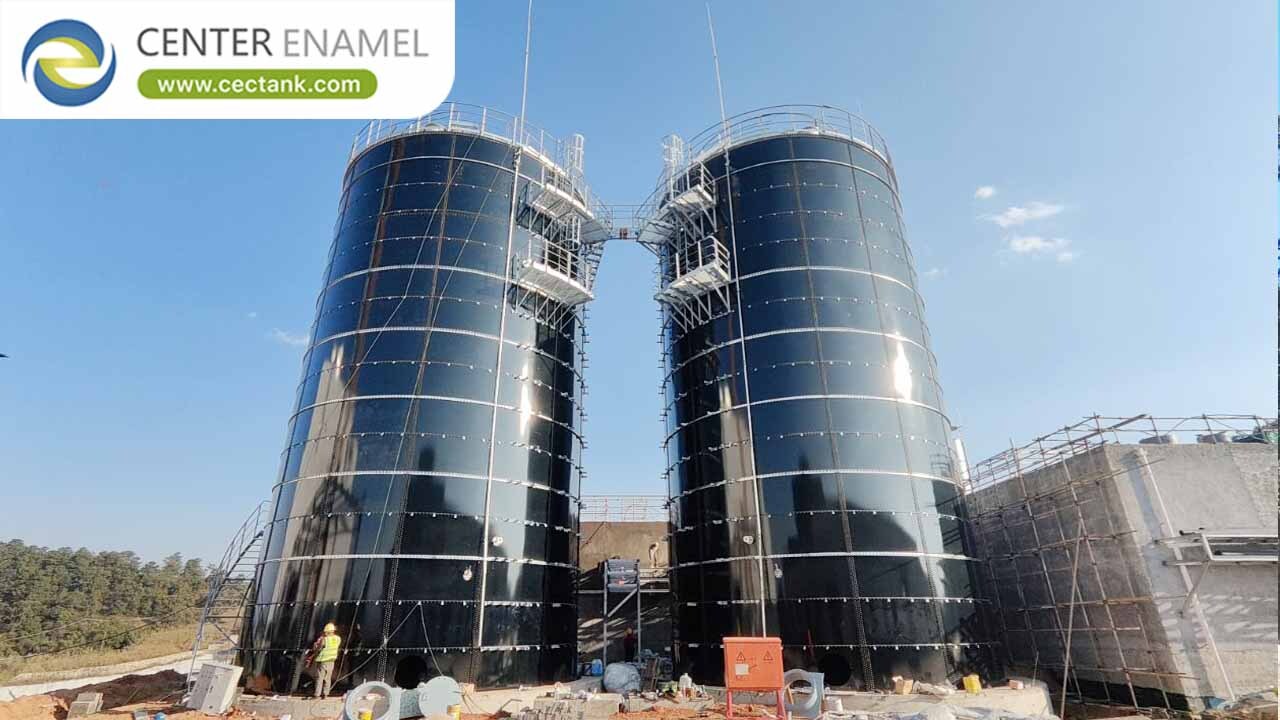
Glasbeschichteter Stahl-UASB-anaerobischer Reaktor für Abwasserbehandlungsprojekte
Im Bereich der industriellen Abwasserbehandlung – insbesondere bei hochbelasteten Abwässern aus der Lebensmittelverarbeitung, Brauereien, Papierherstellung, chemischer Verarbeitung sowie pharmazeutischen Anlagen – ist eine effiziente biologische Abbauweise organischer Schadstoffe von zentraler Bedeutung. Der Aufwärtsströmender anaerobischer Schlammdeckel (UASB) Reaktor gilt als eine der leistungsfähigsten biologischen Behandlungstechnologien und ermöglicht hohe Abbauraten des chemischen Sauerstoffbedarfs (COD), während gleichzeitig organische Abfälle in erneuerbares Biogas umgewandelt werden. Allerdings herrscht im Inneren eines UASB-Reaktors ein äußerst anspruchsvolles Betriebsumfeld: hohe Konzentrationen organischer Säuren, schwankende pH-Werte, ständiger hydraulischer Druck sowie strenge Anforderungen an die Gasdichtheit zur Methangewinnung.
Herkömmliche Betonbecken und standardmäßige geschweißte Kohlenstoffstahltanks verschleißen unter diesen aggressiven Bedingungen häufig und leiden unter Betonabbrüchen, strukturellen Gaslecks sowie schwerer innerer Korrosion. Um diese technischen Herausforderungen zu überwinden, Shijiazhuang Zhengzhong Technology Co., Ltd. (Zentrum-Emaille) liefert erstklassige Glasbeschichtete Stahl (GFS) UASB‑Anaerobreaktoren, die sowohl eine fortschrittliche Kompatibilität mit biologischen Prozessen als auch eine unübertroffene strukturelle Langlebigkeit vereinen.
Die Kernvorteile von Glasbeschichtetem Stahl in der anaeroben Vergärung
Glasbeschichteter Stahl – weithin anerkannt als Glas-geglühter Stahl (GFS)entstehen durch das Verschmelzen anorganischer Glasfritte mit hochfesten strukturellen Stahlplatten bei extrem hohen Temperaturen zwischen 820 °C und 930 °C. Diese Hochtemperatur‑Thermofusion erzeugt eine dauerhafte molekulare Bindung, die die strukturelle Zugfestigkeit des Stahls mit der absoluten chemischen Inertheit des Glases verbindet.
Vollständige Resistenz gegenüber flüchtigen Fettsäuren (VFAs): Bei anaeroben Vergärungsprozessen entstehen intermediäre organische Säuren, die unbeschichteten Kohlenstoffstahl rasch angreifen und Betonoberflächen korrodieren. Die inerte, porenfreie Glasoberfläche (Mohs-Härte 6,0) bietet vollständigen Schutz vor säurebedingter Korrosion und chemischer Zersetzung.
Überlegene Gasdichtheit für die Biogasgewinnung: UASB‑Reaktoren gewinnen wertvolles, methanreiches Biogas zur Energiekogeneration. Die modularen, verschraubten GFS‑Behälter von Center Enamel sind mit speziellen hochwertigen Dichtungen sowie luftdichten Dachkonstruktionen ausgestattet, sodass keinerlei Gasverluste auftreten und die Effizienz der Energiegewinnung maximiert wird.
Schnelle modulare Errichtung vor Ort: Im Gegensatz zu vor Ort gegossenen Betonfermentern, die monatelange Schalungsarbeiten, Betongießvorgänge sowie mehrwöchige Aushärtungszeiten erfordern, werden modulare GFS-Reaktoren in einer ISO-zertifizierten Fabrik vorgefertigt und vor Ort schnell verschraubt, wodurch sich die Inbetriebnahmefristen des Projekts erheblich verkürzen.
Technische Merkmale zentrierter emaillierter UASB‑Systeme
Das Engineering‑Team von Center Enamel konzipiert jeden UASB‑Reaktor individuell, um die biologische Schlammrückhaltung und die hydraulische Verteilung zu optimieren:
Präzise Dreiphasen-Separatoren: Integrierte interne Komponenten zur Gas‑Flüssig‑Feststofftrennung gewährleisten eine effiziente Biomasse‑Rückhaltung und ermöglichen gleichzeitig eine saubere Trennung von gereinigtem Wasser und Biogas.
Optimierte Höhe-Durchmesser-Verhältnisse: Optimiert auf eine ideale Aufwärtsströmungsgeschwindigkeit ausgelegt, verhindert dies das Auswaschen von Schlamm und maximiert die Kontaktzeit zwischen Abwasser und aktiven anaeroben Granulaten.
Umfassende Qualitätssicherung: Jedes GFS‑Paneel durchläuft strenge Werksprüfungen, einschließlich der 100%‑Hochspannungs‑Fehlerstrom‑Entladungstests, um eine absolute Beschichtungskontinuität vor dem Versand sicherzustellen.
Vergleichsmatrix: UASB‑Anaerobreaktor‑Technologien
| Bewertungskriterium | Center Enamel glasbeschichteter Stahl‑UASB‑Reaktor | Ortsgießbarer Beton-UASB-Tank | Traditioneller geschweißter Stahl-UASB-Tank |
| Korrosions- und Säurebeständigkeit | Überlegen (Inerte Glasbeschichtung widersteht VFAs, Schwefelwasserstoff und aggressiven Chemikalien) | Mäßig (Anfällig für Betonkarbonatisierung, Säureabplatzungen und Korrosion der Bewehrung) | Niedrig (Erfordert kontinuierliche Innenbeschichtung mit Epoxidharz sowie regelmäßige Wartung) |
| Gasdichtigkeit und Biogassicherheit | Hoch (Durch speziell entwickelte Dichtungen und versiegelte Dachkonstruktionen wird ein vollständiger Methanaustritt vermieden) | Mäßig (Im Laufe der Zeit anfällig für Mikrorisse und Gasdurchsickerung an Fugen) | Mäßig (Schweißnähte neigen zu Lochfraßbildung und Gasdurchlässigkeit) |
| Montagegeschwindigkeit | Schnell (Vorgefertigte modulare Paneele werden vor Ort rasch verschraubt) | Sehr langsam (Monate der Schalung, des Gießens und der Aushärtungsphasen) | Mäßig (Erfordert umfangreiche Arbeiten vor Ort wie Walzen und Schweißen von Platten) |
| Lebenszyklus und Wartung | Minimal (30 bis über 50 Jahre wartungsfreier Betrieb; keine Innenraum-Neulackierung) | Hoch (Erfordert häufige Abdichtung struktureller Risse sowie Reparaturen der Innenauskleidung) | Hoch (Ständige Korrosionsüberwachung und Neuanstrich erforderlich) |
Technische Gewährleistung: Center Enamel bietet umfassende Berechnungspakete für die strukturelle Auslegung sowie Unterstützung bei der Prozessintegration, um sicherzustellen, dass jeder GFS-UASB‑Anaerobreaktor strikt den internationalen Standards entspricht, einschließlich ISO 28765 und AWWA D103-09.
Häufig gestellte Fragen (FAQ)
F: Warum ist Glasbeschichteter Stahl (GFS) ideal für UASB‑Anaerobreaktoren?
A: Glaskaschierte Stahltanks vereinen eine hohe strukturelle Zugfestigkeit mit einer inerten, porenfreien Glasoberfläche, die vollständig gegen flüchtige Fettsäuren (VFAs), Schwefelwasserstoff sowie chemische Korrosion, die während der anaeroben Vergärung entsteht, immun ist, und so eine Lebensdauer von über 30 Jahren gewährleistet.
F: Wie werden Biogas-Abscheidung und -Sicherheit in GFS-UASB‑Reaktoren bewältigt?
A: Die UASB‑Reaktoren von Center Enamel sind mit speziellen gasdichten Dachkonstruktionen sowie hochwertigen elastomeren Dichtungsdichtungen ausgestattet, die darauf ausgelegt sind, methanreiches Biogas sicher einzuschließen, ohne Umweltbelastungen oder Druckverluste zu verursachen.
F: Können GFS-UASB‑Reaktoren für wachsende Industrieanlagen skaliert oder erweitert werden?
A: Ja. Aufgrund ihrer modularen Schraubkonstruktion können die Reaktoren von Center Enamel durch Hinzufügen weiterer Ringstufen erweitert oder bei Änderungen des Durchsatzbedarfs der Industrieanlage demontiert und umgesiedelt werden.
F: Welche Arten industrieller Abwässer lassen sich am besten mit den UASB‑Systemen von Center Enamel behandeln?
A: UASB‑Anaerobreaktoren sind äußerst effektiv bei hochbelasteten industriellen Abwässern mit hohen CSB‑Konzentrationen, einschließlich Abläufen aus der Lebensmittel‑ und Getränkeverarbeitung, der Brauerei‑ und Destillerieindustrie, Papierfabriken sowie der chemischen Industrie.