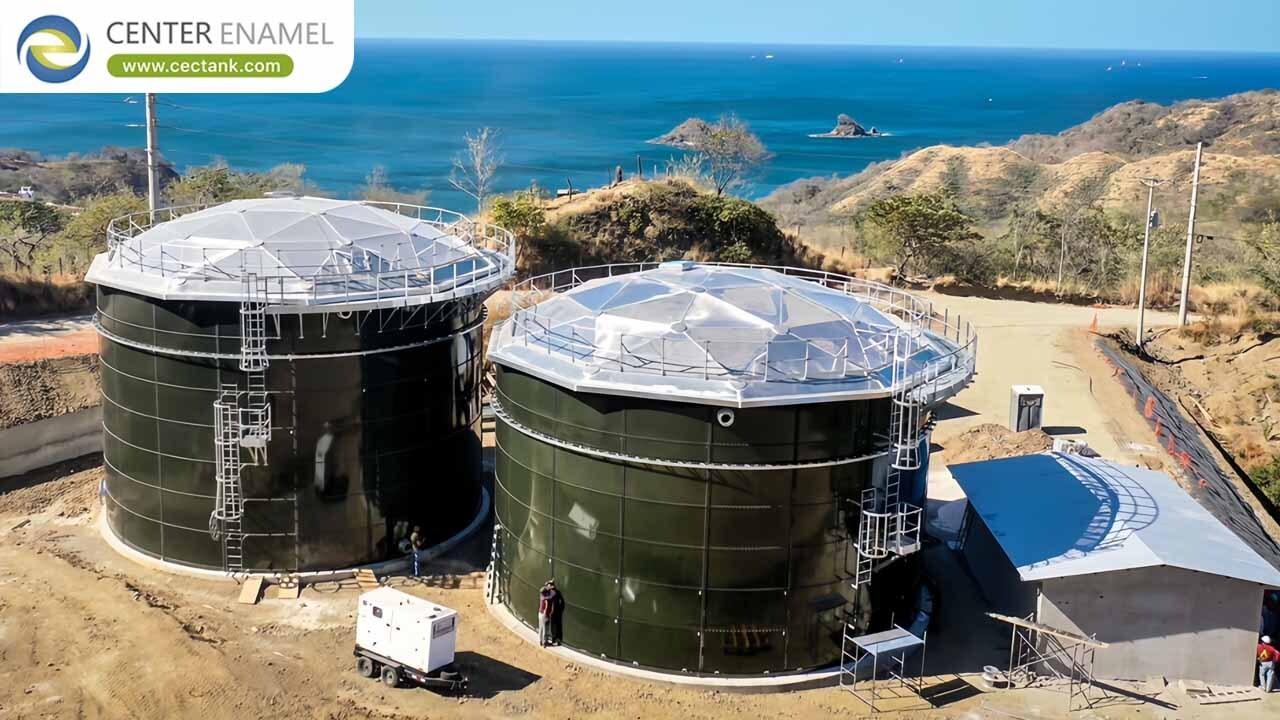
Hochwertige Behältertechnik: Verschraubte Stahltanks von 20 m³ bis 60.000 m³ von Center Enamel
Für Ingenieurberater, Betreiber industrieller Anlagen sowie kommunale EPC-Auftragnehmer, die hochleistungsfähige Flüssigkeitsbehälter benötigen, Shijiazhuang Zhengzhong Technology Co., Ltd (Zentrum emailliert) liefert weltweit führende verschraubte Stahltanksysteme, die ein beispielloses Volumenspektrum abdecken, von 20 m³ bis 60.000 m³. Betrieb einer hochmodernen 150.000 m² große intelligente Produktionsbasis und unterstützt durch nahezu 200 firmeneigene Patente, entwickelt Center Enamel modulare Behälteranlagen unter Verwendung fortschrittlicher Technologien wie glasfused-to-steel (GFS), fusion-bonded epoxy (FBE), Edelstahl (304/316L) sowie feuerverzinktem Stahl. Diese Systeme bieten eine außergewöhnliche 30 bis über 50 Jahre Lebensdauer und entsprechen vollständig strengen internationalen Normen der Ingenieurbaukunst, darunter AWWA D103-09, ISO 28765 sowie NSF/ANSI 61.
1. Strukturtechnik über das gesamte Volumenspektrum hinweg
Die Konstruktion eines Behälters, der zuverlässig sowohl kleinräumige, lokal begrenzte Lagerungen (20 m³) als auch monumentale, netzgroße Reservoire (60.000 m³) bewältigen kann, erfordert tiefgehende Fachkenntnisse in Statik und Metallurgie. Bei kleineren Volumina liegt der Schwerpunkt auf der Optimierung der kompakten Grundfläche und einer schnellen lokalen Bereitstellung. Sobald jedoch ein Tank die Grenze von 10.000 m³, überschreitet, verwandelt er sich in ein hochbelastetes strukturelles Bauwerk, das extremen mechanischen Beanspruchungen ausgesetzt ist.
Hydrostatischer Druck und Umfangsspannungsbewältigung
Mit zunehmendem Flüssigkeitsvolumen steigt der hydrostatische Druck, der auf die unteren Ringbereiche wirkt, erheblich an. Zur Berechnung des erforderlichen Grundwiderstands bei Hochkapazitätsbehältern analysieren Ingenieure die auf die zylindrische Wand wirkenden Umfangsspannungen mithilfe folgender Formel:
Um diesen Kräften sicher entgegenzuwirken, setzt Center Enamel eine variabler Plattendickengradient. Die unteren Ringsegmente werden aus dicken, hochfesten Baustahlplatten (bis zu 12 mm oder mehr) gefertigt, um die maximalen hydrostatischen Lasten aufzunehmen, während die oberen Ringe eine dünnere Materialstärke verwenden, um das Gesamtgewicht zu reduzieren und die Kosten für die Fundamentinfrastruktur zu senken.
2. Multi-Material-Behältermatrix: Maßgeschneiderte Beschichtungstechnologie
Ein Markenzeichen des weltweiten Erfolgs von Center Enamel in über 100 Ländern ist sein unvoreingenommener, multimaterialer Ansatz. Anstatt ein einziges Material für alle Anwendungen einzusetzen, passt das Unternehmen das jeweilige chemische und physikalische Profil des Zielabwassers exakt der optimalen metallurgischen Beschichtung an.
Glas-geglüht-auf-Stahl (GFS)-Tanks
Die absolut erstklassige Wahl für aggressive Flüssigkeiten, kommunales Abwasser, Deponiesickerwasser sowie anaerobe Vergärung (CSTR/UASB). Hochfester Kohlenstoffstahl wird bei 820°C bis 930°C mit einer anorganischen Glasemail-Schlämme gebrannt. Dadurch entsteht eine untrennbare molekulare Bindung mit einer physikalischen Oberflächenhärte von 6,0 Mohs und einem undurchlässigen pH-Betriebsbereich von 1 bis 14.
Fusion-Bonded-Epoxid (FBE)-Tanks
Eine äußerst kosteneffiziente, hochbeständige Lösung für kommunales Trinkwasser, Löschwassertanks sowie grundlegende industrielle Prozesswässer. In einer kontrollierten Fabrikumgebung aufgetragen, erreicht die thermische Polymerbeschichtung eine nahtlose, 100%ige Abdeckung ohne Unterbrechungen und vermeidet so Mikroporosität sowie menschliche Fehler, die bei vor Ort lackierten geschweißten Tanks häufig auftreten.
Edelstahltanks (304 / 316L)
Verwendet dort, wo besonders hygienische Verarbeitung oder strikte chemische Reinheit erforderlich sind, etwa in der Lebensmittel- und Getränkeverarbeitung, bei pharmazeutischen Abwässern, bei chemischen Reaktionen bei hohen Temperaturen sowie in aggressiven industriellen Entsalzungsanlagen.
feuerverzinkte Stahltanks
Hauptsächlich konzipiert für großvolumige landwirtschaftliche Bewässerungs- und gewerbliche Brandschutznetze. Der Stahl wird einem heißen Schmelzbad aus Zink ausgesetzt, um einen tiefgreifenden Opferanoden-Schutz zu schaffen, oft kombiniert mit leistungsstarken Innenbeschichtungen.
3. Dynamische volumetrische Dimensionierung und Strukturlast-Simulator
Die Optimierung Ihrer Lagerinfrastruktur erfordert ein Gleichgewicht zwischen Platzbeschränkungen am Standort und den zulässigen Dickenreserven der Konstruktion. Die Anpassung des Zielvolumens – von lokalen kommerziellen Größen bis hin zu megakommunalen Ausmaßen – beeinflusst direkt die Plattendimensionen sowie die Logistik der Fundamentierung.
Nutzen Sie den unten stehenden interaktiven Ingenieur-Simulator, um die geschätzte physische Geometrie sowie die erforderlichen Grundplattendicken im gesamten volumetrischen Spektrum von Center Enamel zu bewerten.
4. Fortschrittliche Montage-Logistik: Der Jack-Up-Vorteil
Die Errichtung massiver Beton- oder geschweißter Stahlinfrastrukturen erfordert monatelange Baustellenvorbereitungen, die Anmietung schwerer Maschinen sowie eine ständige Wetterüberwachung. Die modulare Schraubkonstruktion von Center Enamel stellt diesen langwierigen Zeitplan durch eine optimierte, top-down‑Montagemethode vollständig auf den Kopf.
- Flach verpackter Transport:Alle Paneele, hochfeste Befestigungselemente der Güteklasse 8.8 sowie präzisionsgeschnittene EPDM-/Viton-Dichtungen werden flach verpackt und ineinander gestapelt in Standard- 40-Fuß-Seecontainer. Ein modulares System mit einem Fassungsvermögen von 20.000 m³ benötigt nur einen Bruchteil der Transportlogistik, die bei rohen Massenplatten erforderlich wäre.
- synchronisierte Bodenhebung:Die Montage erfolgt von oben nach unten. Der obere Ring aus Paneelen sowie die gewählte Dachform (beispielsweise ein Aluminium-Geodätisches Kuppeldach oder ein Membrangasbehälter) werden vollständig auf Bodenhöhe zusammengebaut.
- Beseitigung des Höhenrisikos:Spezialisierte hydraulische oder mechanische Hebekräne heben den fertigen Ring exakt um die Höhe eines Panels an. Der darauf folgende Ring wird darunter auf Bodenhöhe verschraubt. Dieser Vorgang wiederholt sich bis zur Fertigstellung und eliminiert somit vollständig die Notwendigkeit von Hochhubkränen, umfangreichen Gerüstkonstruktionen sowie gefährlichen Hochseilarbeiten vor Ort.
5. Globale Compliance- und Strukturzertifizierungen
Bei der Errichtung von Infrastrukturen, die Tausende Kubikmeter Flüssigkeit aufnehmen, dient die strukturelle Zertifizierung als grundlegender Mechanismus zum Schutz des Anlagevermögens. Die Herstellungs- und Ingenieurverfahren von Center Enamel sind von führenden globalen Prüfnetzwerken zertifiziert:
- AWWA D103-09:Legt die strukturellen Konstruktionsregeln für werkseitig beschichtete, verschraubte Kohlenstoffstahltanks fest und definiert Sicherheitsgrenzen gegenüber seismischen Aktivitäten, starkem Schneefall sowie lokalen Windscherspannungen.
- ISO 28765:Der internationale Benchmarkstandard, der die Prüfkriterien für glasartige Emaillebeschichtungen regelt und zwingend vorschreibt, die Durchführung einer 100%-Hochspannungs-Fehlerstromprüfung bei 1500 V um absolute Kontinuität zu gewährleisten.
- NSF/ANSI 61 und WRAS:Öffentliche Gesundheitszertifizierungen, die bestätigen, dass innere Tankoberflächen, Mastiken und Dichtungen keine organischen Verbindungen, Schwermetalle oder ästhetische Verunreinigungen in öffentliche Trinkwassersysteme abgeben.
- NFPA 22 und FM Global:Validiert die Zuverlässigkeit von Tanks für spezielle Hochdruck-Notfall‑Feuerlöschwasserreservoirs.
6. Technischer FAQ-Bereich
Können Center Enamel verschraubte Tanks extreme Temperaturschwankungen aushalten?
Ja. Der Wärmeausdehnungskoeffizient der Glasemail‑Beschichtung von Center Enamel entspricht dem des darunterliegenden Kohlenstoffstahl‑Grundblechs ($12 \times 10^{-6} \, \text{K}^{-1}$). Dies gewährleistet, dass sich die Beschichtung bei starken Temperaturschwankungen – von eisigen Bedingungen in nördlichen Klimazonen bis hin zu sengenden Wüstenbedingungen – perfekt synchron mit dem Stahl ausdehnt und zusammenzieht, wodurch das Risiko von Delamination, Mikrorissen oder strukturellem Abblättern vollständig ausgeschlossen wird.
Welcher Mechanismus sorgt bei enormen Volumina wie 60.000 m³ für eine dichte Abdichtung?
Die Wasserdichtigkeit wird durch eine Kombination aus hochpräziser CNC‑Panel‑Stanzanpassung, hochfesten Strukturverschraubungen sowie fortschrittlichen elastomeren Dichtungsmassen erreicht. Speziell auf bestimmte chemische Einwirkungen abgestimmte EPDM-, Silikon- oder Viton‑Mastixdichtungen werden entlang der überlappenden Panelverbindungen aufgebracht. Werden die Paneele mit kalibrierten Schlagschraubern auf exakt definierte ingenieurtechnische Anzugswerte angezogen, wird das Dichtungsmaterial zu einer langlebigen, flexiblen, vollständig gas- und flüssigkeitsdichten Barriere verdichtet.
Wie sieht der Wartungsplan über den gesamten Lebenszyklus des Tanks aus?
Im Gegensatz zu herkömmlichen Betoninfrastrukturen, die regelmäßige Rissinstandhaltung und den Austausch von Polymerbeschichtungen erfordern, oder geschweißtem Stahl, der alle zehn Jahre komplett sandgestrahlt und neu lackiert werden muss, benötigen verschraubte Tanks von Center Enamel nur minimalen Wartungsaufwand. Die glatten, porenfreien Glas- und Epoxidoberflächen sind widerstandsfähig gegen Ablagerungen und Bioadhäsion. Die Wartung beschränkt sich im Allgemeinen auf eine jährliche externe Sichtprüfung, die Überprüfung der Anzugskräfte der Ankerbolzen sowie eine optionale interne Druckspülung während geplanter Stillstandszeiten der Anlage.