
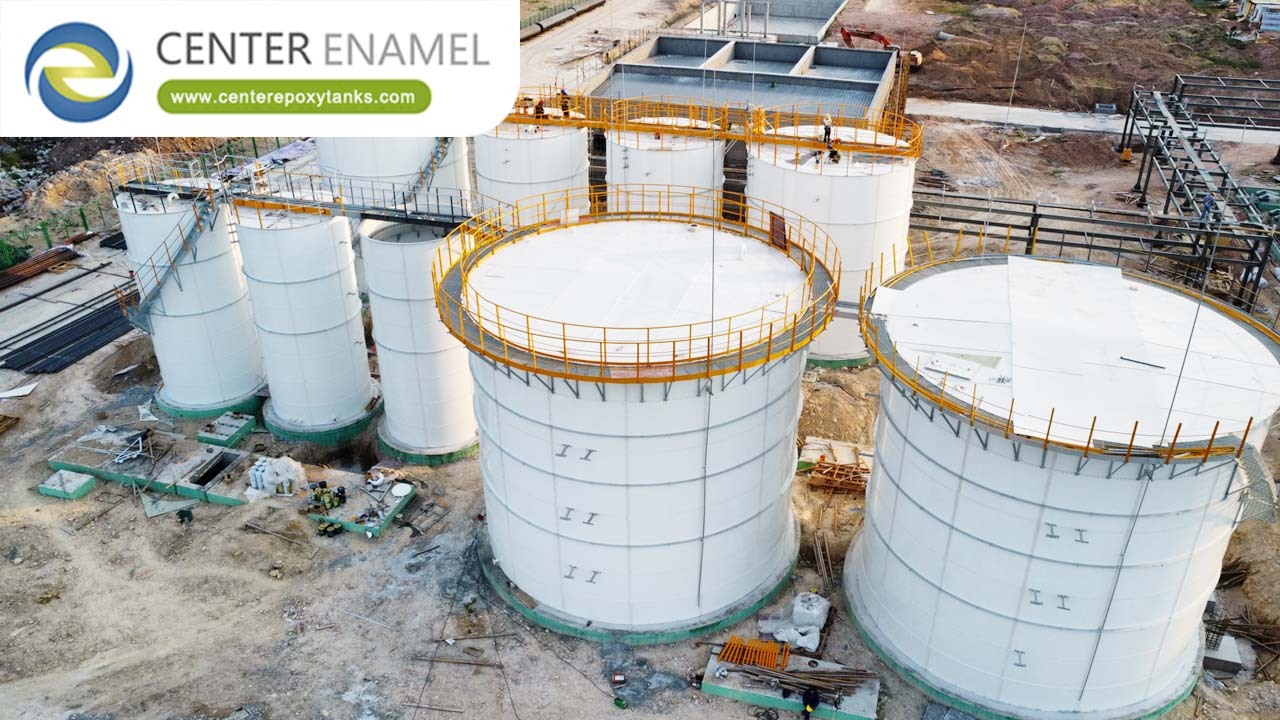
Der Ingenieurleitfaden für FBE-Kessel-Speisewassertanks: Optimierung der thermischen Effizienz und Lebensdauer (2026)
In der Hochdruckumgebung der industriellen Stromerzeugung und Fertigung im Jahr 2026 ist die Integrität des Kesselspeisewasser (BFW) Systems von höchster Bedeutung. Das Kesselspeisewasser muss auf extrem reinen Niveaus gehalten werden, um Ablagerungen sowie sauerstoffbedingte Korrosion in den Kesselrohren zu verhindern. Fusion Bonded Epoxy (FBE)-verschraubte Stahltanks sind zur bevorzugten Infrastruktur für die BFW-Lagerung geworden und bieten eine nicht auslaufende, thermisch stabile Umgebung, die nachgelagerte Anlagen schützt.
1. Was ist ein FBE-Kessel-Speisewassertank?
Ein FBE-Kessel-Speisewassertank ist ein modulares Lagerbehältnis, das entwickelt wurde, um behandeltes Wasser (in der Regel demineralisiert oder enthärtet) vor dessen Pumpung in den Kessel aufzunehmen. Die Stahlplatten sind werkseitig mit einem hochleistungsfähigen duroplastischen Epoxidharz beschichtet.
Im Gegensatz zu herkömmlichen flüssig aufgetragenen Beschichtungen erfolgt der Schmelzgebundenes Epoxid Prozess durch elektrostatische Aufbringung eines trockenen Pulvers auf vorgewärmte Stahlbleche (180 °C bis 230 °C). Dadurch entsteht eine molekular vernetzte Barriere, die dauerhaft mit dem Stahl verschmolzen ist und eine hochdichte, glasglatte Oberfläche bildet, die gegenüber der “ionenbedürftigen” Natur des behandelten Speisewassers resistent ist.
2. Technische Leistung: Schutz des Dampfkreislaufs
Die Speicherung von Kessel-Speisewasser stellt besondere Herausforderungen dar, insbesondere hinsichtlich der Wasserreinheit und Temperaturschwankungen. Die FBE-Technologie adressiert diese Aspekte durch mehrere zentrale Kennwerte:
Ionische Neutralität und Auslaugungsbeständigkeit
Demineralisiertes Speisewasser ist äußerst aggressiv und neigt dazu, Ionen aus seinem Behälter zu ziehen. FBE-Beschichtungen sind chemisch inert und geben weder Eisen noch andere metallische Ionen an das Wasser ab. Dies ist entscheidend, um die erforderlich niedrigen Leitfähigkeitswerte aufrechtzuerhalten und Kesselablagerungen zu vermeiden.
Thermische Belastbarkeit
BFW-Tanks erhalten häufig rückgeführtes Kondensat, was zu erhöhten Lagertemperaturen führt. FBE-Beschichtungen sind so konzipiert, dass sie ständige thermische Zyklen ohne Delaminierung oder Rissbildung aushalten und eine Lebensdauer gemäß dem Design gewährleisten. Über 30 Jahre in Hochtemperatur-Industrieumgebungen.
Qualitätssicherung ohne Unterbrechungen
Selbst ein mikroskopisch kleines Pinhole in der Beschichtung eines BFW-Tanks kann zu lokaler Korrosion führen, wodurch Metalloxide in den Kessel gelangen. Jedes FBE-Paneel wird einem Hochspannungstest unterzogen Fehlerprüfung (1100 V) im Werk, um eine 100%ige fehlerfreie Barriere sicherzustellen.
3. Vergleich: FBE vs. Edelstahl vs. Beton
| Merkmal | FBE-verschraubter Stahl | Edelstahl (316L) | Stahlbeton |
| Ionische Reinheit | Ausgezeichnet (Inert) | Hoch | Schlecht (löst Mineralien aus) |
| Korrosionsbeständigkeit | Überlegen (Epoxidbarriere) | Außergewöhnlich | Niedrig (anfällig für Dampfkorrosion) |
| Montagegeschwindigkeit | Schnell (Wochen) | Mäßig | Langsam (Monate) |
| Wärmeausdehnung | Ausgezeichnet | Hoch (erfordert Dehnungsfugen) | Mäßig |
| Anfangsinvestition | Mäßig | Sehr hoch | Mäßig bis hoch |
4. Ingenieurstandards und globale Konformität (2026)
Um strukturelle Belastbarkeit und Wassereigenschaften zu gewährleisten, bieten Branchenführer wie Center Enamel (Shijiazhuang Zhengzhong Technology) sollen die folgenden Richtwerte eingehalten werden:
- AWWA D103-19:den globalen Standard für werkseitig beschichtete verschraubte Kohlenstoffstahltanks an.
- ISO 28765:2016:Regelt hochleistungsfähige Beschichtungen für industrielle Behandlung und Lagerung.
- ASCE 7-22:Strukturelle Konstruktionsanforderungen hinsichtlich seismischer Widerstandsfähigkeit und extremen Windlasten (bis zu $250\text{ km/h}$).
- NSF/ANSI 61:Stellt sicher, dass die Beschichtung für den Kontakt mit hochreinem Wasser ungefährlich ist und keine schädlichen Substanzen freisetzt.
5. Strategische Anwendungen im Dampfkreislauf
Die FBE-Technologie bildet das Rückgrat mehrerer entscheidender Arbeitsabläufe zur Energierückgewinnung:
- Speicherung von demineralisiertem Wasser:Dient als primärer Speicher für Zusatzwasser nach der Ionenaustausch- oder Umkehrosmoseanlage.
- Kondensat-Rücklaufbehälter:Hält heißes, gereinigtes Wasser bereit, das aus dem Dampfkreislauf zurückgeführt wird, um wiederverwendet zu werden.
- Entgasungs-Kesselspeisewassertanks:Stellt eine gleichmäßige Wasserversorgung für den Entlüftungsheizer bereit, um gelösten Sauerstoff zu entfernen.
Steigerung der Anlagenzuverlässigkeit
Für Anlagenbetreiber, die ihre Kapitalrendite (ROI) und die Stillstandszeiten des Kessels zu minimieren, die FBE-Kesselspeisewassertank ist die eindeutige Wahl. Durch die Beseitigung der mit Beton verbundenen Risiken einer Mineralauslaugung sowie der prohibitiven Kosten von Edelstahl gewährleistet die FBE-Technologie, dass Ihr Dampfkreislauf über Jahrzehnte hinweg sauber, effizient und geschützt bleibt.
Prüfen Sie die Lagerung für ein Hochdruck-Kesselsystem und wünschen sich einen technischen Vergleich zwischen FBE und Edelstahl, basierend auf Ihren spezifischen Anforderungen hinsichtlich Wasserchemie und Temperatur?