
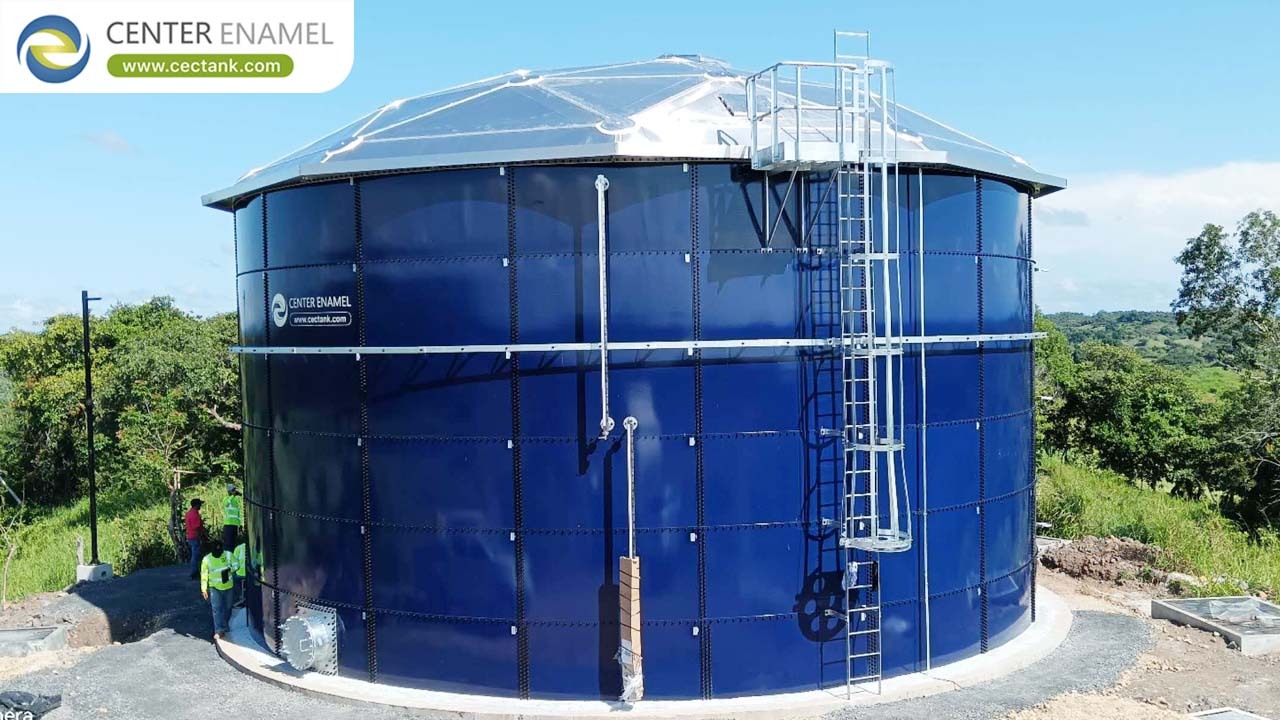
Digestor anaeróbico de lodos Fabricante Tanques digestores GFS para la estabilización de lodos
Las plantas de tratamiento de aguas residuales municipales e industriales de todo el mundo están modernizando sus sistemas de manejo de lodos, sustituyendo los lechos de secado abiertos por digestores anaerobios de lodos: vasijas selladas y térmicamente controladas donde los microorganismos estabilizan los lodos, destruyen patógenos, reducen la masa a eliminar y generan biogás. Los distribuidores que suministran este tipo de equipos enfrentan especificaciones exigentes: el digestor debe ser hermético al gas, resistente a la corrosión provocada por sulfuro de hidrógeno y ácidos grasos volátiles, altamente eficiente desde el punto de vista térmico y entregarlo dentro de los plazos establecidos en el proyecto. Los digestores de hormigón presentan fugas de gas por las fisuras; los digestores de acero soldados en campo pierden su recubrimiento en el espacio libre del gas tras apenas unos años.
Center Enamel — el primer fabricante chino de tanques de vidrio-fundido-al-acero (GFS), con cerca de 200 patentes en esmaltado y exportaciones a más de 100 países hasta 2023 — construye digestores anaerobios de lodos capaces de contener biogás y soportar la química propia del proceso durante décadas. Sus digestores GFS atornillados, diseñados conforme a AWWA D103-09, ISO 28765, NFPA y OSHA, constituyen el modelo de referencia para distribuidores que atienden a empresas de tratamiento de aguas residuales, desarrolladores de biogás y procesadores agroindustriales.
1. ¿Qué es un digestor anaerobio de lodos y qué debe soportar su tanque?
Un digestor anaerobio de lodos es una vasija sellada y termorregulada en la que bacterias anaerobias descomponen los lodos orgánicos, produciendo biosólidos estabilizados y biogás rico en metano. El tanque debe ser simultáneamente hermético al gas, resistente químicamente y estructuralmente robusto.
- Química del digestor:La fase líquida ataca con ácidos grasos volátiles y sulfuros; el espacio libre del gas se ve afectado por sulfuro de hidrógeno y condensación, lo que representa una doble amenaza que deteriora los recubrimientos aplicados en obra y provoca la pérdida de materiales en el hormigón agrietado.
- Estanqueidad a los gases:Un digestor debe retener el metano (CH4) con pérdidas mínimas. Los digestores GFS de Center Enamel emplean sistemas de sellado ingenierizados entre la cubierta y el cuerpo, así como entre paneles, probados para garantizar la retención de gases, manteniendo el valioso biogás dentro y evitando la entrada de oxígeno.
- Regímenes térmicos:La digestión mesofílica opera entre 35 y 38 °C, mientras que la termofílica se realiza entre 50 y 55 °C; los tanques requieren calefacción integrada, aislamiento térmico y un revestimiento resistente a los ciclos térmicos — el vidrio fundido a 820–930 °C resulta inmune a tales condiciones.
- Cargas estructurales:Los lodos con alto contenido de sólidos, las fuerzas ejercidas por el mezclador, la presión del gas, el viento y la sismicidad se resuelven mediante un diseño basado en análisis por elementos finitos, conforme a la normativa AWWA D103-09.
2. Por qué los digestores GFS atornillados dominan los proyectos de estabilización de lodos
Los tanques digestores de vidrio-fundido-al-acero superan ampliamente a los de hormigón y a los de acero soldado recubierto en todos los aspectos críticos para la digestión de lodos: resistencia a la corrosión, hermeticidad al gas, cumplimiento de plazos y costo total de vida útil.
- Barrera de vidrio inerte:La superficie de vidrio cocido no reacciona con la química del digestor ni ofrece un hábitat propicio para la fijación de biofilm, como sí ocurre con el hormigón rugoso, protegiendo tanto el recipiente como la calidad del biosólido estabilizado.
- Vida útil de 30 a 50 años sin recubrimiento:Los digestores de hormigón requieren reparaciones de estanqueidad frente a gases y reemplazo del revestimiento; el acero soldado recubierto necesita ciclos de repintado en la zona de cabeza. Los digestores GFS no lo necesitan.
- Velocidad en los sitios de obra:Los paneles atornillados se montan en semanas, no en los meses que exige la construcción de digestores in situ — algo crucial cuando las plantas deben cumplir plazos de conformidad.
- Historial probado de biogás:Center Enamel GFS anaerobic digesters operate across bio-energy, municipal sewage, and agricultural projects on six continents, standardized to ISO 28765 enameling practice with 100% holiday spark testing.
3. Qué obtienen los distribuidores al asociarse con un digestor de Center Enamel
Los proyectos de digestores son ventas hechas a medida que premian a los distribuidores con un sólido respaldo técnico y penalizan a quienes carecen de él.
- Paquetes completos de digestores:Tanque del digestor junto con el gasómetro correspondiente, interfaces de mezcla, sistemas de calefacción y accesorios de seguridad (alivio de presión/vacío, arrestadores de llama conforme a NFPA) — todo en una sola orden de compra y con una única garantía.
- Entregables de ingeniería:Cálculos FEA, hojas de datos de proceso y detalles sobre la estanqueidad frente a gases emitidos para cada proyecto permiten a los distribuidores presentar ofertas en licitaciones de diseño‑construcción de manera creíble.
- Archivo de cumplimiento:La documentación conforme a ISO 9001, ISO 45001, NSF/ANSI 61 (contacto con agua), EN 1090 y BSCI satisface las auditorías de contratación de servicios públicos en mercados regulados.
- Logística global:Los envíos atornillados optimizados para contenedores y la supervisión de montaje en más de 100 países reducen los riesgos en los términos de entrega de proyectos llave en mano.
| Criterio de evaluación | Digestor empernado de GFS con esmalte central | Digestor de hormigón vertido in situ | Digestor de acero soldado con recubrimiento |
| Defensa contra la corrosión (H2S, VFA) | Superior — inert glass fired 820-930°C, 100% spark tested | Deficiente — fisuración, fugas de gas, ataque por sulfuro | Moderado — el recubrimiento falla en la zona de cabeza gaseosa |
| Estanqueidad al gas | Alto — sistema de sellado de ingeniería | Bajo — grietas bajo ciclos térmicos | Moderado — dependencia de las juntas y del recubrimiento |
| Velocidad de construcción | Rápido — montaje atornillado en semanas | Muy lento — meses de formación y curado | Lento — soldadura más revestimiento de campo en múltiples capas |
| Ciclo de vida y mantenimiento | Mínima — vida útil de diseño de 30 a 50 años | Alto — reacondicionamiento y reparaciones de estanqueidad frente a gases | Alto — recubrimiento periódico del espacio de cabeza |
| Recuperación de biogás | La alta retención de metano favorece la captura de energía | Pérdidas por fisuras | Las pérdidas aumentan a medida que los recubrimientos envejecen |
Garantía de ingeniería
Cada digestor está diseñado conforme a las normas AWWA D103-09, ISO 28765, NFPA y OSHA, con verificación mediante análisis por elementos finitos (FEA), y fabricado bajo los sistemas ISO 9001 e ISO 45001; un paquete de certificaciones que supera la debida diligencia técnica exigida por servicios públicos y entidades crediticias en mercados regulados.
Preguntas frecuentes (FAQ)
¿Qué es un digestor anaeróbico de lodos?
Se trata de un tanque sellado y calefaccionado en el que bacterias anaerobias estabilizan aguas residuales o lodos industriales, reduciendo su masa y contenido patógeno mientras producen biogás rico en metano. Los digestores operan de forma mesofílica a 35–38 °C o termofílica a 50–55 °C.
¿Por qué el GFS es el material preferido para los tanques de digestión?
El vidrio fundido sobre acero es inerte frente al sulfuro de hidrógeno y los ácidos grasos volátiles, proporciona una envoltura hermética para la retención del biogás y ofrece una vida útil de 30 a 50 años sin necesidad de recubrimientos adicionales; en cambio, el hormigón se agrieta y pierde gas, mientras que el acero soldado con recubrimiento en obra se corroe en la zona superior.
¿Suministran gasómetros y sistemas completos de digestión?
Sí. Center Enamel suministra digestores junto con gasómetros compatibles, interfaces de mezcla y calefacción, accesorios de seguridad según la NFPA y supervisión durante el montaje; un paquete de fuente única para distribuidores y contratistas EPC.
¿Pueden personalizarse los tanques de digestión para proyectos de distribuidores?
Sí. Se diseñan capacidades que van desde pequeños digestores agrícolas hasta vasijas de escala municipal superiores a 10.000 m³, adaptándose a cada proyecto; el diámetro, la altura, el tipo de cubierta, así como las opciones de calefacción y aislamiento, son completamente configurables.