
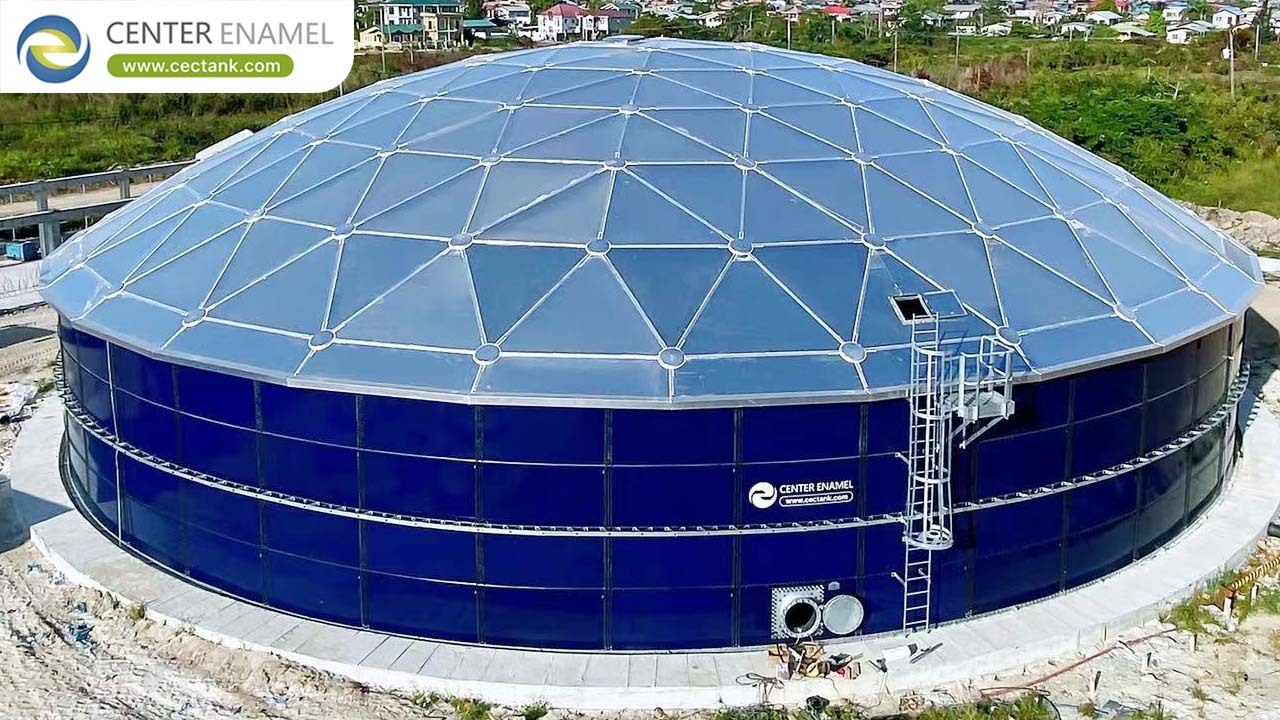
Tanque de almacenamiento de biogás de acero atornillado con depósito de gas de doble membrana: la solución definitiva para el confinamiento de bioenergía
La transición global hacia la energía renovable ha colocado a la digestión anaerobia y a las tecnologías de conversión de residuos en energía en la vanguardia de la ingeniería ambiental moderna. Convertir residuos agrícolas, estiércol ganadero, lodos de aguas residuales municipales y efluentes orgánicos industriales en gas metano limpio proporciona una fuente de energía confiable y sostenible. Sin embargo, capturar y contener el biogás de manera eficiente requiere infraestructuras altamente especializadas, capaces de resistir reacciones químicas agresivas, presiones internas variables y condiciones climáticas exteriores severas.
Para abordar estas demandas complejas, Shijiazhuang Zhengzhong Technology Co., Ltd. (Esmalte central) ofrece avanzado Tanques de almacenamiento de biogás de acero atornillado integrados con soportes de gas de doble membrana. Este sistema híbrido de última generación combina la resistencia a la corrosión y la resistencia estructural inigualables de los tanques modulares de acero atornillado (como los recubiertos con vidrio fundido sobre acero, GFS) con la eficiencia de volumen variable de los techos de doble membrana soldados a alta frecuencia, ofreciendo un estándar de excelencia para plantas globales de biogás.
Arquitectura de ingeniería: cómo funciona el sistema
Un tanque de almacenamiento de biogás de acero atornillado con soporte de gas de doble membrana actúa como un elemento de contención unificado y de doble propósito, sirviendo tanto como recipiente para la reacción anaerobia y el almacenamiento de líquidos, como también como depósito de gas de volumen variable:
La subestructura de acero atornillado (zona de líquidos): Construida con placas de acero de alta resistencia protegidas por esmalte de vidrio especializado o epoxi fusionado, la parte inferior del tanque maneja de forma segura lodos orgánicos agresivos y líquidos corrosivos. El diseño modular atornillado permite un montaje rápido y una escalabilidad ilimitada de la capacidad.
La membrana interior: Suspendida dentro del tanque o sobre la superficie del líquido, la membrana interna de alta resistencia y baja permeabilidad forma una cámara sellada de capacidad variable que se expande y contrae dinámicamente conforme se genera y consume el metano.
La membrana exterior y el sistema de soporte de aire: Un soplador de soporte de servicio continuo mantiene una presión positiva de aire en el espacio entre las membranas interna y externa. Esta envoltura exterior conserva una forma aerodinámica esférica o cónica, protegiendo el sistema de cargas de viento y nieve mientras estabiliza la presión interna del gas.
Ventajas clave de los tanques de biogás de acero atornillado con techos de doble membrana
Resistencia superior a la corrosión: Fusionar esmalte de vidrio con acero a temperaturas entre 820 °C y 930 °C crea una superficie inerte y no porosa que resiste completamente el sulfuro de hidrógeno (H2S), la humedad y los ácidos orgánicos volátiles.
Almacenamiento optimizado de gas y control de presión: La configuración de doble membrana permite una gestión flexible del volumen, asegurando una presión constante del gas de trabajo para los motores de cogeneración o las unidades de mejora situadas aguas abajo.
Instalación modular rápida: Prefabricado bajo estrictas ISO 9001 normas internacionales, toda la estructura se transporta eficientemente a nivel mundial y se ensambla en el lugar con herramientas ligeras, reduciendo drásticamente los plazos de construcción en comparación con las cuencas de hormigón vertido.
Ciclo de vida prolongado y mantenimiento mínimo: Diseñado para una vida útil confiable superior a 30 años, el sistema prácticamente no requiere repintado interior ni costosas reparaciones de grietas estructurales.
Matriz comparativa: Soluciones de almacenamiento y contención de biogás
| Métrica de evaluación | Tanque de acero atornillado con soporte de doble membrana | Digestor tradicional de hormigón vertido | Tanque estándar de acero al carbono soldado |
| Defensa contra la corrosión y la acción de gases | Superior (paredes interiores revestidas de vidrio inerte y membranas especiales resistentes a productos químicos) | Moderado (vulnerable a la carbonatación del hormigón y a la corrosión por coronas de ácido sulfúrico) | Bajo (Propenso a la picadura y a la perforación por óxido sin un recubrimiento continuo) |
| Adaptabilidad del volumen de gas | Dinámico (El sistema de doble membrana de volumen variable se adapta a los rendimientos fluctuantes de metano) | Fijo (Requiere bolsas separadas externas para el gas o gasómetros rígidos) | Rígido (Capacidad limitada del espacio libre interno para el gas) |
| Velocidad de instalación | Rápido (Paneles modulares prefabricados ensamblados rápidamente mediante pernos, con un uso mínimo de equipos pesados) | Muy lento (Meses de encofrado civil, vertido de hormigón y largos tiempos de curado) | Moderado (Requiere cuadrillas pesadas de laminación de placas y soldadura en obra) |
| Ciclo de vida y mantenimiento | Mínimo (Durabilidad a largo plazo superior a 30 años, sin necesidad de repintar el interior) | Alto (Requiere sellado frecuente de juntas, inyección de reparación de grietas y revestimiento interior resistente a ácidos) | Alto (Costos continuos de mantenimiento para prevenir fugas de gas y corrosión) |
Garantía de ingeniería: Todos los tanques de biogás de acero atornillados y los sistemas de doble membrana cumplen estrictamente con los códigos de ingeniería reconocidos internacionalmente, incluyendo AWWA D103-09, ISO 28765, ISO 9001, y OSHA, garantizando la aprobación regulatoria completa y la seguridad estructural en proyectos internacionales.
Preguntas frecuentes (FAQ)
P: ¿Qué es un tanque de almacenamiento de biogás de acero atornillado con un gasómetro de doble membrana?
R: Se trata de un avanzado sistema híbrido de contención que combina un tanque modular de acero atornillado de alta resistencia (a menudo de vidrio fusionado al acero) para almacenar lodos orgánicos con una estructura de cubierta flexible de doble membrana diseñada para almacenar y regular de manera segura y eficiente el metano generado.
P: ¿Cómo mantiene el gasómetro de doble membrana una presión de gas constante?
R: El sistema utiliza una membrana exterior sostenida por un soplador de alimentación continua que mantiene un colchón de aire regulado entre las capas interna y externa. A medida que la producción de metano aumenta o disminuye, la membrana interna se expande o contrae, mientras que válvulas reguladoras de presión aseguran una presión de trabajo estable y constante para los equipos aguas abajo.
P: ¿Por qué se prefieren los tanques atornillados de vidrio fusionado al acero (GFS) para aplicaciones de biogás?
R: Los tanques GFS combinan la alta resistencia a la tracción del acero con la inercia química del vidrio fundido a temperaturas de 820 °C–930 °C. Esto los hace completamente inmunes a la corrosión por sulfuro de hidrógeno (H₂S) y a la degradación causada por la humedad, garantizando una vida útil superior a 30 años en entornos agresivos de digestión anaerobia.2P: ¿Estos tanques modulares de biogás pueden ampliarse o reubicarse si cambian los requisitos del proyecto?.
Sí. Gracias a que la estructura del tanque está construida con paneles modulares de acero atornillados, los operadores de la planta pueden desmontar, ampliar o trasladar fácilmente el sistema, ofreciendo un valor de activo durante todo su ciclo de vida sin igual en comparación con las estructuras permanentes de hormigón.
R: Sí. Debido a que la estructura del tanque está construida con paneles de acero estandarizados y atornillados, los operadores de la planta pueden desmontar, ampliar o reubicar fácilmente el sistema, lo que proporciona un valor de activo durante todo su ciclo de vida inigualable en comparación con las estructuras permanentes de hormigón.