
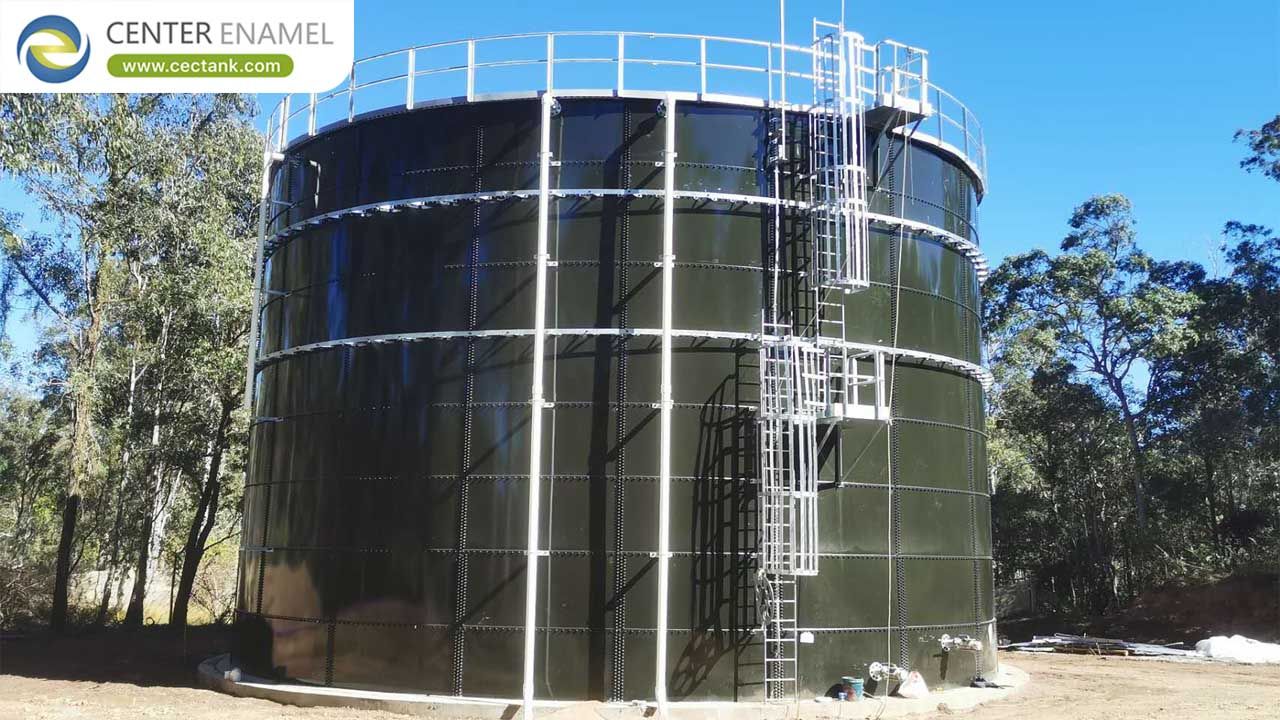
Proveedor de tanques de acero revestidos de vidrio con pH 3: tanques GFS para servicios con líquidos ácidos
Many industrial and process liquids sit at pH 3 – acidic enough to attack carbon steel and defeat ordinary organic coatings, yet common enough to appear in food, mining, and chemical streams. The tank holding such a liquid faces a quiet corrosion problem: even dilute acid dissolves bare steel and undercuts paint, so only an inert, fused lining keeps the steel safe and the product untainted. Choosing the right pH3 tank is therefore a materials decision, not a price decision.
Shijiazhuang Zhengzhong Technology Co., Ltd (Center Enamel) is a pH3 glass-lined steel tanks provider – supplying GFS tanks whose enamel is formulated for acidic liquid service at pH 3. As China’s first GFS manufacturer since 2008 with nearly 200 enameling patents, Center Enamel has exported acid-service tanks to more than 100 countries.
1. Why Does pH 3 Demand a Glass Lining?
At pH 3 the liquid is acidic enough to dissolve carbon steel and undercut organic coatings – only an inert, fused lining keeps the steel safe.
Acid attacks steel: even dilute acid at pH 3 corrodes uncoated steel and pits galvanizing within years.
Coatings fail by undercut: organic paints blister and peel at the acid front, exposing bare steel to accelerated attack.
Glass is inert: the fused-glass surface resists pH 3 chemistry and does not leach, protecting both tank and product.
Standard GFS covers it: standard Center Enamel enamel is rated pH 3-11, so pH 3 sits at the conservative end of the normal range.
2. How Are pH3 Glass-Lined Tanks Built?
Center Enamel produces pH3-capable tanks with enamel grade, thickness, and testing matched to acidic duty.
Enamel grade: 2C2F or 3C3F enamel (pH 2-10 or 2-11) is specified where pH 3 service is continuous or combined with abrasion.
Firing and testing: panels are fused at 820-930 degrees Celsius and 100% holiday spark tested at 1,500V to confirm a continuous acid-proof surface.
Bolted assembly: factory-coated panels bolt together with acid-resistant gaskets – no field welding or painting near acid.
Certification: NSF/ANSI 61 and WRAS options qualify pH3 tanks for potable-adjacent and food process use where approved.
3. Which pH3 Liquids Do These Tanks Store?
pH3 service spans several industries where acidic process or product streams must be contained without contamination or corrosion.
Industrial process water: acidic rinse, pickling, and plating streams at pH 3 are contained without steel loss.
Food and beverage: fruit juices, vinegar, and fermentation intermediates sit near pH 3 and need inert, non-tainting surfaces.
Mining and leachate: acidic leachates and process liquors are held in pH3-rated GFS without liner replacement.
Agricultural liquids: acidic fertilizers and silage effluents are stored safely in glass-lined steel.
| Lining Type | pH3 Service (Center Enamel) | Carbon Steel | Organic Paint |
|---|---|---|---|
| Acid resistance | Excellent – inert glass | Corrodes | Undercuts, peels |
| Leaching | Ninguna | Metal ions | Posible |
| Life at pH3 | 30-50 years | Años | 5-10 yr |
| Field welding | None – bolted | Required | Required |
| Certification | NSF/ANSI 61 options | Ninguna | Coating dependent |
Engineering Assurance
Center Enamel pH3 glass-lined tanks are FEA-verified to AWWA D103-09, manufactured under ISO 9001/45001, 100% high-voltage holiday spark tested at 1,500V, and available with NSF/ANSI 61 and WRAS certification for approved duties – exported to more than 100 countries.
At pH 3 the question is never whether the acid will attack the tank – it is whether the lining is inert enough to outlast the project. Glass fused to steel answers that question with a surface the acid cannot dissolve.
Preguntas frecuentes (FAQ)
What are pH3 glass-lined steel tanks?
They are glass-fused-to-steel (GFS) tanks whose enamel lining is formulated for acidic liquid service at pH 3. Center Enamel supplies them with 2C2F or 3C3F enamel rated to pH 2-10 or 2-11, 100% spark tested at 1,500V, for industries storing acidic process and product streams.
Why not use carbon steel or paint at pH 3?
At pH 3, carbon steel corrodes and galvanizing pits within years, while organic paints blister and undercut at the acid front. Only an inert fused-glass surface resists the chemistry without leaching or recoating.
Are pH3 GFS tanks certified for food or potable use?
Standard GFS enamel is rated pH 3-11, and NSF/ANSI 61 and WRAS certified options qualify tanks for potable-adjacent and food-process duty where approved. Confirm the specific grade and certification with the project’s regulator.
Can pH3 glass-lined tanks be customized?
Yes – enamel grade, capacity, diameter-to-height ratio, roof, gaskets, heating, and fittings are engineered for the pH 3 liquid and site, with acid-resistant seals and 100% spark testing on every panel.
Key Takeaways
At pH 3, only an inert fused-glass lining resists acid without steel loss or leaching.
Standard GFS enamel (pH 3-11) covers pH 3; 2C2F/3C3F grades suit continuous acidic duty.
Every panel is fired at 820-930 degrees Celsius and 100% spark tested at 1,500V.
Center Enamel supplies pH3 glass-lined tanks with NSF/ANSI 61 options to 100+ countries.