
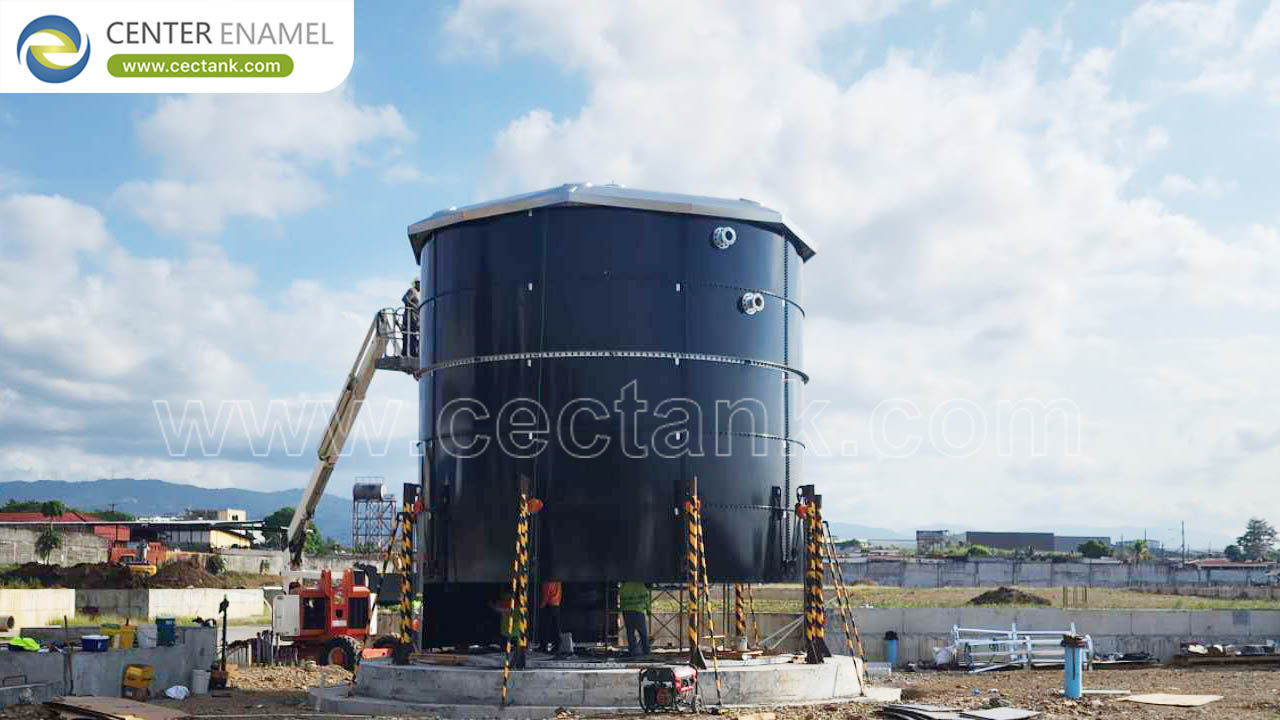
FBE DI Water Tanks: The Engineering Standard for Ultra-Pure Water Storage (2026)
In high-precision industries such as semiconductor manufacturing, pharmaceuticals, and power generation, Deionized (DI) Water is a critical utility. Because DI water is “ion-hungry,” it is highly aggressive toward metallic surfaces, seeking to leach ions from its container. Fusion Bonded Epoxy (FBE) DI water tanks have emerged as the premier solution for 2026, offering a chemically inert, non-leaching environment that preserves water resistivity.
1. What is an FBE DI Water Tank?
An FBE DI water tank is a modular bolted steel storage system where the internal panels are factory-coated with a high-performance thermoset epoxy resin.
Unlike traditional liquid paints, the Epossidico fuso aderente process involves electrostatically applying dry powder to pre-heated steel plates (180°C to 230°C). This creates a molecularly cross-linked barrier that is permanently fused to the steel. The resulting finish is a high-density, glass-smooth lining that prevents the DI water from coming into contact with the carbon steel substrate.
2. Why FBE is Essential for DI Water Storage
Storing ultra-pure water (UPW) or DI water requires materials that prevent contaminazione ionica. FBE technology excels in this domain due to several key factors:
Neutralità ionica e resistenza al lisciviazione
DI water is a powerful solvent. FBE coatings are formulated to be chemically inert, meaning they do not release metallic ions (such as iron or manganese) back into the water. This is essential for maintaining the high resistivity levels required in laboratory and electronic grade water.
Assicurazione della qualità senza interruzioni
In DI water applications, even a microscopic pinhole in the coating can lead to rapid localized corrosion and water contamination. Every FBE panel undergoes a high-voltage Prova di tenuta alle tensioni (>1100V) at the factory. This ensures a 100% defect-free barrier before the tank is even shipped to the site.
Smooth Surface to Inhibit Biofilm
The high-gloss, non-porous finish of FBE reduces the surface area available for microbial attachment. This makes it significantly easier to sanitize the tank and maintain the low Total Organic Carbon (TOC) levels required for high-purity water systems.
3. Comparison: FBE vs. Stainless Steel vs. Polyethylene
| Caratteristica | Serbatoio in acciaio imbullonato con rivestimento FBE | Acciaio inossidabile (316L) | Polyethylene (HDPE) |
|---|---|---|---|
| Ionic Protection | Excellent (Inert Resin) | Good (Passivation needed) | Eccellente |
| Durabilità | High (Structural Steel) | Alto | Moderate (UV sensitive) |
| Size Scalability | Unlimited (Modular) | Expensive at large scale | Limitata |
| Velocità di installazione | Fast (Bolted) | Lento (saldatura) | Moderato |
| Cost (Large Volume) | Più conveniente dal punto di vista economico | Molto elevato | Alto |
4. Engineering Standards & Compliance (2026)
To ensure the safety and purity of DI water systems, FBE tanks from industry leaders like Center Enamel (Shijiazhuang Zhengzhong Technology) aderiscono ai seguenti standard internazionali:
-
NSF/ANSI 61: Essential for water contact components to ensure no harmful substances leach into the water.
-
AWWA D103-19: The global standard for factory-coated bolted carbon steel tanks.
-
ISO 28765:2016: Governing the high-performance coating requirements for industrial treatment and storage.
-
FDA Compliance: Ensuring the epoxy resin is safe for sensitive pharmaceutical and food-grade water applications.
5. Strategic Applications in 2026
FBE DI water tanks are the backbone of high-purity water cycles across several sectors:
-
Semiconductor Fabrication: Storing the massive volumes of ultra-pure water required for wafer rinsing.
-
Pharmaceutical Manufacturing: Serving as holding tanks for USP-grade purified water.
-
Power Generation: Providing demineralized makeup water for high-pressure boilers to prevent scale and corrosion.
-
Laboratory Facilities: Centralized storage for Type I, II, or III reagent-grade water.
Securing Water Purity
For facilities that cannot afford ionic contamination or structural failure, the FBE DI water tank represents the most strategic infrastructure choice. By combining the structural reliability of bolted steel with the chemical immunity of fusion-bonded epoxy, these tanks deliver a durable, low-maintenance solution that protects the integrity of your most sensitive water assets.
Are you evaluating storage for a specific grade of deionized water, and would you like a technical comparison of FBE vs. 316L Stainless Steel for your volume requirements?