
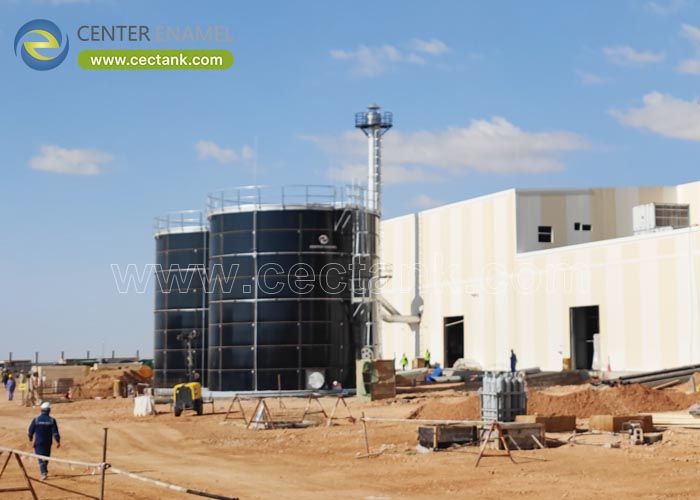
Serbatoi in acciaio fuso con vetro (GFS) certificati NSF/ANSI 61 per lo stoccaggio dell’acqua potabile: sicurezza e durabilità senza compromessi
Un NSF/ANSI 61 certified Glass-Fused-to-Steel (GFS) tank is an elite, high-purity modular containment vessel engineered specifically to store municipal drinking water safely while complying with the strictest global public health and environmental standards. Potable water infrastructure demands absolute material purity to prevent toxic chemical leaching, heavy metal contamination, and bacterial colonization. By thermally fusing inorganic glass enamel to high-tensile structural steel panels at temperatures exceeding 800°C, Center Enamel delivers certified GFS tanks that combine the unyielding structural strength of steel with the inert, non-porous chemical barrier of glass, ensuring a 30-to-50-year service life dedicated to public water security.
The Critical Public Health Demands of Potable Water Storage
Municipalities and water utility authorities face rigorous regulatory scrutiny when constructing or upgrading drinking water reservoirs. Protecting public health requires overcoming three primary infrastructure challenges:
Prevention of Chemical and Contaminant Leaching: Storage materials must never transfer harmful chemicals, volatile organic compounds (VOCs), or heavy metals into the water supply. Strict third-party certification is mandatory to verify drinking water safety.
Inhibition of Bacterial Growth and Biofilms: Stored drinking water can foster microbial proliferation if interior walls harbor micro-crevices, porous patches, or degrading protective paints.
Long-Term Structural and Corrosion Resilience: Water treatment chemicals (such as chlorine or chloramines) and environmental weathering can rapidly degrade ordinary concrete or coated steel tanks, threatening water purity over time.
Engineering Advantages of NSF/ANSI 61 Certified GFS Tanks
1. Absolute Compliance with Public Health Standards
Certification under NSF/ANSI 61 verifies that all interior surfaces of the tank in contact with drinking water have undergone rigorous toxicological testing. It guarantees that no harmful contaminants will leach into the water supply, providing complete peace of mind for public health regulators and consumers.
2. Inert Glass Enamel Surface Chemistry
The high-temperature fusion process creates a hard, vitreous glass surface that is chemically inert. Unlike plastic or painted steel tanks, GFS tanks do not absorb odors, flavors, or organic compounds, ensuring that treated drinking water remains crisp, clean, and completely pure from source to tap.
3. Rapid Modular Erection and Long-Term Reliability
Center Enamel’s modular bolted design allows massive potable water reservoirs to be assembled rapidly on-site without complex formwork or curing delays. The permanent fusion of glass and steel eliminates the need for periodic interior repainting, minimizing lifecycle maintenance costs.
Matrice comparativa: tecnologie di stoccaggio dell’acqua potabile
| Metrica delle prestazioni | NSF/ANSI 61 GFS Tank (Center Enamel) | Bacino in calcestruzzo gettato in opera | Serbatoio standard in acciaio verniciato |
|---|---|---|---|
| Health Certification | Guaranteed (Certified NSF/ANSI 61 compliance) | Variable (Requires specialized interior sealing) | Low to Moderate (Coatings can degrade and flake) |
| Purity & Inertness | Superior (Non-porous glass barrier prevents leaching) | Moderate (Porous concrete can alter water chemistry) | Low (Prone to paint breakdown and chemical interaction) |
| Resistenza alla corrosione | High (Permanent fusion of inorganic glass enamel) | Moderato (Vulnerabile alla carbonatazione e alla formazione di incrostazioni da acqua) | Basso (Richiede manutenzione continua sul campo mediante riverniciatura) |
| Velocità di installazione | Veloce (kit modulare prefabbricato imbullonato) | Molto lento (Casseri prolungati e cura del calcestruzzo) | Lento (Estese saldature sul campo e test approfonditi) |
| Durata progettuale | 30–50+ anni | 20–25 anni | 15–20 anni |
Compliance and Engineering Excellence
When specifying drinking water infrastructure, adherence to international structural and health benchmarks ensures project success. Center Enamel’s potable water storage tanks are manufactured in strict compliance with:
NSF/ANSI 61: Governing public health safety for drinking water system components.
AWWA D103: The benchmark standard for bolted steel tank structural calculations.
ISO 28765 & ISO 9001: Guaranteeing precise panel geometry, strict coating quality control, and advanced manufacturing management.
Domande frequenti (FAQ)
Q: What does NSF/ANSI 61 certification mean for potable water storage tanks?
R: NSF/ANSI 61 is an internationally recognized public health standard. Certification proves that the tank’s interior materials and coatings have been rigorously tested to ensure they do not leach harmful chemicals, heavy metals, or toxins into drinking water.
Q: Why is Glass-Fused-to-Steel (GFS) superior for storing drinking water?
R: GFS technology combines the structural strength of steel with the chemical inertness of glass. The vitreous glass surface is non-porous, corrosion-resistant, and prevents bacterial buildup or chemical leaching, ensuring maximum water purity.
Q: Are GFS potable water tanks resistant to municipal water treatment chemicals?
R: Yes. The inorganic glass enamel coating is highly resistant to standard municipal disinfectants such as chlorine, chloramines, and fluoride, ensuring long-term structural integrity without degrading.
Q: How long does it take to install an NSF 61 certified GFS water tank?
R: Because all steel panels are prefabricated and precision-engineered in our factory, on-site assembly is exceptionally fast. Depending on tank capacity, a municipal drinking water tank can be fully erected in just a few weeks.
Partnering for Your Municipal Water Infrastructure
A Smalto centrale, we combine advanced manufacturing capabilities with rigorous international certifications to deliver robust, hygienic, and efficient potable water storage solutions for communities worldwide.
Are you planning a municipal drinking water storage or water treatment project? Contatta oggi stesso il nostro team di ingegneria per una consulenza tecnica, la dimensionamento della capacità e una proposta personalizzata.