
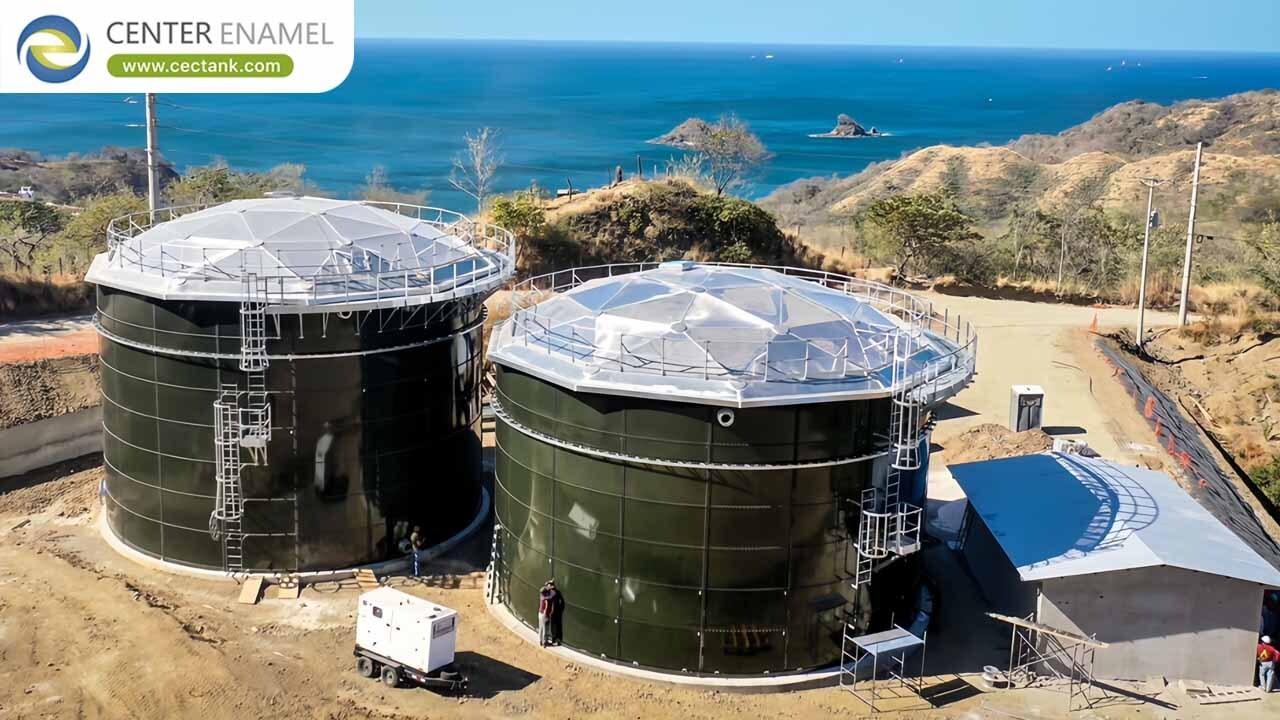
Zbiorniki szklano-emaliowane do stali AWWA D103: Globalny standard przechowywania wody i ścieków
For municipal utilities, industrial plant managers, and EPC contractors, the selection of liquid containment infrastructure is a decision that defines operational reliability for decades. Szkło-zalane do stali (GFS) bolted tanks, engineered strictly to AWWA D103 standards, have emerged as the premier global solution for potable water storage and industrial sewage treatment.
Łącząc strukturalną przewidywalność wytrzymałej stali z chemiczną obojętnością szklistego emalu, te zbiorniki stanowią szybko wdrażalny, długowieczny i wymagający niewielkiej konserwacji element zabezpieczający.
Dlaczego AWWA D103 ma znaczenie
Ten AWWA D103 (American Water Works Association) standard is the definitive benchmark for the design, fabrication, and erection of factory-coated bolted carbon steel tanks. It ensures that every aspect of the tank—from the thickness of the steel panels to the structural bolt torque and seismic load calculations—is mathematically validated for safety. When combined with Glass-Fused-to-Steel (GFS) technology, it creates a tank that is structurally secure, chemically inert, and exceptionally resistant to corrosion, making it ideal for the most demanding municipal and industrial environments.
Techniczna przewaga: Technologia GFS
Center Enamel’s GFS tanks are manufactured using a sophisticated thermal fusion process. Specialized silica-based glass frit is applied to high-strength titanium-alloy steel plates and fired in an automated furnace at temperatures between 820°C i 930°C.
Fuzja molekularna: Unlike organic coatings that merely adhere to the surface, the glass and steel undergo a chemical reaction, forming an inorganic, molecular bond.
Odporność na korozję: This boundary layer creates a non-porous, dielectric barrier that completely isolates the steel substrate from the stored liquid, whether it is high-purity potable water or corrosive industrial sewage.
Lifespan: Engineered for a service life exceeding 30 years, GFS tanks eliminate the costly cycles of sandblasting and repainting required by traditional field-welded steel structures.
Zastosowania: Woda pitna kontra oczyszczanie ścieków
- Miejskie magazyny wody pitnej
W sieciach dystrybucji wody pojemnik magazynowy musi zapewniać zerową kontaminację i długoterminową higienę.
Zgodność: Center Enamel tanks are certified to NSF/ANSI 61 standards, ensuring no toxic leaching occurs.
Biofilm Resistance: The ultra-smooth, glass-hard surface prevents the accumulation of algae and biofilm, which are common in the porous surfaces of concrete reservoirs.
- Industrial & Municipal Sewage Treatment
Sewage treatment involves complex chemical profiles, including high concentrations of hydrogen sulfide (H_2S) and variable pH levels.
Odporność chemiczna: GFS enamel is chemically inert, providing complete immunity to the sulfuric acid corrosion that destroys concrete and traditional steel headers in anaerobic digesters and aeration tanks.
High-Rate Capability: GFS tanks are the preferred structural choice for high-rate anaerobic reactors (UASB, EGSB) and oxidation ditches.
Matryca porównawcza: GFS vs. Tradycyjna infrastruktura
| Metryka inżynierska | AWWA D103 Zbiorniki śrubowe z powłoką ze szkła i żywicy | Stal spawana w terenie | Zalewany beton |
| Odporność na korozję | Doskonały (szklany, obojętny) | Aktywny (Wymaga anod) | Niski (Odpadanie zbrojenia) |
| Projekt konstrukcyjny | Norma AWWA D103 | Zmienny | Kody regionalne |
| Czas budowy | Od kilku dni do kilku tygodni (Modułowy) | Miesiące | Miesiące |
| Całość powłoki | Testowany w fabryce (1500 V) | Naniesiony na miejscu (Duże ryzyko błędów) | N/D (porowata) |
| Rozszerzalność | Wysoki (Modułowe pierścienie) | Brak | Brak |
Zaprojektowane do szybkiego wdrożenia: Metoda podnoszenia za pomocą podnośników
Center Enamel utilizes a high-efficiency hydrauliczny system podnoszenia od góry for tank erection.
Dach i górna obręcz skorupy są montowane na poziomie ziemi.
Konstrukcja jest podniesiona za pomocą podnośników, a kolejna obręcz paneli przykręcana jest zespawianiem od spodu.
Wynik: This process eliminates the need for expensive high-altitude scaffolding and heavy cranes, reducing site execution time by up to 60% compared to traditional welded construction. This makes AWWA D103 GFS tanks the ideal solution for fast-track municipal projects and remote industrial sites.
Często zadawane pytania (FAQ)
Pytanie: Dlaczego AWWA D103 jest preferowanym standardem dla zbiorników GFS?
Odpowiedź: AWWA D103 provides comprehensive structural specifications for wind, seismic, and liquid loads. Adhering to this standard ensures the tank will withstand extreme weather events and hydrostatic pressures without the risk of structural fatigue or failure.
Pytanie: Czy technologia GFS nadaje się do anaerobowych fermentatorów ścieków?
Odpowiedź: Yes. Anaerobic digesters produce significant amounts of hydrogen sulfide (H_2S), which creates a highly corrosive environment. The glass-fused surface is completely resistant to this acidity, preventing the structural degradation that typically forces the replacement of concrete or painted steel digesters.
Pytanie: Czy można przenosić lub rozbudowywać te zbiorniki?
Odpowiedź: Because they are bolted, GFS tanks offer unparalleled flexibility. They can be unbolted and relocated, or vertically expanded by adding new panel rings, which is impossible with welded or poured structures.
Partnerstwo z firmą Center Enamel
Center Enamel is Asia’s leading manufacturer of modular bolted storage containment systems, holding nearly 200 własnych patentów and operating under strict ISO-certified quality frameworks. We partner with global EPC firms, municipal utilities, and environmental engineers to deliver safe, compliant, and cost-effective water and sewage storage.
Gotowi na zabezpieczenie swojej infrastruktury za pomocą technologii GFS zgodnej z normą AWWA D103?