
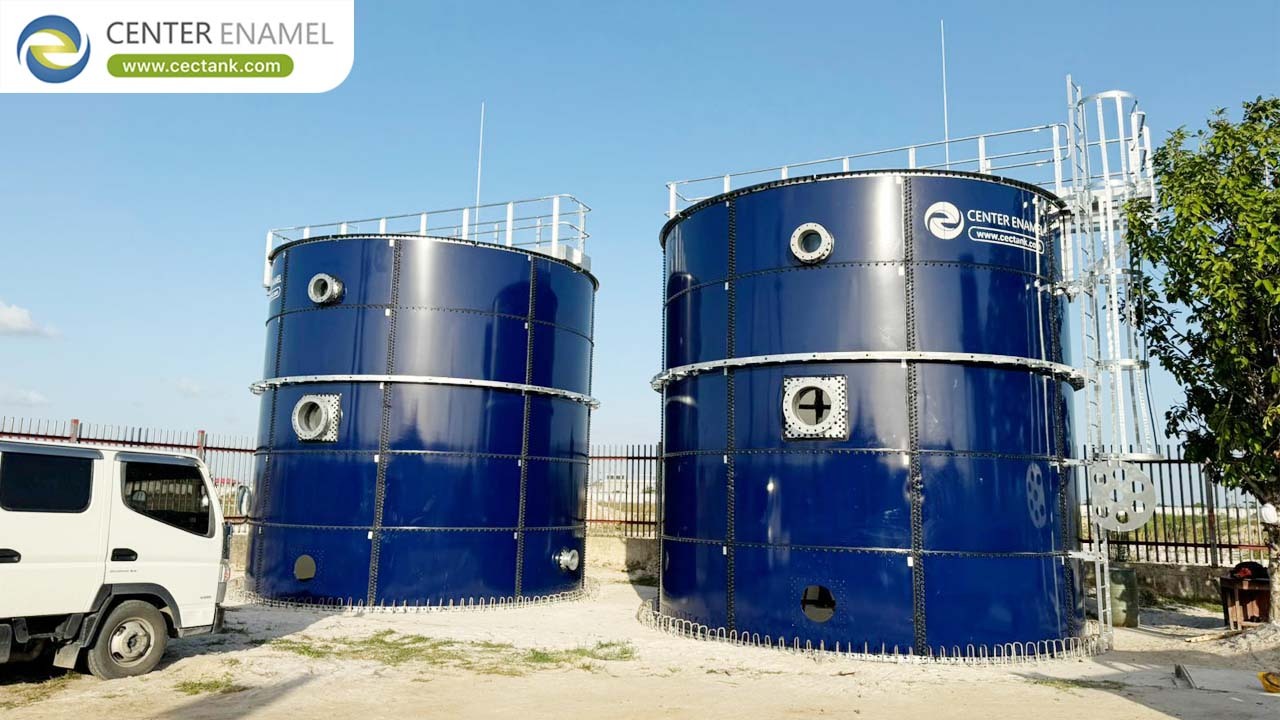
Zbiorniki anaerobowe na osady biologiczne: wysokowydajne rozwiązania do oczyszczania ścieków przemysłowych
W nowoczesnym krajobrazie przemysłowym ścieki są coraz częściej postrzegane jako zasób, a nie obciążenie. Dla branż od przetwórstwa żywności i produkcji mleczarskiej po celulozę i papier, przekształcanie bioosadu w energię odnawialną to już nie tylko cel związany z zrównoważonym rozwojem – jest to konieczność operacyjna.
W samym centrum tego procesu leży Zbiornik do fermentacji beztlenowej. Choć tradycyjne zbiorniki betonowe i stalowe spawane na miejscu stanowiły dotychczasową normę, Szkło-zalane do stali (GFS) zbiorniki łączone śrubowo stały się lepszym wyborem infrastrukturalnym dla nowoczesnych zakładów oczyszczania ścieków przemysłowych.
Dlaczego zakłady przemysłowe przechodzą na zbiorniki fermentacyjne GFS?
Przemysłowy bioosad stwarza unikalne wyzwania: wysokie obciążenie organiczne, zmienne pH oraz obecność agresywnych gazów, takich jak siarkowodór ($H_2S$). Tradycyjne materiały często nie radzą sobie w tych warunkach, co prowadzi do długoterminowego degradowania struktury.
- Doskonała odporność na korozję
Wewnętrzne środowisko fermentatora bioosadu jest z natury bardzo agresywne. Beztlenowe rozkładanie substancji organicznych uwalnia lotne kwasy tłuszczowe i siarczyny, które szybko niszczą zwykłą stal węglową i niszczą porowatą powierzchnię betonu.
Bariera obojętna: Zbiorniki GFS charakteryzują się wiązaniem molekularnym między szkłem a stalą, tworząc powierzchnię chemicznie obojętną. Nie reaguje ona z kwasowymi produktami procesu trawienia, dzięki czemu konstrukcja zbiornika pozostaje w doskonałym stanie przez ponad 30 lat.
- Maksymalizacja wydajności biogazu
Efektywność fermentatora beztlenowego często zależy od “czystości” wewnętrznej powierzchni.
Nieprzywierająca powierzchnia: Gładka, zafuzowana szklaną emalią powierzchnia zapobiega nagromadzeniu osadu, tłuszczu, oleju i smarów (FOG). To uniemożliwia powstawanie “martwych stref” w reaktorze, zapewniając równomierne mieszanie i większą aktywność mikroorganizmów, co bezpośrednio przekłada się na 15–20% wyższe wydajności biogazu w porównaniu z zbiornikami o szorstkim powierzchniowym wykończeniu.
- Przyspieszone terminy realizacji projektów
Projekty przemysłowe często muszą spełnić rygorystyczne terminy oddania do eksploatacji.
Metoda podnoszenia od góry: Zbiorniki GFS są modułowe. Montowane są od góry w dół przy użyciu podnośników hydraulicznych, co umożliwia budowę całej konstrukcji na poziomie ziemi. Dzięki temu eliminuje się konieczność kosztownych rusztowań, zmniejsza się ryzyko bezpieczeństwa na placu budowy, a czas prac konstrukcyjnych skraca się nawet o 60% w porównaniu z betonowymi zbiornikami wylewanymi na miejscu.
Porównanie techniczne typów fermentatorów
| Cecha | Szkło-zalane do stali (GFS) | Zalewany beton | Stal spawana w terenie |
| Odporność na korozję | Doskonałe (nierdzewne szkło) | Niski (wymaga uszczelnienia) | Umierne (wymaga anod) |
| Czas budowy | Szybki (tygodnie) | Wolny (miesiące) | Średnia (kilka miesięcy) |
| Porowatość powierzchni | Zero | Wysokie | Niska |
| Konserwacja | Minimalna | Wysoka (naprawa pęknięć) | Wysoka (ponowne malowanie) |
| Potencjał rozwoju | Wysoki (Modułowy) | Brak | Brak |
Podstawowe kwestie projektowe dla przemysłowych biogazowników
Aby zapewnić długoterminowy sukces Twojego projektu oczyszczalni ścieków, zbiornik biogazownika musi być zaprojektowany tak, aby radzić sobie ze specyficzną chemią Twojego bioosadu.
Systemy uszczelniania: Wysokiej jakości, odpornościowe na działanie substancji chemicznych uszczelniacze elastomerowe są niezbędne w połączeniach paneli łączonych śrubami, aby utrzymać szczelność gazową.
O izolacji termicznej: Bakterie beztlenowe są wrażliwe na temperaturę (mezofilne vs. termofilne). Zbiorniki GFS łatwo można wyposażyć w wysokiej gęstości zewnętrzne pokrowce izolacyjne, które zapewniają stabilność termiczną konieczną do utrzymania optymalnych temperatur trawienia.
Obsługa gazu: Przemysłowe biogazowniki powinny być wyposażone w bezpieczne, zintegrowane systemy obsługi gazu – często wykorzystujące pokrywy dwupokładowe – aby bezpiecznie odbierać i magazynować wytworzony metan do lokalnej produkcji energii elektrycznej (CHP).
Często zadawane pytania (FAQ)
Pytanie: Czy zbiorniki GFS są w stanie poradzić sobie z wysokimi stężeniami siarkowodorku wodnego ($H_2S$) występującymi w przemysłowym bioosadzie?
Odpowiedź: Tak. $H_2S$ jest główną przyczyną korozji spowodowanej kwasem w biogazownikach. Ponieważ technologia GFS wykorzystuje powierzchnię szklaną, która w istocie jest nieaktywnym minerałem, jest całkowicie odporna na kwas siarkowy powstający pod wpływem $H_2S$.
Pytanie: Czy te zbiorniki spełniają międzynarodowe standardy?
Odpowiedź: Zbiorniki GFS firmy Center Enamel są projektowane tak, aby spełniać światowe normy, w tym AWWA D103-19, ISO 28765, oraz NSF/ANSI 61. Dokonujemy indywidualnych obliczeń sejsmicznych i obciążeń wiatrowych dla danego miejsca, aby upewnić się, że Twój zakład spełnia wszystkie lokalne przepisy bezpieczeństwa.
Pytanie: Czy istniejący biogazownik beztlenowy może zostać zmodernizowany za pomocą technologii GFS?
Odpowiedź: Tak. Wiele instalacji decyduje się na wymianę niesprawnych betonowych lub zgrzewanych stalowych pokryw na elementy GFS. Dzięki swojej modułowości panele GFS mogą być dostosowane do integracji z istniejącymi fundamentami lub systemami ogrzewania.
Partnerstwo z firmą Center Enamel
Dzięki ponad 30-letniemu doświadczeniu w inżynierii ochrony środowiska, Center Enamel oferuje nie tylko zbiornik – zapewniamy kompleksowe rozwiązanie do anaerobowego rozkładu odpadów, dostosowane do profilu twoich ścieków przemysłowych.
Gotowi na optymalizację swojej instalacji do oczyszczania ścieków? Skontaktuj się już dziś z naszym zespołem inżynierskim, aby omówić twój surowiec bioosadu, wymagania dotyczące wydajności oraz cele związane z odzyskiem energii.