
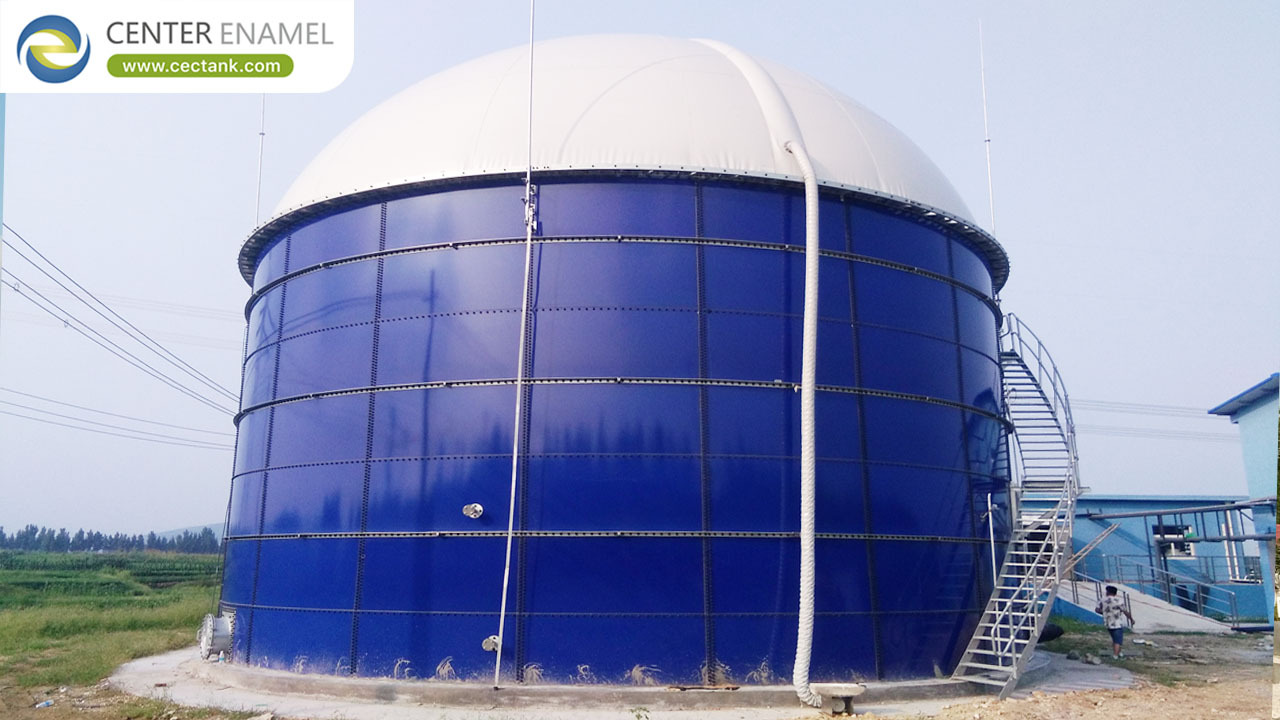
Odporne na korozję śrubowane zbiorniki na biogaz z blachy stalowej: idealne rozwiązanie dla procesów anaerobowego rozkładu
W branży fermentacji beztlenowej (AD) awaria infrastruktury często jest równoznaczna z korozją chemiczną. Instalacje biogazowe pracują w jednym z najbardziej agresywnych środowisk przemysłowych – bogatym w siarkowodór ($H_2S$), wilgoć i lotne kwasy tłuszczowe. Te czynniki szybko niszczą beton oraz standardową stal węglową, co prowadzi do przecieków konstrukcyjnych i kosztownych przestojów.
Dla zarządców instalacji i wykonawców EPC, Stalowe zbiorniki biogazowe łączone śrubowo, wyposażone w dachy ze szkła sparowanego ze stali (GFS), stały się wiodącym rozwiązaniem w tej dziedzinie. Ta technologia łączy wytrzymałość konstrukcyjną wysokowytrzymałej stali z chemicznie obojętnymi właściwościami szkła, zapewniając infrastrukturę „po raz pierwszy zamontowane i na zawsze” – maksymalizując wydajność metanu i długość okresu eksploatacji.
Nieprzyjazne środowisko tlenowego rozkładania
Zbiorniki anaerobowe nie tylko magazynują odpady; są one aktywnymi reaktorami chemicznymi. Proces mikrobiologicznego rozkładu tworzy:
Kwas siarkowy biogenny: Powstaje, gdy $H_2S$ łączy się z wilgocią; ten kwas agresywnie niszczy tradycyjne materiały.
Dynamiczne ciśnienia gazowe: Zbiorniki do fermentacji wymagają idealnie szczelnej konstrukcji, aby maksymalizować wydajność odbioru metanu i zapobiegać zagrożeniom dla środowiska.
Naprężenie mechaniczne: Ciągłe mieszanie (CSTR) oraz cykle termiczne wywierają stałe naprężenia na ściany zbiorników i konstrukcje dachowe.
Dlaczego technologia szkła przypiekanego do stali (GFS)?
Technologia GFS polega na spajaniu fritu szklanego z płytami stalowymi w temperaturze przekraczającej $820^\circ\text{C}$. Nie jest to powłoka; jest to proces molekularnego połączenia, który tworzy materiał kompozytowy.
Odporność chemiczna: Powierzchnia szklana jest odporna na działanie kwasów i zasad, które niszczą beton oraz niepowlekane stale.
Zero porowatości: W przeciwieństwie do betonu, GFS jest nieporowaty. Zapobiega powstawaniu biofilmów oraz korozji mikrobiologicznej (MIC), które stanowią główne przyczyny awarii dachów i ścian w instalacjach AD.
Strategiczna przewaga dachów GFS
W przypadku magazynowania biogazu dach jest równie istotny jak ściana. Dach wykonany z GFS zapewnia znacznie lepszą ochronę niż elastyczne membrany czy stalowe pokrycia:
Szczelność gazowa: Wykorzystując panele GFS na dachu, cała zbiornik – zarówno ściany, jak i pokrywa – staje się jednolitym, wyłożonym szkłem, szczelnym systemem gazu. Dzięki temu uniemożliwia się ucieczkę cennego biogazu oraz blokuje dostęp tlenu.
Minimalna konserwacja: Tradycyjne dachy wymagają periodicznego malowania lub ponownego pokrywania, aby zapobiec rdzewieniu. Dach z GFS jest praktycznie bezobsługowy, co znacznie obniża całkowity koszt posiadania (TCO).
Odporność na warunki środowiskowe: Powierzchnia szklana odbija promieniowanie UV i jest odporna na degradację spowodowaną warunkami atmosferycznymi, dzięki czemu dach nie ulega pogorszeniu przez ponad 30 lat eksploatacji.
Analiza porównawcza: materiały do zbiorników na biogaz
| Cecha | Stal śrubowa GFS | Zalewany beton | Spawana stal węglowa |
| Odporność na korozję | Doskonały (szklany, obojętny) | Niski (podatny na kwas) | Niski (wymaga powłoki) |
| Odporność na korozję mikrobową | Doskonała (nieporowata) | Niska | Niska |
| Hermetyczność gazowa | Doskonałe | Umierająca (mikropęknięcia) | Średnia (defekty spoin) |
| Szybkość instalacji | Szybka (modularna) | Powolna (wymagana utwardzanie) | Umierająca (spawanie w terenie) |
| Cykl życia | Ponad 30 lat | 20–30 lat | 15–20 lat |
Często zadawane pytania (FAQ)
Pytanie: Dlaczego GFS jest preferowany w stosunku do powłok epoksydowych w przypadku fermenterów?
Odpowiedź: Powłoki epoksydowe opierają się na adhezji mechanicznej. W kwaśnym środowisku fermentera epoksydy mogą pęcznieć, odpryskiwać lub delaminować, odsłaniając podłoże stalowe i doprowadzając do szybkiej korozji. GFS natomiast jest termicznie sparowane ze stalą, tworząc jednolity, spójny materiał, który nie może zostać naruszony przez zawartość zbiornika.
Pytanie: Czy zbiorniki GFS są odpowiednie do termofilowej fermentacji (wysoka temperatura)?
Odpowiedź: Tak. Zbiorniki GFS są stabilne pod względem termicznym. Szklano-zalutowane połączenie nie ulega zmianom pod wpływem wahaniom temperatury (zazwyczaj od 35°C do 55°C) występujących podczas aktywnej biologicznej fermentacji.
Pytanie: Jak zbiorniki GFS radzą sobie z miejscowymi obciążeniami sejsmicznymi i wiatrowymi?
Odpowiedź: Każdy zbiornik GFS jest projektowany tak, aby spełniać indywidualne wymagania danego miejsca. Wykorzystując analizę elementów skończonych (FEA), obliczamy niezbędne grubości blach oraz konfigurację śrub, by dostosować się do międzynarodowych norm konstrukcyjnych, takich jak AWWA D103-19 oraz ISO 28765, zapewniając bezpieczeństwo w każdym klimacie.
Pytanie: Czy zbiorniki fermentacyjne GFS mogą być rozbudowywane?
Odpowiedź: Tak. Modułowa, śrubowana konstrukcja zbiorników GFS umożliwia późniejsze rozszerzanie ich pojemności. Często można dodać dodatkowe pierścienie do istniejących zbiorników, zwiększając objętość magazynowania bez konieczności wymiany całej konstrukcji.
Partnerstwo z firmą Center Enamel
Center Enamel jest światowym liderem w dziedzinie infrastruktury zbiorników GFS. Dysponując ponad 30-letnim doświadczeniem, udanie wdrożyliśmy rozwiązania do przechowywania biogazu w ponad 100 krajach. Oferujemy wsparcie „od końca do końca” – od analizy konstrukcyjnej i projektowania kolektorów do odbioru gazu po profesjonalny, modułowy montaż.
Gotowi na optymalizację produkcji biogazu? Skontaktuj się dzisiaj z naszym zespołem inżynieryjnym, aby uzyskać techniczny studium wykonalności.