
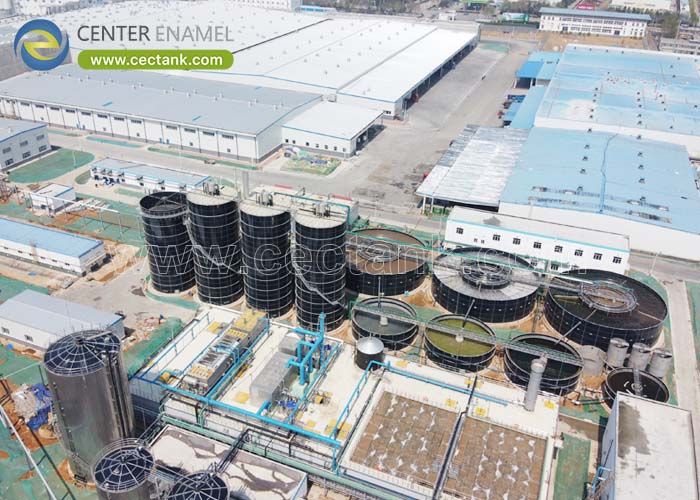
Zbiorniki na osady ze szkła sparowanego ze stalą (GFS): trwałe rozwiązanie dla oczyszczalni ścieków
In modern municipal and industrial wastewater treatment, effective sludge management is the difference between a high-performing facility and a maintenance nightmare. Sewage sludge is inherently aggressive; it contains corrosive acids, hydrogen sulfide (H2S), and abrasive solids that rapidly degrade traditional concrete and carbon steel infrastructure.
For plant managers and EPC contractors, Glass-Fused-to-Steel (GFS/GLS) tanks have become the industry standard for sludge holding. By combining the structural tensile strength of steel with the chemical inertness of glass, GFS tanks provide a “fit-and-forget” solution that maximizes operational uptime and protects long-term capital investments.
Why Sludge Management Demands Superior Material Science
Sludge holding is arguably the most hostile environment in a treatment plant. As organic matter breaks down, it releases gases and chemical byproducts that act as catalysts for corrosion:
Microbially Induced Corrosion (MIC): Biological activity in sludge produces sulfuric acid, which chemically eats away at the cement matrix in concrete tanks, leading to spalling and structural compromise.
Abrasive Wear: The grit and suspended solids in sludge act like sandpaper against tank walls.
Dynamic Loading: Sludge volume and density fluctuate, requiring a tank structure that can handle varying hydrostatic pressures without cracking.
The GFS Advantage: Why It Outperforms Traditional Tanks
GFS technology involves fusing silicate glass frit to steel panels at temperatures exceeding 820°C. This creates a molecular bond that is far superior to standard painted or epoxy coatings, which are prone to peeling, blistering, and delamination.
1. Wyższa odporność na korozję
The glass-enamel surface is completely inert. It does not react with the acidic environment of sewage sludge, preventing rust and ensuring the tank walls remain smooth and structurally sound for 30+ years.
2. Low-Friction, Non-Stick Surface
Sludge has a high tendency to adhere to rough surfaces. The ultra-smooth glass surface minimizes “clinging,” which facilitates more efficient mixing and ensures that the tank can be fully emptied and cleaned with minimal effort, reducing downtime.
3. Rapid, Modular Construction
Unlike poured concrete tanks that require weeks of curing and weather-dependent scheduling, GFS tanks are prefabricated in a factory and assembled on-site using a bolted, modular method. This “top-down” hydraulic jacking approach allows for construction in almost any climate, significantly reducing project timelines.
Comparative Analysis: GFS vs. Conventional Sludge Tanks
| Cecha | Szkło-zalane do stali (GFS) | Zalewany beton | Spawana stal węglowa |
|---|---|---|---|
| Odporność na korozję | Doskonałe (nierdzewne szkło) | Niska (wymaga wyłożenia) | Low (Needs Repainting) |
| Konserwacja | Minimalna | Wysoka (uszczelnianie pęknięć) | Wysoka (ponowne pokrycie) |
| Szybkość budowy | Szybka (modularna) | Powolne (Tygodnie/Miesiące) | Średnie |
| Cykl życia | Ponad 30 lat | 20–30 lat | 15–25 lat |
| Wartość aktywów | High (Expandable) | Low (Fixed) | Niska |
Często zadawane pytania (FAQ)
Q: Can GFS tanks handle the harsh chemical nature of septic sludge?
A: Yes. The glass-fused surface is specifically engineered to resist acids and alkalis (pH range 3–11), making it ideal for the chemical variability found in municipal sewage and industrial effluent.
Q: Does the tank require special maintenance?
A: Because the coating is a molecularly bonded glass, it does not require the periodic sandblasting or repainting needed for steel tanks. Routine maintenance is limited to inspecting bolt seals and ensuring the mixing/aeration equipment is functioning correctly.
Q: Are GFS tanks suitable for seismic zones?
A: Absolutely. Every tank is engineered using Finite Element Analysis (FEA) to withstand the specific wind, seismic, and hydrostatic loads required by local building codes. The bolted, segmented design offers a degree of flexibility that allows the tank to absorb structural stress more effectively than brittle concrete.
Q: Can I expand the tank later?
A: One of the key benefits of the bolted design is scalability. If your sludge volume increases due to population growth or industrial changes, you can often add additional rings to your existing GFS tank, protecting your initial investment.
Nawiąż współpracę z światowym liderem
At Center Enamel, we specialize in providing high-performance GFS sludge holding solutions. With over 30 years of global experience, we provide end-to-end support—from structural engineering and site-specific foundation design to professional, modular assembly.
Ready to upgrade your sludge management infrastructure? Contact our engineering team today to discuss your site requirements, volume capacity, and project timelines.
· 1. Foremost China Welded Stainless Steel Syrup Storage Tanks Manufacturer