
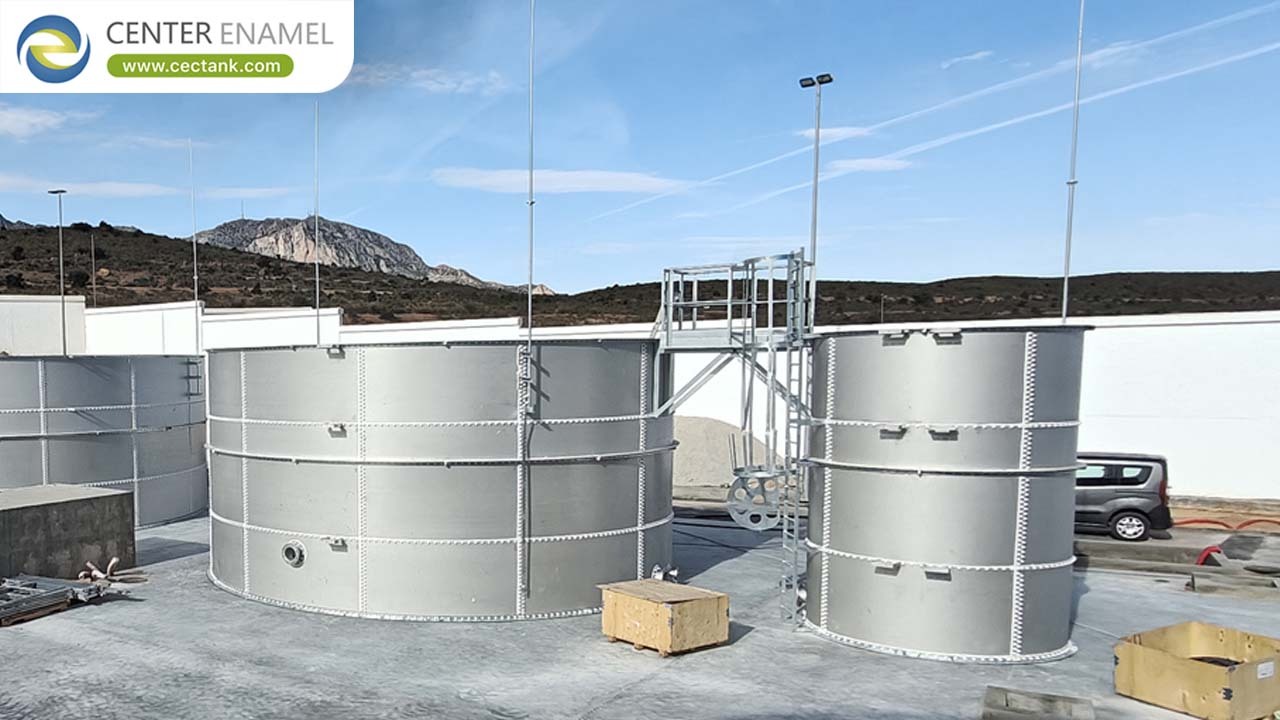
Stainless Steel Storage Tanks for Effluent Sludge Settlement Tanks
In municipal wastewater treatment plants, chemical processing facilities, food and beverage manufacturing units, and textile mills, managing industrial effluent and byproduct sludge is vital for regulatory compliance and environmental stewardship. The primary and secondary clarification stages rely heavily on gravity sedimentation to separate suspended solid particles, biological flocs, and heavy slurries from liquid wastewater.
Because industrial effluent frequently fluctuates in chemical composition, pH levels, and temperature, selecting the correct containment structure is essential. To achieve maximum corrosion immunity, structural longevity, and operational efficiency, modern facilities rely on Stainless Steel Storage Tanks for Effluent Sludge Settlement Tanks. Engineered by Shijiazhuang Zhengzhong Technology Co., Ltd. (Center Enamel), these specialized containment systems deliver benchmark performance in demanding wastewater environments.
The Critical Role of Settlement Tanks in Wastewater Treatment
Effluent sludge settlement tanks—frequently designated as industrial clarifiers or thickeners—perform several core engineering functions within a treatment train:
Gravity Clarification: Incoming wastewater enters the tank under controlled hydraulic velocities, allowing heavier suspended solids, chemical precipitates, and biological flocs to settle naturally toward a sloped or conical base.
Biomass Concentration and Return: In activated sludge systems, secondary settling tanks separate treated liquid from biomass, thickening the settled sludge so it can be returned to the process inlet to maintain required microbial concentrations.
Sludge Volume Reduction: By separating clear supernatant liquid from heavy sludge via decanting ports or overflow weirs, the volume of waste requiring downstream dewatering or pressing is drastically minimized.
Technical Superiority of Stainless Steel Sludge Settlement Tanks
Center Enamel’s stainless steel settlement tanks incorporate advanced metallurgical and structural features designed to handle corrosive slurries:
Corrosion-Resistant Austenitic Grades (304 / 316 / 316L): Fabricated from premium stainless steel grades, these tanks possess a native chromium-oxide passive layer that provides exceptional resistance to oxidation, mild acids, alkalis, and chemical cleaning agents.
Conical and Sloped Bottom Configurations: Engineered with specialized funnel or conical bases that direct settled sludge toward a central low-point outlet, enabling smooth, automated extraction via sludge pumps without manual clearing.
Smooth, Non-Porous Anti-Adhesion Walls: The high-gloss, inert surface finish prevents biological fouling, scaling, and the accumulation of sticky organic flocs, ensuring simple washdowns and consistent hydraulic performance.
Comparative Matrix: Effluent Settlement Tank Technologies
| Evaluation Metric | Center Enamel Stainless Steel Settlement Tank | Cast-in-Place Concrete Clarifier | Traditional Carbon Steel Tank (Painted) |
| Corrosion & Chemical Defense | Superior (Native passive chromium layer resists acidic, alkaline, and saline effluent) | Moderate (Vulnerable to concrete carbonation, sulfate attack, and acidic leaching) | Low (Dependent on periodic field-applied coatings that blister and peel quickly) |
| Biological Adhesion & Scaling | Minimal (Smooth, non-porous surface prevents bio-fouling and sludge build-up) | High (Rough concrete porosity encourages bacterial growth and scaling) | Moderate (Surface degradation creates micro-crevices for sludge adherence) |
| Construction & Assembly | Modular & Fast (Precision-engineered panels assembled rapidly on-site) | Very Slow (Months of formwork, concrete pouring, and multi-week curing phases) | Moderate (Requires heavy field plate rolling and extensive weld inspections) |
| Lifecycle & Maintenance | Minimal (40 to 60+ years of service with virtually zero structural maintenance) | High (Requires frequent structural crack sealing and waterproof patching) | High (Continuous maintenance overhead to prevent rust-through and leaks) |
Engineering Assurance: All stainless steel storage and settlement tanks engineered by Center Enamel comply strictly with rigorous international standards, including AWWA D103-09, ISO 28765, and ISO 9001, ensuring dependable, long-term operation in critical municipal and industrial applications.
Frequently Asked Questions (FAQ)
Q: Why choose stainless steel over concrete or carbon steel for effluent settlement tanks?
A: Stainless steel offers superior native resistance to aggressive chemicals, acids, and alkalis found in industrial effluent. Unlike concrete, which is prone to structural cracking and sulfate attack, or painted carbon steel, which requires frequent recoating, stainless steel provides a long service life (40–60+ years) with minimal maintenance.
Q: What stainless steel grades are used for Center Enamel’s sludge settlement tanks?
A: Center Enamel fabricates its tanks using high-grade austenitic stainless steel—primarily Grade 304 for standard environments and Grade 316/316L for high-chloride, acidic, or chemically aggressive industrial wastewater streams to ensure maximum pitting resistance.
Q: How is settled sludge discharged from these stainless steel tanks?
A: Our settlement tanks are typically engineered with a sloped or conical bottom floor that channels heavy settled solids and biological flocs naturally toward a central bottom outlet, allowing efficient removal via sludge pumps or automated discharge valves.
Q: Can stainless steel settlement tanks be customized for specific plant flow rates?
A: Yes. Center Enamel provides fully custom-engineered solutions tailored to your plant’s hydraulic flow rates, space restrictions, and specific wastewater characteristics, incorporating options such as specialized internal mixers, baffles, weirs, and level sensors.