
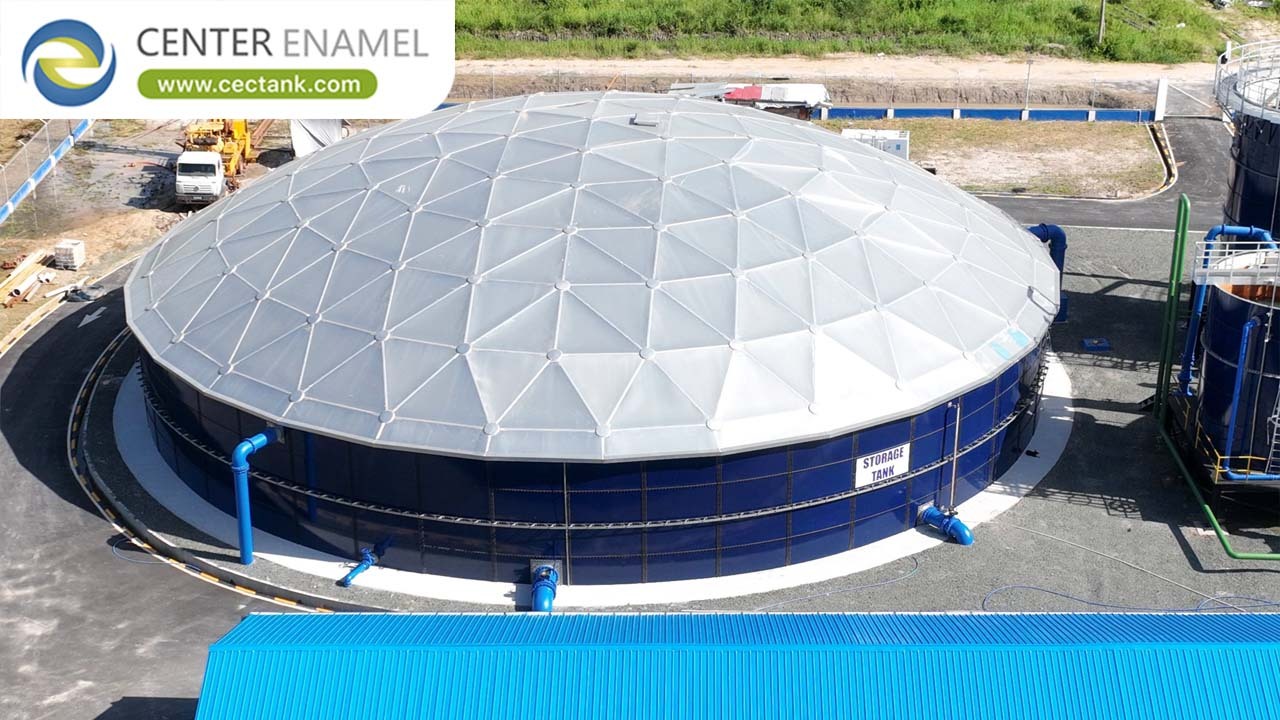
Aluminum Geodesic Dome Roofs: Engineering Excellence for Water and Wastewater Infrastructure
For municipal water districts and industrial wastewater treatment operators, the “roof” of a tank is more than just a cover—it is a critical barrier against contamination, corrosion, and environmental leakage. Aluminum Geodesic Dome Roofs (AGDRs) have become the industry-leading solution for large-diameter storage tanks, offering a combination of structural efficiency, chemical resistance, and long-term asset protection that traditional steel or concrete roofs simply cannot match.
Why Geodesic Domes Dominate Water Infrastructure
Unlike traditional flat or cone roofs that require a forest of internal columns, rafters, and trusses, a geodesic dome is a self-supporting, clear-span structure. Its geometry, based on a network of interlocking triangles, distributes structural loads—such as snow, wind, and seismic forces—evenly across the tank perimeter.
The Aluminum Advantage
These domes are fabricated from high-strength, marine-grade aluminum alloys. Unlike carbon steel, which demands aggressive anti-corrosion maintenance (sandblasting and repainting every few years), aluminum naturally forms a passive, self-healing oxide layer that makes it virtually immune to atmospheric and chemical corrosion.
Operational Benefits in Water & Wastewater Treatment
- Superior Corrosion Resistance (Wastewater)
In wastewater and anaerobic digestion environments, the tank headspace is often filled with corrosive gases like Hydrogen Sulfide (H2S) and high humidity. While these elements rapidly degrade steel and concrete, aluminum remains unaffected, ensuring the roof doesn’t deteriorate or drop debris into the treatment process.
- Odor Control and Emission Containment
Geodesic domes create a tight, airtight seal over tanks. In wastewater treatment facilities, this is critical for containing foul odors and volatile organic compounds (VOCs). By keeping emissions trapped, facilities can comply with strict local environmental regulations and maintain positive relations with surrounding communities.
- Potable Water Safety
For municipal water storage, aluminum domes act as a total barrier against:
- External Contaminants:Bird droppings, dust, and debris.
- Algal Blooms:By blocking UV light, the dome prevents photosynthesis, effectively eliminating the risk of algae growth within the tank.
Comparison Matrix: Dome Roofs vs. Conventional Roofs
When evaluating the Total Cost of Ownership (TCO), the engineering advantages of aluminum domes become clear.
| Performance Metric | Aluminum Geodesic Dome | Traditional Steel Cone | Poured Concrete Dome |
| Internal Supports | Clear-Span (None) | Columns/Rafters | Minimal/None |
| Corrosion Resistance | Superior (Inherent) | Low (Requires painting) | Moderate |
| Maintenance | Minimal | High (Periodic recoating) | Moderate |
| Installation Speed | Fast (Modular) | Slow (Welded) | Very Slow (Curing) |
| Weight | Lightweight | Heavy | Extremely Heavy |
Compliance and Engineering Standards
Infrastructure projects must adhere to rigorous structural and safety mandates. Reputable manufacturers design and fabricate these systems in strict accordance with global standards to ensure long-term stability.
- AWWA D108:The American Water Works Association standard specifically for Aluminum Dome Roofs for Water Storage.
- API 650 Appendix G:Often referenced for petroleum and large-scale industrial storage tank roofs.
- ASCE 7:Ensures the dome is engineered to withstand site-specific wind, snow, and seismic load calculations.
Frequently Asked Questions (FAQ)
Q: Can these domes be retrofitted onto existing tanks?
A: Yes. Because aluminum domes are lightweight and modular, they are frequently retrofitted onto existing steel or concrete tanks. They can often be assembled on the ground adjacent to the tank and lifted into place in a single operation, significantly reducing downtime.
Q: How do they handle extreme weather?
A: The geodesic design is specifically engineered for high-wind and heavy snow-load environments. By using finite element analysis (FEA), engineers can customize the strut thickness and node strength to meet local climate requirements.
Q: Are they maintenance-free?
A: While no structure is 100% “maintenance-free,” aluminum domes are considered the closest to this ideal. They do not require the routine repainting, coating, or structural inspection cycles (for rust) that are necessary for steel roofs.
Secure Your Infrastructure
For facility managers looking to reduce long-term operational costs and protect their water quality, the aluminum geodesic dome is a strategic investment. By eliminating internal support structures and resisting corrosive degradation, you ensure that your storage assets remain compliant and operational for 40+ years.
Are you evaluating a new storage project or a roof replacement?
Consult with a specialist manufacturer to conduct a structural analysis of your tank site and review compliance with AWWA D108 standards.
- Expert Recommendation:Ensure your chosen manufacturer provides Finite Element Analysis (FEA) certification and adheres to the Aluminum Design Manual (ADM) to guarantee your dome is engineered for long-term safety.