
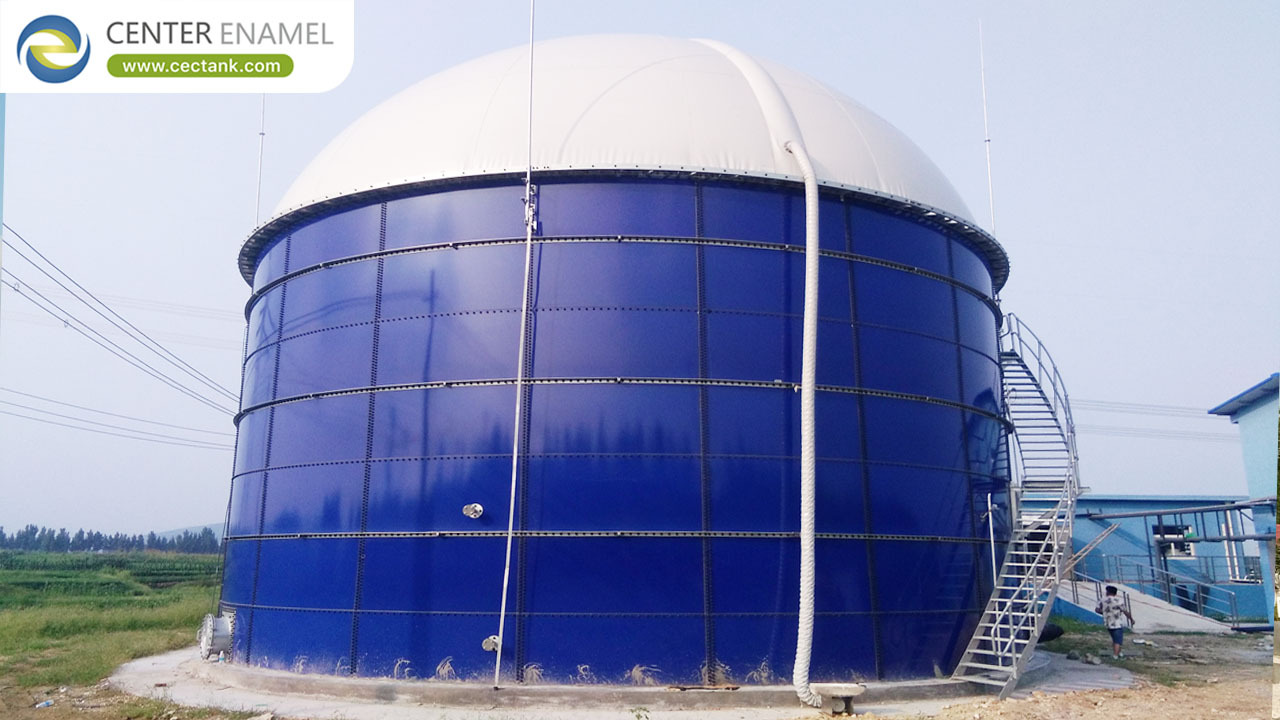
Balones contenedores de biogás: el componente esencial para el almacenamiento de gas a baja presión
En el campo en rápida expansión de la digestión anaerobia (DA), el Globo para biogás—técnicamente conocido como un Depósito de gas de doble membrana—funciona como el corazón del sistema. Para plantas municipales de tratamiento de aguas residuales, granjas agrícolas e instalaciones industriales de bioenergía, este componente constituye la solución principal para el almacenamiento a baja presión.
Ya sea que esté gestionando biogás para unidades de Cogeneración (CHP) o preparándolo para su conversión en Bio-GNV, un gasómetro de alta calidad garantiza que su planta permanezca segura, eficiente y rentable.
¿Qué es un globo de almacenamiento de biogás?
En esencia, un gasómetro de biogás es un recipiente de almacenamiento dinámico y flexible que equilibra la diferencia entre la producción de gas (que es continua) y el consumo de gas (que suele ser variable).
A diferencia de los tanques rígidos de acero que deben soportar altas presiones, estos sistemas están diseñados para almacenamiento a baja presión (típicamente entre 10 y 50 mbar). Utilizan un diseño de “doble membrana”, que se ha convertido en el estándar de la industria por su fiabilidad y durabilidad:
·
Membrana interna: Una cámara flexible y hermética al gas que contiene directamente el biogás crudo. Se expande y contrae según varía el volumen de gas almacenado.
·
·
Membrana exterior: Una cúpula resistente a las condiciones climáticas, sustentada por aire, que protege la membrana interna de la radiación UV, el viento, la nieve y la lluvia.
·
·
Espacio intersticial de aire: Un soplador de aire automatizado mantiene una ligera presión positiva entre las dos membranas. Esto proporciona la forma estructural de la cúpula exterior y asegura una presión de descarga constante y estable para los equipos situados aguas abajo.
·
Por qué el almacenamiento a “baja presión” es fundamental
La mayoría de las plantas de biogás no almacenan gas a altas presiones. El almacenamiento a alta presión consume mucha energía y requiere infraestructuras de acero robustas. Los gasómetros de baja presión ofrecen ventajas operativas claras:
00001.
Regulación de presión constante: Al mantener una presión constante y uniforme, estos gasómetros garantizan que los motores de gas, las calderas y los sistemas de upgrading reciban un flujo estable, evitando así los problemas de “sobrecarga” o “falta de suministro” en los sistemas de combustión.
00002.
00003.
Resistencia a la corrosión: Los gasómetros tradicionales de acero son notoriamente susceptibles a la corrosión interna causada por el sulfuro de hidrógeno (H2S) y humedad. Los materiales de membrana de alta calidad son químicamente inertes e inmunes a este tipo de oxidación.
00004.
00005.
Eficiencia en espacio y costos: Los soportes tipo globo pueden instalarse directamente sobre el tanque del digestor, lo que permite ahorrar una importante huella espacial y elimina la necesidad de tuberías complejas entre el reactor y el depósito.
00006.
Beneficios para las instalaciones modernas de biogás
|
Característica |
Almacenador de biogás de membrana |
Depósito de gas tradicional de acero |
|
Riesgo de corrosión |
Cero (materiales inertes) |
Alto (oxidación) |
|
Velocidad de instalación |
Rápida (modular) |
Lento (Semanas/Meses) |
|
Presión operativa |
Constante |
Variable (disminuye a medida que se consume el gas) |
|
Mantenimiento |
Mínimo |
Alto (repintado/revestimiento) |
|
Vida útil |
15–20 años |
25+ (con mantenimiento constante) |
Preguntas frecuentes (FAQ)
Pregunta: ¿Por qué las plantas de biogás necesitan un “globo” si ya cuentan con un digestor?
R: Los digestores producen gas las 24 horas del día, los 7 días de la semana, pero la demanda energética (motores CHP) o las unidades de upgrading pueden funcionar por lotes o a diferentes ritmos. El contenedor de biogás actúa como un “amortiguador”, almacenando el exceso de gas durante los periodos de baja demanda y liberándolo durante los picos de consumo. De este modo se evita la quema (pérdida) de su valioso metano.
Pregunta: ¿Es seguro el material de la membrana frente al fuego y a ataques químicos?
R: Sí. Los soportes de membrana de alta calidad utilizan tejidos de poliéster de grado industrial recubiertos con PVC o PVDF especializados. Estos materiales están tratados con retardantes de llama (a menudo cumplen la normativa DIN 4102 B1) y están específicamente formulados para resistir los gases ácidos (H2S, CO2) presente en el biogás crudo.
Pregunta: ¿Cómo elijo el tamaño adecuado para mi planta?
R: El dimensionamiento se basa en su producción diaria de biogás y en sus requisitos operativos de reserva. Una regla general para plantas equipadas con motores CHP es almacenar suficiente gas para De 4 a 6 horas de operación. Si está realizando la conversión a Bio-CNG, suele recomendarse un buffer más grande (10–12 horas) para gestionar las paradas del compresor.
Integración estratégica con tanques GFS
Para un rendimiento óptimo, muchos operadores de plantas integran estos globos de membrana con Digestores de vidrio fundido sobre acero (GFS). El tanque GFS proporciona una base robusta y resistente a la corrosión, mientras que el techo de doble membrana funciona como el contenedor integrado de gas. Esta combinación ofrece el menor Costo Total de Propiedad (TCO) del sector.
¿Está listo para optimizar el almacenamiento de su biogás? Center Enamel ofrece soportes de membrana de alta durabilidad, diseñados específicamente para integrarse perfectamente con su infraestructura existente o nueva de digestores.