
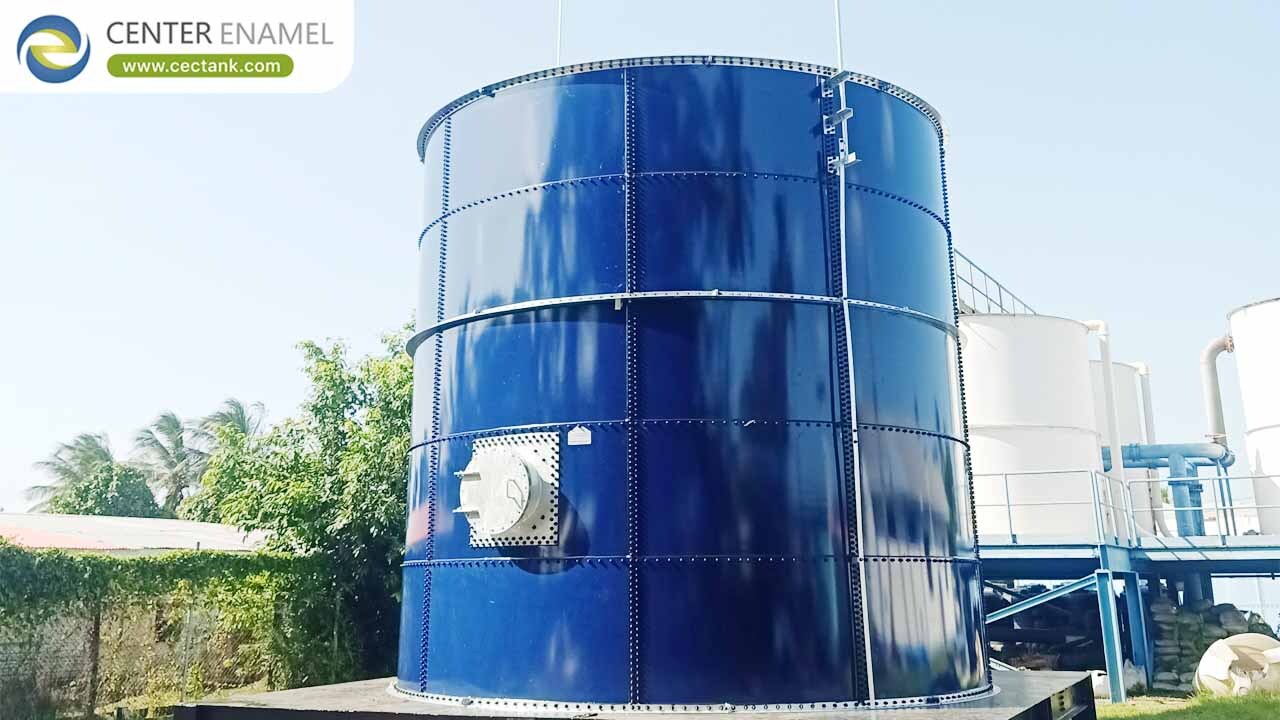
Tanques de reactor UASB: Pioneros en el tratamiento anaeróbico de aguas residuales para un futuro sostenible
En el cambio global hacia prácticas de economía circular, el reactor de lecho de lodos anaerobio de flujo ascendente (UASB) ha surgido como el estándar de oro para el tratamiento sostenible de aguas residuales. Al convertir los contaminantes orgánicos en biogás renovable mientras se trata simultáneamente el agua, el proceso UASB transforma un problema tradicional de eliminación de residuos en un recurso generador de energía.
Para instalaciones municipales e industriales, el éxito de un proyecto UASB depende de dos factores: el rendimiento biológico del lecho de lodos y la integridad estructural del propio tanque reactor.
¿Qué es un reactor UASB?
El reactor UASB es un digestor anaeróbico productor de metano. Procesa las aguas residuales haciendo que fluyan hacia arriba a través de un lecho denso de lodos granulares —el “lecho”—. A medida que el agua residual atraviesa estos lodos, los microorganismos digieren la materia orgánica, convirtiéndola en biogás rico en metano y en efluente limpio.
Cómo funciona: los principios fundamentales
Distribución del influente: Las aguas residuales se bombean desde la parte inferior del reactor mediante un sistema de distribución especializado, garantizando un flujo uniforme.
La capa de lodo: Los microorganismos forman gránulos densos que se asientan en el fondo. A medida que las burbujas de gas ascienden, levantan estos gránulos, creando un “lecho” suspendido de biomasa activa.
Separación de fases: En la parte superior del reactor, una Separador trifásico La separación (gas-líquido-sólido) es esencial. Evita la pérdida de lodos valiosos mientras captura el biogás para su recuperación energética.
Clarificación del efluente: El agua restante sale por la parte superior, significativamente más limpia y lista para su posterior tratamiento o descarga.
Beneficios clave de la tecnología UASB
Adoptar la tecnología UASB ofrece una ventaja competitiva y operativa importante para industrias con aguas residuales orgánicas de alta carga, como las dedicadas a la elaboración de alimentos y bebidas, las fábricas de papel y las destilerías.
Generación de energía: El proceso captura metano, que puede ser purificado y utilizado para calefacción, generación de electricidad o como combustible vehicular.
Bajo consumo energético: A diferencia de los sistemas aerobios, los reactores UASB no requieren sopladores de aire que consumen mucha energía.
Producción mínima de lodo: La alta tasa de degradación orgánica produce significativamente menos lodo residual en comparación con los procesos de lodos activados, reduciendo así los costos de eliminación.
Pequeña huella ecológica: La naturaleza de alta velocidad del diseño UASB permite tratar grandes cargas orgánicas en tanques compactos y verticales.
El papel crucial de la infraestructura de tanques
Dado que el proceso UASB es inherentemente anaeróbico, crea un ambiente rico en sulfuro de hidrógeno ($H_2S$) y ácidos orgánicos. Los materiales tradicionales, especialmente el hormigón y el acero al carbono, son altamente susceptibles a la corrosión en estas condiciones.
Tanques de vidrio fundido sobre acero (GFS/GLS) son la opción preferida para los reactores UASB por varias razones:
Resistencia a la corrosión: La superficie vidriada y esmaltada es químicamente inerte, evitando la degradación provocada por ácidos que destruye los tanques de acero convencionales.
Integridad hermética a los gases: El diseño atornillado y sellado con juntas garantiza un cierre hermético, indispensable para mantener las condiciones anaeróbicas y capturar todo el biogás generado.
Despliegue rápido: Los paneles modulares permiten construir reactores altos y de gran diámetro en una fracción del tiempo requerido para la construcción con hormigón vertido.
Análisis comparativo: UASB frente a tratamiento aeróbico tradicional
| Característica | UASB (Anaeróbico) | Lodo activado (aeróbico) |
| Consumo de energía | Bajo (productor de energía) | Alto (costo de aireación) |
| Producción de lodo | Baja | Alta |
| Huella ecológica | Compacto | Grande |
| Tasa de carga orgánica | Alta | Moderada |
| Costo operativo | Económico | Caro |
Preguntas frecuentes (FAQ)
P: ¿Qué tipos de aguas residuales son adecuadas para los reactores UASB?
R: Los reactores UASB resultan más eficaces para aguas residuales con altas cargas de DQO (Demanda Química de Oxígeno) y DBO (Demanda Bioquímica de Oxígeno), típicas de las industrias alimentaria y de bebidas, de pulpa y papel, así como farmacéutica.
P: ¿Cuánto tiempo se necesita para poner en marcha un reactor UASB?
R: La puesta en marcha depende de la disponibilidad de lodo granular “semilla”. Con la semilla biológica adecuada, un reactor UASB puede alcanzar su capacidad operativa en unas pocas semanas. Sin sembrado, puede tardar varios meses.
P: ¿Por qué es tan importante el material del tanque?
R: La digestión anaerobia produce sulfuro de hidrógeno ($H_2S$). Si este $H_2S$ reacciona con la humedad, se forma ácido sulfúrico. En un tanque de hormigón, este ácido puede disolver la matriz cementosa; en un tanque de acero al carbono, provoca una rápida oxidación. Los tanques GFS/GLS resisten este ataque químico, garantizando que el reactor dure décadas.
P: ¿Se puede utilizar un reactor UASB como parte de un sistema de varias etapas?
R: Sí. Los reactores UASB se emplean con frecuencia como etapa principal de tratamiento, seguidos de reactores aerobios de “pulido” (como SBR o MBR) para cumplir estrictas normas ambientales de vertido.
Asóciese con Center Enamel
Center Enamel aprovecha más de 30 años de experiencia para ofrecer tanques de alto rendimiento y resistentes a la corrosión, diseñados específicamente para aplicaciones anaeróbicas UASB. Proporcionamos la integridad estructural necesaria para contener estas reacciones químicas, maximizando al mismo tiempo la recuperación de energía a partir del biogás.
¿Listo para integrar un tratamiento sostenible de aguas residuales en su instalación? Póngase en contacto con nuestro equipo de ingeniería para analizar sus cargas de DQO, caudales y requisitos específicos del proyecto en el sitio.