
Combinando Tanques de Aço: Sistemas Parafusados Multiplos para Capacidade e Etapas
Por que combinar vários tanques de aço em vez de um único tanque grande?
Como você manifolds tanques de aço parafusados?
É possível adicionar tanques posteriormente para ampliar a capacidade?
Quais são as regras para a operação em paralelo versus em série?
O instinto em um projeto em expansão é especificar um único tanque grande e considerar o assunto encerrado. O problema surge mais tarde: o recipiente único não pode ser retirado de serviço sem interromper a planta, seu volume fica fixo no momento da compra, independentemente de a demanda se concretizar, e, caso o local precise de maior capacidade, a única alternativa é iniciar outro programa completo de engenharia civil e mecânica. Em plantas municipais, instalações industriais e operações agrícolas, essa rigidez acarreta altos custos — os operadores acabam utilizando um ativo subutilizado nos primeiros anos e um equipamento subdimensionado nos períodos posteriores, sem qualquer período de inspeção intermediário. Tratar o armazenamento como um sistema composto por múltiplos tanques, em vez de um único recipiente, elimina simultaneamente essas três limitações.
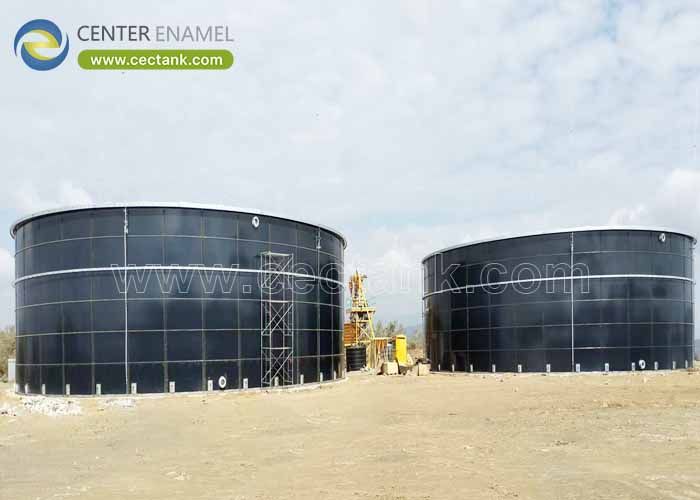
Combinar tanques de aço significa conectar vários vasos parafusados por meio de um coletor comum, permitindo que funcionem como um único volume de armazenamento, ao mesmo tempo em que permanecem isoláveis individualmente. Essa configuração oferece capacidade escalonada, uma janela de inspeção sem necessidade de parada e a possibilidade de operar etapas do processo em série, quando a demanda assim o exigir. A Shijiazhuang Zhengzhong Technology Co., Ltd. (Center Enamel) fornece tanques GFS parafusados, revestidos com epóxi, em aço inoxidável e galvanizados, projetados segundo um padrão comum de conexão, fabricados conforme a norma ISO 9001 e entregues em mais de 100 países.
1. Por que Combinar Tanques em vez de Especificar um Único Recipiente Grande?
Tanques combinados desacoplam a capacidade de uma única decisão de entrega. O volume pode ser adicionado quando a demanda o justificar, qualquer tanque individual pode ser isolado para inspeção ou reparo enquanto o restante do sistema permanece em operação, e as restrições de transporte deixam de ser um limitador da capacidade total, pois cada embarcação transporta painéis padronizados.
Capital Estagiado: Instale a fase um agora e adicione embarcações nos ciclos orçamentários posteriores, em vez de financiar a capacidade máxima antes que ela seja necessária.
Janela de Inspeção: Isole e esvazie um tanque para limpeza ou inspeção, enquanto o restante do sistema continua em operação.
Independência de Transporte: Cada tanque é transportado como painéis de fábrica, de modo que a capacidade total do local não fica mais limitada por restrições rodoviárias ou portuárias impostas a uma única embarcação.
Redundância: Um problema mecânico em uma embarcação torna-se uma tarefa de manutenção em vez de uma parada da planta, o que é especialmente importante em instalações de processos contínuos.
Separação de Funções: Diferentes tanques no mesmo sistema podem transportar conteúdos ou etapas de processo distintos, algo que uma única embarcação não consegue fazer.
2. Como Manifolds de Tanques Parafusados São Feitos Corretamente?
A manifolding é simples em princípio, mas regida pela hidráulica: o coletor deve ser dimensionado de modo que os tanques sejam preenchidos e esvaziados a taxas comparáveis; cada tanque precisa de sua própria válvula de isolamento; e o sistema deve ser projetado para que nenhum recipiente seja sobrecarregado ou fique estagnado. Linhas de equalização, controle de nível e disciplina no isolamento são o que fazem um sistema combinado comportar-se como um único tanque, em vez de vários conectados por tubulação.
Cabeçalho Comum Dimensionado: O diâmetro do coletor deve suportar o fluxo combinado sem criar um gradiente hidráulico que deixe o tanque mais distante com escassez de fluido.
Válvulas de Isolamento Individuais: Cada tanque necessita de sua própria válvula tanto na entrada quanto na saída, permitindo retirar um único equipamento do serviço sem esvaziar todo o sistema.
Conexões Equalizadoras: Uma tubulação balanceada equaliza os níveis entre tanques operando em paralelo, evitando que um recipiente transborde enquanto outro permanece baixo.
Controle de Nível e Alarmes: Um sinal de nível comum, com alarmes independentes de nível alto para cada tanque, garante que uma falha no controle não possa encher um recipiente além de seu nível de projeto.
Gerenciamento de Estagnação: A rotação ou a sequência de esvaziamento mantém todos os tanques em circulação, o que é importante em aplicações potáveis e biológicas, onde a estagnação compromete a qualidade.
3. Quando os Tanques Devem Operar em Série em Lugar de Paralelo?
A operação em paralelo combina capacidade; já a operação em série cria etapas de processo. A configuração em série é adotada quando o líquido requer tempo de residência ou tratamento sequencial — sedimentação antes do armazenamento, condicionamento do pH antes da descarga, ou tratamento anaeróbio seguido de aeróbio — pois dividir um único volume em etapas proporciona um perfil hidráulico que nenhum tanque misto único consegue reproduzir.
Série para Tempo de Residência: Dois ou mais tanques em série aproximam-se do escoamento em pistão, oferecendo desempenho muito superior em decantação ou reação do que um único tanque com o mesmo volume total.
Série para Tratamento Sequencial: As etapas podem ser configuradas para sedimentação, depois equalização e, por fim, descarga, com cada etapa operando em seu próprio nível e tempo de retenção.
Paralelo para Capacidade Pura: Quando a finalidade é apenas o volume, a operação em paralelo com um coletor balanceado é a configuração mais simples e robusta.
Arranjos Comutáveis: A válvula pode permitir ambos os modos, permitindo que o operador opere em paralelo durante a operação normal e em série quando um distúrbio no processo exigir uma etapa de preparação.
Consistência da Fundação: Independentemente do arranjo, os tanques devem compartilhar um projeto comum de fundação e um padrão de conexão, para que novas unidades possam ser instaladas sem necessidade de modificações.
| Critério de avaliação | Sistema Combinado de Esmalte Central Parafusado | Tanque Único Grande Parafusado | Bacias de Concreto Moldadas no Local |
|---|---|---|---|
| Escalabilidade | Alto — adicione tanques por fase à medida que a demanda cresce | Baixo — volume fixo na compra | Nenhum — fixo desde o primeiro preenchimento |
| Inspection & redundancy | Alto — isolar um tanque, manter a operação | Nenhum — a isolamento interrompe a planta | Baixo — falhas em células individuais |
| Estágio do processo | Alto — arranjos em série ou comutáveis | Nenhum — volume único e misto | Moderado — células com defletores possíveis |
| Delivery & installation | Rápido — painéis padrão, entrega em 30 dias | Rápido — mas necessita de guindaste maior e fundação mais robusta | Muito lento — cofragem e cura |
Center Enamel builds combined systems on a common engineering standard so vessels added years later match the originals. Panels are glass-fused at 820-930 °C with 2C2F coverage verified by 100% high-voltage holiday spark testing, joined with grade 8.8 bolting, and structurally validated by finite element analysis to AWWA D103-09. Production runs to ISO 9001 with CE/EN 1090 coverage and NSF/ANSI 61 where potable duty applies, delivered to more than 100 countries on a standard 30-day schedule with a three-year warranty.
Um único tanque grande é uma aposta baseada em uma previsão de demanda. Já um sistema combinado é uma decisão passível de revisão — é possível acrescentar um vaso, isolar um vaso ou reorganizar a configuração de um vaso, sem interromper a operação da planta. — Equipe de Engenharia de Água Municipal da Center Enamel
Perguntas Frequentes (FAQ)
Por que combinar vários tanques de aço em vez de um único tanque grande?
Tanques combinados permitem aumentar a capacidade em fases, à medida que a demanda se concretiza; possibilitam isolar qualquer vaso individual para inspeção sem paralisar a planta e eliminam limitações de transporte quanto ao volume total do local. Um único tanque grande fixa o volume desde a compra e não oferece margem para inspeção.
Como você manifolds tanques de aço parafusados?
Conecte-os a um coletor comum dimensionado para a vazão combinada, instale válvulas de isolamento individuais nas entradas e saídas de cada tanque, providencie conexões equalizadoras para manter os níveis equilibrados e instale alarmes independentes de nível alto. O controle de nível e a sequência de retirada mantêm todos os tanques em circulação.
É possível adicionar tanques posteriormente para ampliar a capacidade?
Sim, desde que o layout da fundação e o padrão de conexão tenham sido projetados desde o início para a configuração final. Como cada tanque é fabricado a partir de painéis produzidos em fábrica, os vasos adicionados posteriormente correspondem aos anteriores e podem ser instalados sem modificar o sistema operacional.
O sistema combinado pode ser personalizado para o nosso local?
Sim. A Center Enamel define a quantidade de tanques, diâmetro, altura e material de cada vaso, bem como o arranjo do coletor e das válvulas, a operação em série, paralela ou comutável, o tipo de cobertura e toda a gama de aberturas de inspeção, flanges, escadas, plataformas e instrumentos de medição de nível.
Principais conclusões
Tanques combinados parafusados transformam o armazenamento de uma compra fixa em um sistema que pode ser ampliado, isolado e reconfigurado.
Uma manifolagem adequada requer um coletor comum dimensionado, válvulas de isolamento individuais, linhas equalizadoras e alarmes independentes de nível alto.
Operar tanques em paralelo para obter capacidade pura e em série quando for necessário tempo de residência ou tratamento sequencial.
Projetar o arranjo da fundação e o padrão de conexão para a configuração final, de modo que os vasos subsequentes possam ser instalados sem alterações.