
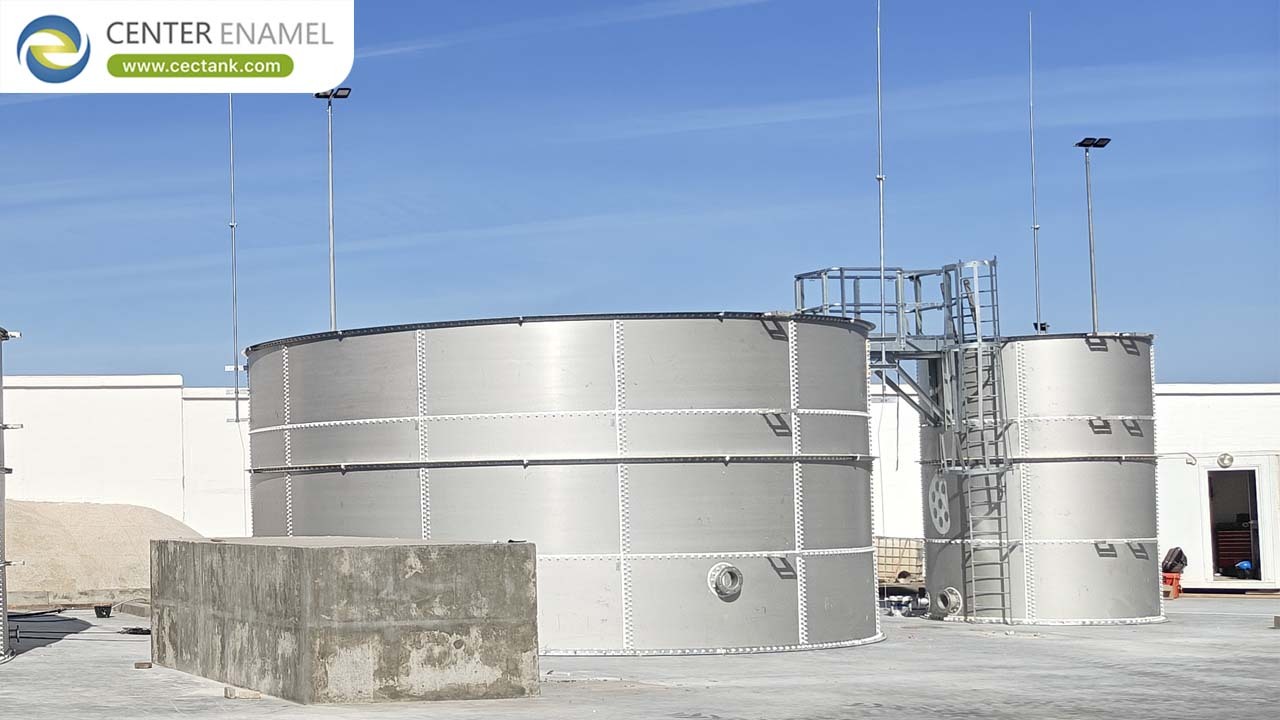
Stainless Steel Tanks for Industrial Wastewater Treatment Plants
Industrial manufacturing, chemical processing, textile production, pharmaceutical synthesis, and food processing operations generate complex, highly aggressive wastewater streams. These industrial effluents frequently contain concentrated acids, caustic alkalis, toxic organic compounds, heavy metals, and high biological loads. Managing and treating these corrosive liquids requires containment infrastructure that offers absolute chemical inertness, structural rigidity, and long-term reliability. Traditional poured-in-place concrete basins and coated carbon steel tanks frequently fail under these harsh operational conditions, suffering from concrete spalling, sulfate attack, and rapid interior coating breakdown.
To achieve maximum corrosion resistance and absolute environmental compliance, modern facilities rely on Stainless Steel Tanks for Industrial Wastewater Treatment Plants. Engineered by Shijiazhuang Zhengzhong Technology Co., Ltd. (Center Enamel), these advanced containment systems deliver benchmark performance across demanding wastewater treatment trains.
The Severe Engineering Challenges of Industrial Effluent Containment
Industrial wastewater treatment introduces unique operational stresses that standard municipal water storage tanks cannot accommodate:
Aggressive Chemical Exposure: Fluctuating pH levels and reactive chemical compounds can rapidly corrode unprotected or poorly lined metal structures, leading to catastrophic leaks and environmental contamination.
Biological Sludge Accumulation: Clarification and equalization basins are prone to bacterial biofilm formation, scaling, and organic residue build-up that complicate routine tank cleaning.
Strict Zero-Leakage Mandates: Industrial plants operate under rigorous regulatory frameworks that demand total containment security to protect surrounding soil and groundwater tables.
Technical Superiority of Stainless Steel Wastewater Tanks
Center Enamel’s stainless steel containment systems incorporate advanced metallurgical and structural features tailored for industrial wastewater environments:
Premium Austenitic Grades (304 and 316/316L): Fabricated from high-grade stainless steel, these tanks feature a native chromium-oxide passive layer that instantly self-heals upon exposure to oxygen, providing continuous immunity to oxidation and chemical attack.
Zero Coating Requirements: Because stainless steel is corrosion-resistant throughout its entire thickness, interior epoxy linings and periodic repainting are entirely unnecessary, eliminating the risk of coating peeling and chemical leaching.
Smooth, Non-Porous Anti-Adhesion Surface: The ultra-smooth interior finish prevents sticky organic sludges, chemical precipitates, and biological flocs from adhering to tank walls, ensuring simple washdowns and consistent hydraulic performance.
Comparative Matrix: Industrial Wastewater Tank Technologies
| Evaluation Metric | Center Enamel Stainless Steel Tank | Cast-in-Place Concrete Basin | Traditional Coated Carbon Steel Tank |
| Corrosion & Chemical Defense | Superior (Native passive chromium layer resists aggressive industrial acids and alkalis) | Moderate (Vulnerable to concrete carbonation, sulfate attack, and acid spalling) | Low (Dependent on field-applied epoxy coatings that blister and pit quickly) |
| Biological Adhesion & Cleaning | Minimal (Smooth, non-porous surface prevents scaling and bio-fouling) | High (Rough concrete porosity encourages bacterial growth and sludge retention) | Moderate (Surface degradation creates micro-crevices for organic adherence) |
| Construction & Scalability | Modular & Fast (Precision-engineered panels assembled rapidly on-site) | Very Slow (Months of formwork, concrete pouring, and multi-week curing phases) | Moderate (Requires heavy field plate rolling and extensive weld inspections) |
| Lifecycle & Maintenance | Minimal (40 to 60+ years of service with virtually zero interior maintenance) | High (Requires frequent structural crack sealing and waterproof patching) | High (Continuous maintenance overhead to prevent rust-through and leaks) |
guo Engineering Assurance: All stainless steel tanks engineered by Center Enamel comply strictly with internationally recognized design and quality standards, including AWWA D103-09, ISO 28765, and ISO 9001, ensuring certified reliability in critical industrial wastewater applications worldwide.
Frequently Asked Questions (FAQ)
Q: Why are stainless steel tanks preferred for industrial wastewater treatment plants?
A: Stainless steel tanks offer exceptional resistance to aggressive chemicals, fluctuating pH levels, and industrial effluents without requiring protective interior coatings. They provide a long service life (40–60+ years) and minimal maintenance compared to concrete or painted carbon steel.
Q: What stainless steel grades are used for corrosive industrial wastewater streams?
A: Center Enamel fabricates tanks using high-grade austenitic stainless steel—primarily Grade 304 for standard industrial environments and Grade 316/316L for high-chloride, highly acidic, or chemically aggressive industrial wastewater applications to ensure maximum pitting resistance.
Q: Do stainless steel wastewater tanks require interior epoxy linings or repainting?
A: No. Because stainless steel is corrosion-resistant throughout its entire thickness due to its self-healing passive chromium-oxide layer, interior epoxy linings, specialized coatings, and periodic repainting are entirely unnecessary.
Q: Can Center Enamel’s stainless steel tanks be customized for specific plant flow rates and spatial layouts?
A: Yes. Center Enamel provides fully custom-engineered solutions tailored to your plant’s hydraulic flow rates, space restrictions, and specific wastewater chemistry, incorporating options such as specialized nozzles, internal baffles, mixers, and level sensors.