
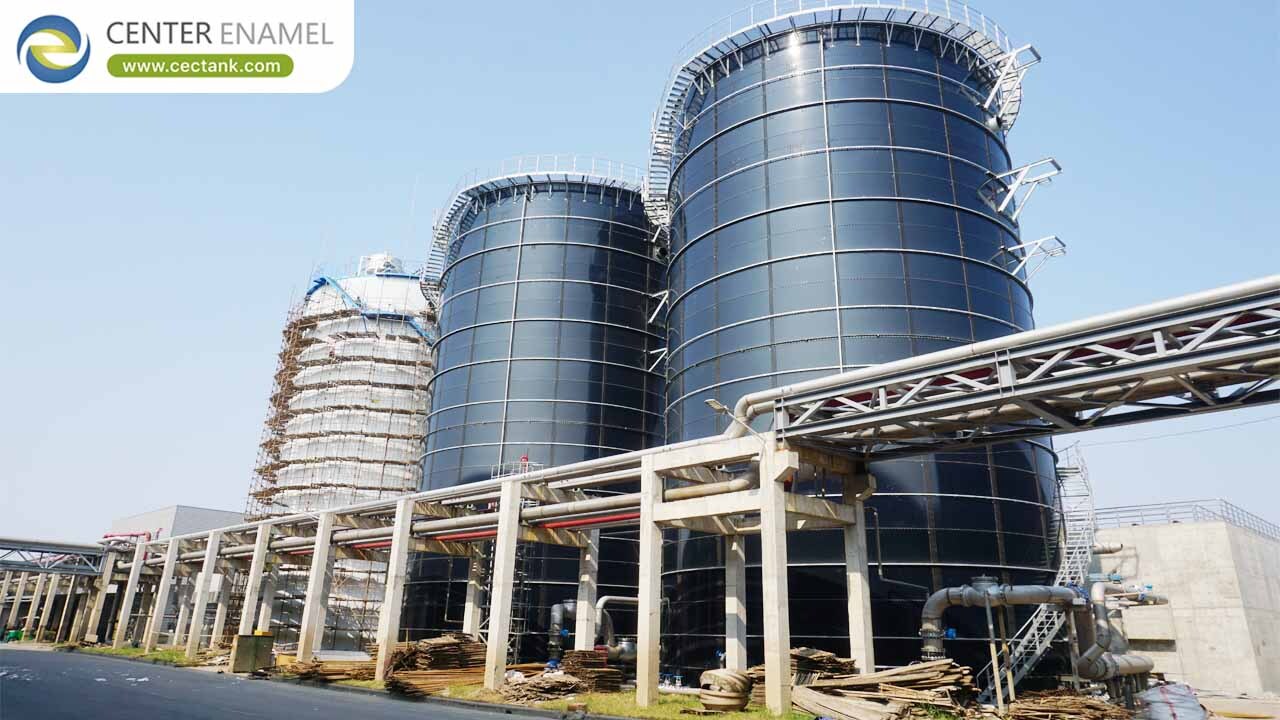
UASB Reactor for Industrial Wastewater Treatment: High-Efficiency Anaerobic Solutions
In the face of rising energy costs and stringent environmental regulations, industrial facilities are increasingly turning to Upflow Anaerobic Sludge Blanket (UASB) reactors. This technology has revolutionized industrial wastewater treatment by transforming organic pollutants—often seen as a disposal cost—into a renewable energy resource (biogas).
For facility managers and environmental engineers, the UASB reactor is no longer just a treatment option; it is a strategic asset for achieving operational sustainability.
How a UASB Reactor Works: The Anaerobic Advantage
Unlike aerobic treatment processes that require energy-intensive aeration, the UASB reactor leverages anaerobic microorganisms to degrade organic matter in the absence of oxygen.
Bottom-Up Flow: Industrial wastewater is pumped into the base of the reactor through a specialized distribution system.
The Sludge Blanket: The water rises through a dense, “fluffy” blanket of granular anaerobic sludge. This blanket acts as a biological filter and reactor, where microorganisms break down complex organic compounds.
Three-Phase Separation: At the top of the reactor, a gas-liquid-solid separator ensures that:
Biogas (methane and carbon dioxide) is captured for energy use.
Treated water exits the system.
Biomass (sludge) is retained within the reactor to maintain the process.
Why UASB Reactors are Ideal for Industrial Applications
For high-strength wastewater (common in food and beverage, paper and pulp, and chemical manufacturing), UASB technology offers undeniable operational advantages:
Energy Recovery (Biogas): The anaerobic process converts organic matter into methane-rich biogas. This can be used to power boilers or generate electricity, directly offsetting energy costs.
Low Sludge Production: Anaerobic bacteria grow significantly slower than aerobic bacteria, resulting in substantially lower volumes of waste sludge. This reduces the costs associated with sludge handling, transport, and disposal.
High Organic Loading Rates: UASB reactors are engineered to handle high Chemical Oxygen Demand (COD) concentrations, making them perfect for “dirty” industrial effluents that would overwhelm traditional aerobic plants.
Low Operational Footprint: Because the process is compact and does not require large aeration basins, it is an excellent choice for facilities with limited space.
The Infrastructure Choice: Why GFS Tanks for UASB Reactors
The efficiency of a UASB reactor is heavily dependent on the integrity of the containment structure. At Center Enamel, we recommend Glass-Fused-to-Steel (GFS) tanks as the gold standard for UASB infrastructure.
The GFS Advantage:
Corrosion Immunity: Industrial wastewater often contains volatile fatty acids (VFAs) and sulfides that aggressively corrode concrete and carbon steel. The inert glass coating of a GFS tank acts as an impenetrable barrier, protecting the steel for decades.
Non-Stick Surface: The smooth, pore-free surface of the glass lining prevents sludge adhesion, ensuring efficient mixing and minimizing the maintenance required for cleaning the reactor walls.
Modular Scalability: Whether your facility needs to start with a small pilot reactor or scale up to a massive industrial system, GFS modular panels allow for rapid construction and future expansion.
Comparative Analysis: UASB vs. Traditional Aerobic Treatment
| Feature | UASB Reactor | Aerobic Activated Sludge |
| Energy Consumption | Low (Energy Producer) | High (Energy Consumer/Aeration) |
| Sludge Production | Low (0.05–0.1 kg VSS/kg COD) | High (0.3–0.6 kg VSS/kg COD) |
| Space Requirements | Compact | Large (Due to aeration basins) |
| Organic Load Capacity | High | Moderate |
| Operating Cost | Economical | Expensive (Aeration & Sludge handling) |
Frequently Asked Questions (FAQ)
Q: Can a UASB reactor handle fluctuating production loads?
A: Yes. Modern UASB designs, when coupled with a well-balanced equalization tank and expert monitoring, are quite robust. The granular sludge blanket can survive periods of low feed and quickly recover during production peaks.
Q: Does the UASB reactor require a post-treatment step?
A: Yes. While UASB reactors are incredibly efficient at reducing COD/BOD (often up to 80-90%), the effluent usually contains residual organic matter, nutrients (nitrogen/phosphorus), and dissolved solids. A smaller aerobic “polishing” step is typically used as a final stage to meet strict discharge requirements.
Q: How long does it take to “start up” a UASB reactor?
A: The startup time depends on the availability of granular sludge for seeding. By importing “seed” granules, a reactor can reach full capacity in a matter of weeks. Without seeding, it can take several months for the natural granulation process to occur.
Q: Are UASB reactors suitable for low-temperature environments?
A: Anaerobic bacteria perform best at mesophilic temperatures (approx. 30–38°C). In colder climates, heating of the influent or the reactor contents is often necessary to maintain efficiency.
Partner with Center Enamel
At Center Enamel, we combine decades of experience in environmental engineering with our world-class GFS storage technology to deliver high-performance UASB reactors tailored to your industrial wastewater profile.
Ready to turn your wastewater into an energy asset? Contact our engineering team today to discuss your industrial application and receive a technical feasibility study.