
Der Ingenieurleitfaden für FBE‑Umkehrosmose‑(RO)‑Wassertanks (2026)
In den sich rasch ausweitenden Bereichen der Entsalzung und der industriellen Wasserversorgung stellt die Lagerung von Umkehrosmose (RO)-Wasser eine einzigartige chemische Herausforderung dar. RO‑Wasser ist hochreines, “aggressives” Wasser, dem seine Mineralien entzogen wurden, wodurch es besonders dazu neigt, Ionen aus seinem Behälter herauszulösen.
Fusion Bonded Epoxy (FBE)-verschraubte Stahltanks haben sich als Industriestandard 2026 für die Lagerung von RO‑Permeat etabliert und bieten eine chemisch inerte, nicht auslaufende Umgebung, die die Wasserqualität schützt und gleichzeitig eine lange strukturelle Lebensdauer gewährleistet.
1. Was ist ein FBE‑Umkehrosmose‑Wassertank?
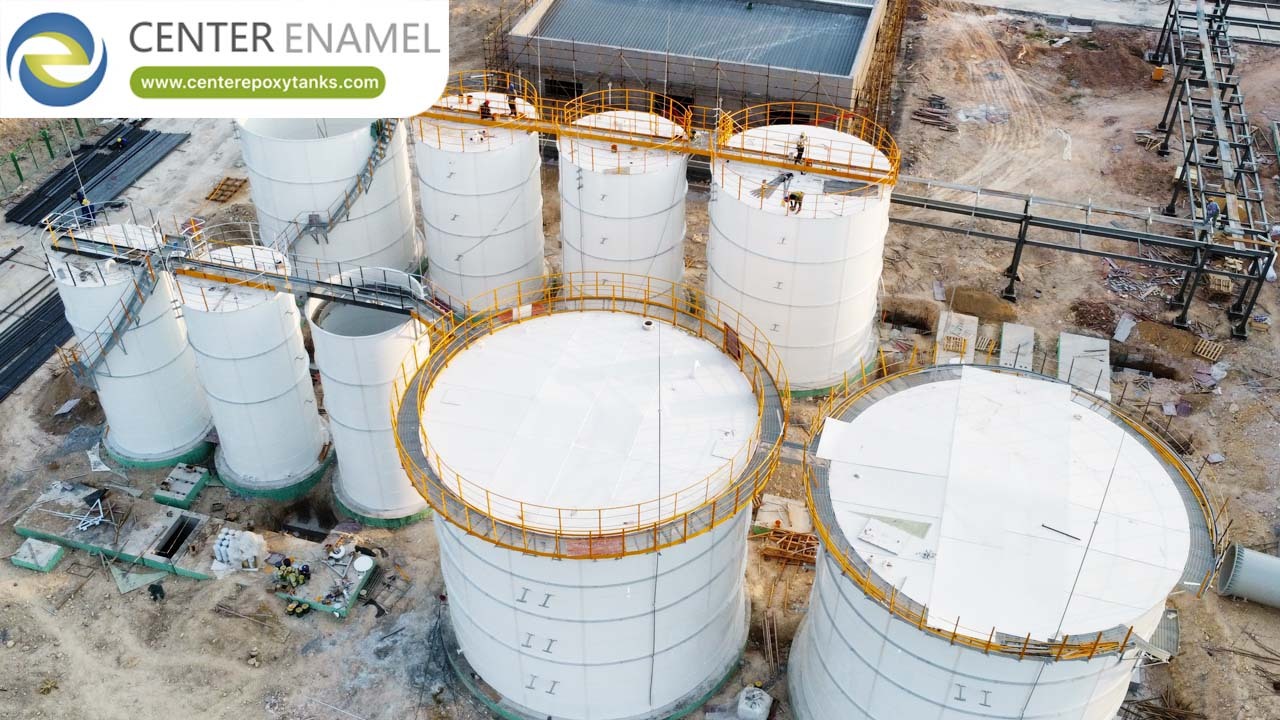
Ein FBE‑RO‑Wassertank ist ein modulares Lagersystem, bei dem Stahlpaneele werkseitig mit einem hochleistungsfähigen duroplastischen Epoxidharz beschichtet werden.
Im Gegensatz zu herkömmlichen flüssig aufgetragenen Farben erfolgt das Schmelzgebundenes Epoxid Verfahren durch elektrostatische Aufbringung eines trockenen Pulvers auf vorgewärmte Stahlbleche (in der Regel zwischen 180 °C und 230 °C). Dadurch entsteht eine molekular vernetzte Barriere, die dauerhaft mit dem Stahlsubstrat verschmolzen ist. Das Ergebnis ist eine hochdichte, glasglatte Innenauskleidung, die speziell dafür entwickelt wurde, die “ionenhungrige” Natur des RO‑Permeats zu bewältigen.
2. Warum FBE für die Lagerung von RO‑Permeat unerlässlich ist
Die Lagerung von RO‑Wasser erfordert Materialien, die verhindern, dass Remineralisierung und Ionische Kontamination. Die FBE‑Technologie erfüllt diese Anforderungen durch mehrere entscheidende Leistungsmerkmale:
Ionische Neutralität und Auslaugungsbeständigkeit
Da RO‑Wasser keine Mineralien enthält, neigt es von Natur aus dazu, sich durch Auflösen der Materialien, mit denen es in Kontakt kommt, zu stabilisieren. FBE‑Beschichtungen sind chemisch inert und geben weder Eisen, Mangan noch andere metallische Ionen an das gereinigte Wasser ab. Dies ist entscheidend, um die spezifischen Leitfähigkeitswerte aufrechtzuerhalten, die in industriellen und kommunalen RO‑Systemen erforderlich sind.
Qualitätssicherung ohne Unterbrechungen
In einer Umgebung mit Umkehrosmose kann bereits ein mikroskopisch kleines Loch in der Beschichtung zu lokaler Korrosion führen, wodurch Metalloxide in den hochreinen Wasserstrom gelangen. Jedes FBE-Paneel wird einem Hochspannungstest unterzogen Festigkeitstest (≥1100V) im Werk. Dies gewährleistet eine 100 % fehlerfreie Barriere, bevor der Tank zum Einsatzort versendet wird.
Beständigkeit gegen Reinigungsmittel
RO-Anlagen durchlaufen häufig Clean-In-Place (CIP)-Zyklen, bei denen verschiedene Säuren und Laugen eingesetzt werden. FBE-Beschichtungen bieten eine hervorragende chemische Beständigkeit über einen breiten pH-Bereich (typischerweise 3 bis 11), und stellen sicher, dass das Innere des Tanks von Wartungsprozessen nicht beeinträchtigt wird.
3. Vergleich: FBE vs. Beton vs. Edelstahl
| Merkmal | FBE-verschraubter Stahltank | Stahlbeton | Edelstahl (316L) |
| Ionische Reinheit | Ausgezeichnet (Inertharz) | Schlecht (löst Kalzium/Ionen aus) | Hoch |
| Korrosionsschutz | Überlegen (Epoxidbarriere) | Niedrig (anfällig für Säureangriffe) | Außergewöhnlich |
| Montagegeschwindigkeit | Schnell (Wochen) | Langsam (Monate der Aushärtung) | Mäßig |
| Wartung | Minimal | Hoch (erfordert Auskleidungen) | Minimal |
| Anfangsinvestition | Mäßig | Mäßig bis hoch | Sehr hoch |
4. Ingenieurstandards und globale Konformität (2026)
Um strukturelle Robustheit und Wassergüte zu gewährleisten, entsprechen FBE-RO-Wassertanks führender Hersteller wie Center Enamel (Shijiazhuang Zhengzhong Technology) folgenden internationalen Standards:
- NSF/ANSI 61:Unverzichtbar für Komponenten, die mit Wasser in Kontakt stehen, um sicherzustellen, dass keine schädlichen Substanzen in das trinkbare RO-Wasser gelangen.
- AWWA D103-19:den globalen Standard für werkseitig beschichtete verschraubte Kohlenstoffstahltanks an.
- ISO 28765:2016:Regelt die Anforderungen an hochleistungsfähige Beschichtungen für industrielle Behandlung und Lagerung.
- ASCE 7-22:Strukturelles Design für Erdbebenresistenz sowie Windlasten bis zu 250 km/h – entscheidend für Küstenentsalzungsanlagen.
5. Strategische Anwendungen im RO-Wasserkreislauf
Die FBE-Technologie bildet das Rückgrat der Hochreinwasserbewirtschaftung in zahlreichen Branchen:
- Kommunale Entsalzung:Sie dient als großdimensionierte Permeat-Speicher für die Trinkwasserversorgung in trockenen Regionen wie Saudi-Arabien und den Vereinigten Arabischen Emiraten.
- Industrielle Prozesswasser:Speicherung von RO-aufbereitetem Wasser für empfindliche Produktionsprozesse in der Halbleiter- und Pharmaindustrie.
- Vorbehandlung von Kesselspeisewasser:Aufbewahrung von demineralisiertem RO-Wasser vor dessen Eintritt in Hochdruck-Dampfschleifen zur Vermeidung von Kalkablagerungen.
- Containerisierte RO-Anlagen:Dank der modularen Bauweise aus verschraubten Paneelen lassen sich FBE-Tanks problemlos in mobile oder kompakte RO-Aufbereitungsanlagen integrieren.
Schutz hochreiner Anlagen
Für Wasserversorger und Industrietechniker, die ihre Kapitalrendite (ROI), die FBE-Umkehrosmose-Wassertank ist die ultimative Wahl für das Jahr 2026. Durch die Beseitigung der mit Beton verbundenen Risiken einer Mineralstoffauslaugung sowie der prohibitiven Kosten hochwertigen Edelstahls gewährleistet die FBE-Technologie, dass Ihr hochreines Wasser rein, geschützt und einsatzbereit bleibt.
Prüfen Sie die Lagerung für eine spezifische RO-Anwendung, etwa die Meerwasserentsalzung oder die Behandlung von Brackwasser, und wünschen sich ein technisches Angebot entsprechend Ihrem Volumenbedarf?