
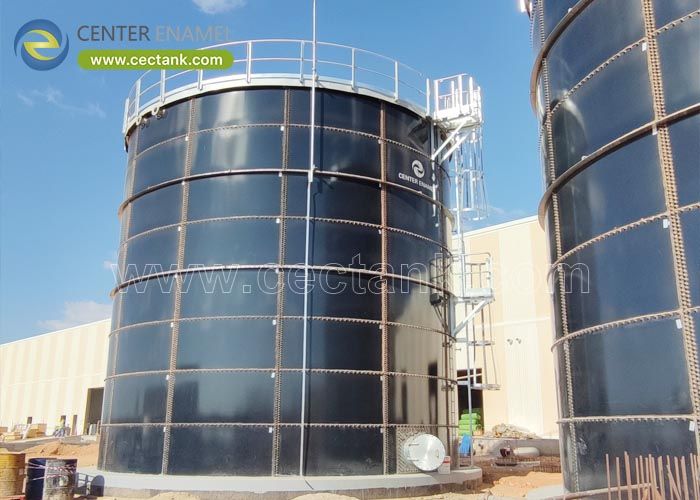
Proveedor de tanques de digestión anaerobia esmaltados: cómo elegir un proveedor de tanques de digestión
¿Qué es un tanque de digestión anaerobia con revestimiento de esmalte?
¿Por qué elegir el recubrimiento de esmalte en lugar del epoxi o del hormigón para los digestores?
¿Cómo evaluar a un proveedor de tanques de AD con revestimiento de esmalte?
¿Qué capacidad pueden alcanzar los tanques de digestión con revestimiento de esmalte?
Un digestor anaerobio es uno de los entornos más hostiles que un tanque de almacenamiento pueda enfrentar. Tanto en digestores agrícolas, como en plantas municipales de lodos y en instalaciones de residuos alimentarios, el líquido corrosivo actúa desde múltiples frentes al mismo tiempo: sulfuro de hidrógeno generado por bacterias reductoras de sulfato, ácidos grasos volátiles producidos durante la hidrólisis, amoníaco libre, partículas abrasivas arrastradas junto con la materia prima, y una carga térmica constante, ya que la actividad biológica no puede detenerse. Bajo esta combinación, los sistemas de contención convencionales fallan de manera predecible: el hormigón se carbonata y agrieta, los sistemas de epoxi y pintura se abomban y deslaminan, y cada ciclo de re-revestimiento deja fuera de servicio el activo precisamente durante las semanas en que la planta debería estar generando ingresos. Por ello, elegir el recubrimiento y el proveedor que lo respalda constituye la decisión clave que determina si un digestor operará durante décadas o se convertirá en una carga de mantenimiento.
Enamel anaerobic digestion tanks solve this by fusing glass to steel at 820-930 °C, creating a metallurgically bonded, chemically inert surface rather than a film that merely sits on the substrate. For developers evaluating an enamel anaerobic digestion tanks provider, the decisive questions are enameling process control, coating verification, structural engineering, and delivered reference scale. Shijiazhuang Zhengzhong Technology Co., Ltd. (Center Enamel) has manufactured glass-fused-to-steel (GFS) tanks since becoming China’s first GFS tank producer, backed by enameling research and close to 200 enameling patents, with bolted tank systems delivered to more than 100 countries and a standard 30-day delivery window.
1. ¿Por qué el esmalte es el recubrimiento preferido para los tanques de digestión anaerobia?
El esmalte es la opción preferida porque el ambiente del digestor ataca simultáneamente de forma química, térmica y mecánica, y solo un recubrimiento inorgánico fusionado puede resistir los tres efectos al mismo tiempo. El vidrio fundido sobre acero ofrece inercia química, estabilidad térmica y resistencia a la abrasión en una sola superficie, mientras que los recubrimientos orgánicos se ablandan bajo calor prolongado y el hormigón pierde alcalinidad al carbonatarse.
Inercia química: La capa de vidrio fusionado es inerte frente al sulfuro de hidrógeno, los ácidos grasos volátiles y el amoníaco libre, por lo que el recubrimiento no reacciona con el líquido digestivo en un rango de pH que destruye los sistemas de pintura.
Estabilidad térmica: Funciona de manera continua a temperaturas mesofílicas de 35–38 °C o termofílicas de 50–55 °C, sin ablandarse ni perder adherencia, ya que el recubrimiento fue formado inicialmente a temperaturas superiores a 820 °C.
Resistencia a la abrasión: Una dureza superficial de 6,0 en la escala de Mohs resiste la abrasión de grano, arena y la mezcla mecánica continua, sin el desgaste que adelgaza los revestimientos orgánicos.
Unión no delaminante: A diferencia del epoxi o la pintura, el esmalte se funde con el sustrato de acero, por lo que no existe una interfaz por la cual la humedad pueda infiltrarse y levantar el recubrimiento formando ampollas.
Estanqueidad a los gases: Precision bolted seams with engineered sealant retain biogas at 55-65% methane content, protecting both energy yield and site safety.
2. ¿Cómo evaluar a un proveedor de tanques esmaltados AD?
Evalúe a un proveedor según cuatro criterios clave: si posee y controla el horno de esmaltado, si cada panel se somete a pruebas eléctricas, si el diseño del casco está estructuralmente validado y si puede presentar referencias de digestores de volumen comparable. Los proveedores que subcontratan la cocción o realizan inspecciones puntuales de los recubrimientos rara vez cumplen con las expectativas una vez que el tanque entra en servicio biológico continuo.
Control del proceso de esmaltado: Cocción en horno propio a 820‑930 °C, con recubrimiento de doble capa y doble cocción (2C2F) como estándar, y recubrimiento de triple capa (3C3F) disponible para servicios exigentes.
Verificación del recubrimiento: 100% high-voltage holiday spark testing of every panel, with coating adhesion measured at 3450 N/cm² and thickness verified before the panel leaves the factory.
Ingeniería estructural: Diseño del casco y de la cubierta validado mediante análisis por elementos finitos conforme a AWWA D103‑09, utilizando tornillería de grado 8.8 y tolerancias de panel controladas en fábrica.
Escala de referencia: Operación de digestores de volumen y clima comparables —no solo pequeñas unidades de demostración—, idealmente incluyendo proyectos superiores a 10.000 m³.
Cobertura de certificación: Gestión de calidad ISO 9001, norma ISO 28765 para tanques revestidos de vidrio, cumplimiento estructural CE/EN 1090, además de ISO 45001 para la seguridad en el sitio.
3. ¿Qué tamaños y configuraciones están disponibles?
Los tanques esmaltados AD se suministran en un amplio rango, desde aproximadamente 20 m³ para plantas de escala agrícola hasta unidades municipales de gran tamaño, desempeñando tres funciones principales: el propio digestor, el gasómetro o recipiente de almacenamiento de gas, y el depósito de digestato. La configuración de la cubierta se selecciona según si el recipiente almacena líquido, gas o ambos.
Tanques digestores: El vaso reactor, configurado para operación mesofílica o termofílica, con sistemas de calefacción, aislamiento y mezcla integrados en el diseño del panel.
Gasómetros y almacenamiento de gas: Recipientes dedicados a gases, a menudo con una cubierta de doble membrana sobre un casco GFS, para separar el volumen de almacenamiento de gas del volumen de digestión.
Almacenamiento del digestato: Almacenamiento posterior a la digestión dimensionado según el calendario de aplicación en tierra, normalmente el volumen del tanque más grande en un sitio agrícola.
Opciones de cubierta: Cubiertas autoportantes GFS, cúpulas geodésicas de aluminio para grandes luces sin columnas interiores, o cubiertas de membrana para servicios de gas.
Rango de capacidad: Configuraciones de proyecto desde 20 m³ hasta más de 20.000 m³, con múltiples tanques conectados en serie cuando un único recipiente superaría los límites de transporte.
| Criterio de evaluación | Tanques de esmalte AD con esmalte GFS central | Digestor de hormigón vertido in situ | Digestor de acero recubierto con epoxi |
|---|---|---|---|
| Corrosion & H2S defense | Superior — vidrio fundido inerte, unión a 820-930 °C | Moderado — carbonatación y microfisuras | Moderado — la película orgánica se degrada en H2S |
| Thermal & abrasion duty | Alto — 6,0 en la escala de Mohs, funcionamiento continuo a 35-55 °C | Moderado — resistente pero propenso a las grietas | Bajo-Moderado — se ablanda con el calor |
| Velocidad de construcción | Rápido — paneles de fábrica, atornillados, entrega en 30 días | Muy lento — encofrado, curado, ventanas climáticas | Moderado — recubierto en fábrica, montaje en obra |
| Lifecycle & maintenance | Mínima — vida útil de diseño de 30 a 50 años | Alto — reparación de fisuras y rechapado | Alto — ciclos periódicos de re recubrimiento |
Center Enamel engineers enamel digestion tanks for continuous biological duty: panels glass-fused at 820-930 °C for a bond that cannot delaminate, 2C2F coverage verified by 100% high-voltage holiday spark testing, grade 8.8 bolted connections, and shell geometry validated by finite element analysis to AWWA D103-09. Production runs under an ISO 9001 quality system with ISO 28765 and CE/EN 1090 coverage, with tanks delivered to more than 100 countries on a standard 30-day schedule and backed by a three-year warranty.
El revestimiento de un digestor no falla gradualmente; falla en el instante en que la unión se rompe. Si se funde el vidrio en el acero a temperaturas superiores a 820 °C, ya no queda ninguna unión por perder. — Equipo de Ingeniería de Procesos de Biogás de Center Enamel
Preguntas frecuentes (FAQ)
¿Qué es un tanque de digestión anaerobia con revestimiento de esmalte?
Se trata de un recipiente digestivo de acero atornillado cuya superficie interna está recubierta con un esmalte de vidrio fundido al acero a 820-930 °C. El resultado es un revestimiento inerte y no poroso que resiste el sulfuro de hidrógeno, los ácidos orgánicos y la abrasión, al tiempo que retiene el biogás, convirtiéndose así en la opción estándar de contención para la digestión anaerobia en aplicaciones agrícolas, municipales e industriales.
¿Por qué el esmalte es superior al epoxi en los digestores?
El epoxi es una película orgánica aplicada sobre la superficie del acero; por ello puede ablandarse ante temperaturas prolongadas, formar ampollas si la humedad alcanza la interfaz y requerir reencapado periódico. En cambio, el esmalte se funde en el sustrato a temperatura de horno, proporcionando una unión sin interfaz que pueda desprenderse, una superficie de 6,0 en la escala de Mohs resistente a la abrasión y una vida útil de diseño de 30 a 50 años sin necesidad de reemplazar el revestimiento.
¿A qué temperatura operan los tanques de digestión esmaltados?
El propio recubrimiento se forma a temperaturas superiores a 820 °C, por lo que la temperatura de proceso nunca constituye un factor limitante. Los digestores funcionan habitualmente a temperaturas mesofílicas de 35-38 °C o termofílicas de 50-55 °C, con aislamiento y calefacción integrados en el diseño del tanque, en lugar de añadidos como una modificación posterior.
¿Se pueden personalizar los tanques de digestión anaerobia con revestimiento de esmalte para adaptarse a una materia prima específica?
Sí. Center Enamel configura el volumen del digestor, la relación altura-diámetro, el paquete de calefacción y aislamiento, las penetraciones para la mezcla y el tipo de cubierta según la materia prima y la tasa de carga. La capacidad del gasómetro, el volumen de almacenamiento del digestato y todo el conjunto de pasarelas de inspección, bridas, escaleras y plataformas se especifican de manera individualizada para cada planta.
Puntos clave
Los tanques de digestión anaerobia con revestimiento de esmalte funden el vidrio sobre el acero a temperaturas de 820–930 °C, generando un recubrimiento inerte sin interfaz que pueda deslaminarse, a diferencia de los sistemas epoxi o de pintura.
El recubrimiento resiste simultáneamente el ataque químico, térmico y abrasivo, precisamente la combinación que deteriora los revestimientos convencionales de los digestores.
Evaluate a provider on furnace control, 100% spark testing, FEA-validated structural design, and reference digesters of comparable volume.
Un único proveedor puede abarcar el digestor, el gasómetro y el sistema de almacenamiento del digestato, manteniendo la química del recubrimiento y los detalles de las conexiones atornilladas uniformes en toda la instalación.