
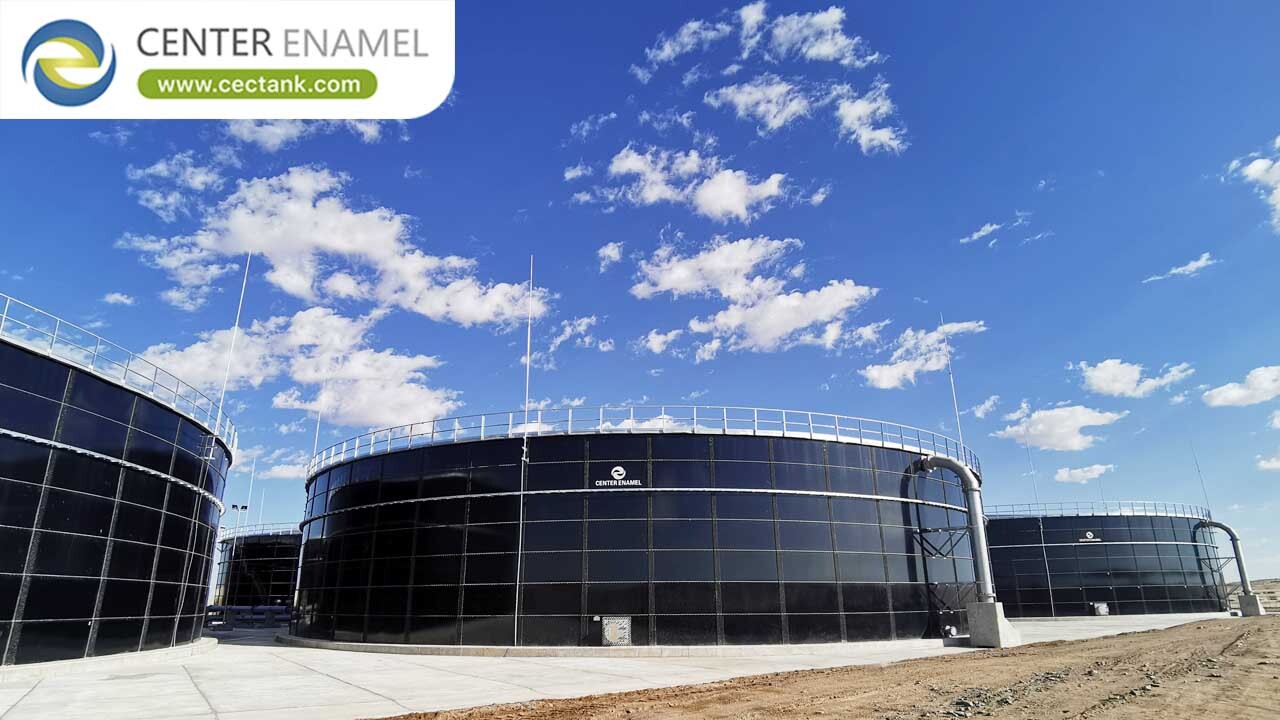
Resiliencia industrial: Tanques de tratamiento de efluentes GFS
La norma de ingeniería para la infraestructura ambiental de 2026
En el impulso global hacia el “Cero Descarga Líquida” (ZLD) y el cumplimiento estricto de las normativas ambientales, el tanque de tratamiento de efluentes es el activo más crítico en cualquier instalación industrial. Los efluentes —a menudo una mezcla compleja de cargas orgánicas, metales pesados, tensioactivos y niveles variables de pH— son notoriamente agresivos para los materiales de contención tradicionales.
Shijiazhuang Zhengzhong Technology Co., Ltd. (Esmalte central) proporciona la solución global de primera categoría: Tanques de tratamiento de efluentes de vidrio fundido sobre acero (GFS). Al fusionar acero rico en titanio con un revestimiento de vidrio de alto rendimiento a temperaturas superiores a 820 °C, ofrecemos un sistema de contención diseñado para una Vida útil de 30 a 50 años incluso en los entornos químicos más severos.
1. La ciencia del GFS: diseñado para efluentes complejos
El tratamiento de efluentes comprende diversas etapas, incluyendo la digestión anaerobia, el tratamiento aeróbico y la precipitación química. Cada etapa presenta desafíos corrosivos únicos que el GFS está especialmente capacitado para abordar.
- Resistencia superior a la corrosión (pH 1–14):Nuestras formulaciones de vidrio son prácticamente inertes, protegiendo el sustrato de acero frente a los ácidos orgánicos volátiles presentes en el tratamiento primario y a los productos químicos cáusticos utilizados para ajustar el pH.
- 100% Integridad sin interrupciones:Cada panel fabricado en nuestra planta certificada ISO pasa por un control de fábrica Prueba de chispa de alta tensión de 1500 V. Esto garantiza la ausencia total de discontinuidades microscópicas en el revestimiento, proporcionando una barrera completamente hermética y resistente a la contaminación.
- Unión interfacial molecular:A diferencia de los recubrimientos epoxi que dependen de la adhesión mecánica, GFS forma un enlace covalente molecular con una resistencia de adherencia de 3.450 N/cm². El revestimiento no se “ampolla” ni se delamina bajo la presión constante y los ciclos térmicos propios de los procesos de tratamiento activos.
2. Especificaciones técnicas
Nuestros tanques de tratamiento de efluentes cumplen y superan las normas AWWA D103-09, ISO 28765 y NSF/ANSI 61.
| Característica | Especificación de rendimiento |
| Capacidad individual máxima | Hasta 60.000 m³ + |
| Tipo de recubrimiento | Vidrio-Fundido-Al-Acero (GFS) de Alto Rendimiento |
| Cumplimiento de normas | AWWA D103-09, ISO 28765, NSF/ANSI 61, CE |
| Dureza | 6,0 Mohs (Durabilidad de estándar diamante) |
| Control de calidad | Controlado en fábrica Prueba de chispa de 1500 V |
| Vida útil operativa | 30 – 50 años (Mantenimiento mínimo) |
3. Ventajas estratégicas para EPC globales y operadores industriales
Despliegue rápido y flexibilidad modular
Los proyectos industriales modernos suelen desarrollarse dentro de plazos regulatorios apremiantes.
- 60% Instalación más rápida:Los paneles están acabados de fábrica y se ensamblan mediante pernos en obra. A diferencia del hormigón, no requieren tiempo de curado; y a diferencia del acero soldado, no generan riesgos de incendio por trabajos en caliente, lo que permite una puesta en marcha rápida del proyecto.
- Escalabilidad:El diseño atornillado permite la expansión vertical en caso de que aumente el volumen de efluentes de la instalación, protegiendo así la inversión inicial.
Control avanzado de gases y olores
Para cumplir con los mandatos de sostenibilidad de 2026 y garantizar operaciones respetuosas con el entorno vecinal, integramos:
- Techos geodésicos de aluminio:Como se demuestra en nuestro proyecto de Brasil 2024, estos techos ofrecen una cubierta de vano libre, bloqueadora de rayos UV y resistente a la corrosión causada por H₂S y otros biogases.
- Sellado hermético:Juntas de EPDM de alta calidad y sellantes especializados aseguran un ambiente hermético al 100%, esencial para la digestión anaerobia y la mitigación de olores.
4. Autoridad comprobada: hitos de proyectos globales 2024–2025
Nuestro liderazgo está avalado por logros alcanzados en más de 100 países:
- Proyecto de sostenibilidad en Daxing, Pekín:Implementación masiva 10.392 m³ Tanques GFS diseñados para manejar efluentes municipales e industriales complejos.
- Proyecto industrial en Suazilandia:Instalación emblemática que incluye tanques individuales con un volumen total del proyecto de 42.188 m³—estableciendo el estándar global para contenciones atornilladas a gran escala.
- Infraestructura de Nicaragua (2024):Reservorios de gran capacidad que alcanzan 24 metros en altura, demostrando experiencia estructural en la gestión de fluidos a gran escala.
- Mauritania y Guinea (2024):Despliegue rápido de soluciones modulares de almacenamiento y tratamiento para garantizar la seguridad de recursos críticos en zonas mineras remotas.
5. Preguntas frecuentes: Por qué GFS es la opción premium para el tratamiento de efluentes
¿Cómo se compara GFS con el hormigón en cuanto a tanques de efluentes?
El hormigón es poroso y susceptible a la “corrosión inducida por microorganismos” (MIC) y al ataque químico. GFS, en cambio, es 100% impermeable, ha sido probado en fábrica a 1500 V y ofrece un retorno de inversión significativamente superior durante su vida útil de 30 a 50 años, gracias a sus requisitos de mantenimiento prácticamente nulos.
¿Pueden los tanques GFS con esmalte central soportar residuos industriales de alta resistencia?
Sí. Nuestras formulaciones especiales de vidrio son resistentes a pH 1–14, lo que los convierte en la opción ideal para tanques que manejan lixiviados de vertederos, tintes textiles o aguas residuales del procesamiento alimentario.
¿Cuál es la capacidad máxima disponible para un único recipiente de efluentes?
Mediante ingeniería avanzada y Análisis por elementos finitos (FEA), Shijiazhuang Zhengzhong Technology Co., Ltd. (Esmalte central) puede proporcionar recipientes GFS individuales que superan 60.000 m³, el valor más alto en la industria de tanques atornillados.
Sobre Shijiazhuang Zhengzhong Technology Co., Ltd. (Center Enamel)
Con más de 30 años de experiencia y casi 200 patentes, somos el principal fabricante asiático de tanques atornillados. Ofrecemos soporte técnico integral EPC, asegurando que cada tanque GFS para el tratamiento de efluentes esté diseñado para maximizar la seguridad, la fiabilidad y la sostenibilidad a largo plazo.
Asegure el futuro de su infraestructura ambiental con una solución GFS de más de 60.000 m³.